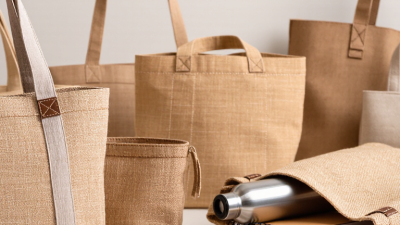
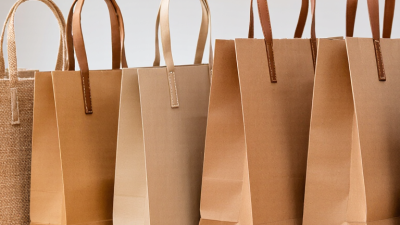
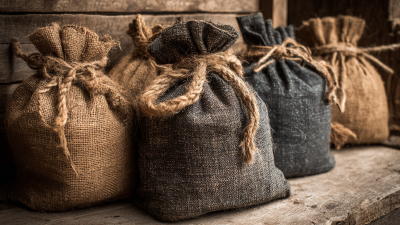
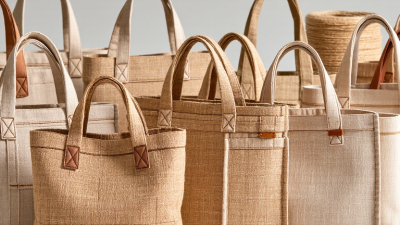
China Best Personalised Jute Bags Manufacturer?
Choosing a China-based manufacturer for Personalised Jute Bags takes more than comparing prices or browsing attractive product photos. Buyers should look closely at fabric weight, stitching, handle reinforcement, printing quality, and the supplier’s ability to repeat a design consistently. These details affect how a bag feels in the hand and how well it holds up after regular use. The right choice depends on the intended audience, order size, budget, and artwork requirements.
A reliable supplier should explain material options clearly and provide samples or useful production details before an order is confirmed. Ask how custom logos are applied, what bag dimensions are available, and how color differences are handled between a sample and a larger run. Clear answers matter. So does a realistic production timeline. A practical comparison can include factory experience, communication, quality checks, packaging, and shipping support, without treating one sales claim as proof of quality.
There is no single manufacturer that suits every buyer. A low quote may leave out setup costs or finishing details; a high quote does not automatically mean better workmanship. Look for specific evidence, such as close-up product images, sample policies, and consistent answers to technical questions. Small details matter. And samples can still disappoint. A sample may look excellent, while bulk production reveals uneven seams or shifting print placement. This guide will outline what to check when evaluating China’s Personalised Jute Bags manufacturers, so buyers can make a more informed decision and spot questions worth asking before placing an order.
Jute Fiber Composition: 60–70% Cellulose and Its Role in Bag Performance
China Best Personalised Jute Bags Manufacturer?
Jute Fiber Composition: 60–70% Cellulose and Its Role in Bag Performance
Jute fiber typically contains about 60–70% cellulose, though the exact share varies with the crop and processing. Cellulose forms much of the fiber’s structure. It helps jute yarn resist pulling and gives woven bags a firm, dependable feel. On a finished bag, that strength matters at the handles, seams, and bottom corners. Yet cellulose alone does not determine performance. Yarn thickness, weave density, stitching, and finishing also matter.
Moisture can make jute fibers swell and feel less crisp, so storage and intended use deserve attention. A roomy grocery bag may suit a sturdy weave, while a lightweight promotional tote needs careful handle construction. Personalised printing adds another variable: dense ink coverage can change the fabric’s texture. The result may still be useful, but it may not feel quite as natural. That trade-off is easy to overlook.
Tips: Ask for a sample and inspect the handle seams, print area, and fabric after gentle handling. Compare the bag’s expected load with its construction, not just its fiber percentage. Small details count. A strong fabric can still disappoint if the stitching is rushed.
Compare China Suppliers by Fabric GSM, MOQ, Production Capacity, and Lead Time
China Best Personalised Jute Bags Manufacturer?
When comparing China suppliers, look beyond the quoted price. Ask for the fabric GSM and a sample made to your intended size. A heavier fabric may feel sturdier, but stitching, handles, and lining also affect bag performance. Check the print position and color against your artwork. Natural jute varies in texture, so small differences are normal.
Request the MOQ for your exact design. A custom color, woven label, or unusual handle can raise the minimum order. Compare production capacity for the same bag specification, not a supplier’s general monthly output. Ask how many units they can make during your required production window. It’s worth checking. Lead time should include sample approval, material preparation, production, and packing. Confirm each stage in writing, then allow room for revisions. Plans can slip.
Tips: Ask for dated photos of recent production and a pre-shipment inspection option. Compare samples from shortlisted suppliers using the same checklist: dimensions, GSM, seam strength, print clarity, and handle attachment. If a quote seems unusually fast, ask what it excludes. One weakness in this approach: samples cannot fully predict how every bag will look across a large batch. Keep agreed tolerances clear before placing an order.
China Jute Bag Suppliers: Indicative Production Benchmarks
Compare typical planning ranges by supplier scale. Figures are indicative estimates, not verified quotations or a survey of named manufacturers; confirm specifications directly with suppliers.
| Supplier scale |
Common fabric range |
Indicative MOQ |
Indicative lead time |
| Small batch |
200–300 GSM |
500–1,000 bags |
15–25 days |
| Mid-size |
200–350 GSM |
1,000–3,000 bags |
20–30 days |
| Large-scale |
200–400 GSM |
3,000+ bags |
25–40 days |
Fabric weight, minimum order, output, and delivery schedule depend on bag design, printing, material availability, and order quantity. Request a current quotation and sample before comparing suppliers.
Personalisation Methods: Screen Printing, Heat Transfer, and Color Limitations
Personalised jute bags need a decoration method suited to their coarse, uneven weave. Screen printing works well for bold artwork and repeat orders. Each ink color usually needs a separate screen, so detailed gradients can become costly or look less smooth. On natural jute, the fabric’s tan base also changes how inks appear. Pale colors may look muted; opaque ink can improve coverage, but may feel heavier.
Heat transfer can reproduce small details and several colors in one design. Yet the transfer needs an even contact surface. Raised fibers and seams may cause weak edges, bubbles, or patchy adhesion. Keep artwork clear of handles and folded seams. Test a sample bag first. Then check color, feel, and durability after handling. A small flaw remains: jute varies from batch to batch, so one approved sample cannot guarantee identical results across every bag.
Smithers’ report, The Future of Digital Textile Printing to 2027, projected the wider digital textile printing market would reach $8.8 billion by 2027. That forecast concerns textiles overall, not jute bags specifically, but it reflects growing demand for customized print runs. For jute, request a physical proof rather than relying only on a screen preview. Compare the printed shade under daylight, and confirm whether the supplier limits artwork to a few solid colors.
Quality Checks: ISO 2859-1 Sampling and an Agreed AQL 2.5
A personalised jute bag can look sound while hiding a loose handle stitch or a weak seam. That is why we agree the inspection plan before production. ISO 2859-1 uses lot size, inspection level, and AQL to set a random sample and acceptance rule. AQL 2.5 is not a promise that every batch contains no more than 2.5% defects.
For example, the ISO 2859-1 normal-inspection table gives a sample of 125 bags for a lot of 1,201–3,200 at General Inspection Level II. At AQL 2.5, the plan accepts up to seven defective units and rejects the lot at eight. The result is a lot-level decision, not a count of every flaw. Small details matter.
Checks should cover:
print alignment
handle attachment
seam strength
dimensions
visible stains.
For fabric tensile testing, ISO 13934-1 describes a strip-test method; buyers can agree minimum strength values before sampling. Record each defect with a photo and location, such as “left handle, 15 mm from seam.” One limitation remains: random sampling can miss defects. We still need in-process checks, and the agreed AQL should never replace clear workmanship standards.
Export Readiness: Assessing Compliance with EU Packaging Regulation 2025/40
China Best Personalised Jute Bags Manufacturer?
Export Readiness: Assessing Compliance with EU Packaging Regulation 2025/40
For personalised jute bags entering the EU, export readiness starts with a practical question: does the bag count as packaging in its intended use? A reusable shopping bag may be treated differently from a bag supplied to carry a specific product. Regulation (EU) 2025/40 entered into force in 2025 and generally applies from 12 August 2026. Classification depends on use, not just the material.
Ask suppliers for evidence, not broad assurances. Request the jute’s material specification, details of coatings and inks, and records for handles, linings, or other components. These details can affect recyclability and how the finished bag is assessed. A printed sample is useful, but it cannot replace technical documentation. Small details matter. A water-resistant finish, for example, may change the bag’s end-of-life options.
A capable manufacturer should explain how it controls design changes and keeps batch records. It should also identify which compliance duties may fall to the EU importer, such as packaging registration or reporting, depending on the sales arrangement and destination market. Some requirements will be clarified through later EU measures, so dated checklists can become stale. That part is easy to overlook. Buyers should confirm current obligations before shipment and avoid treating a supplier’s certificate as proof of compliance by itself.