How to Choose Promotional Jute Bags in 2026

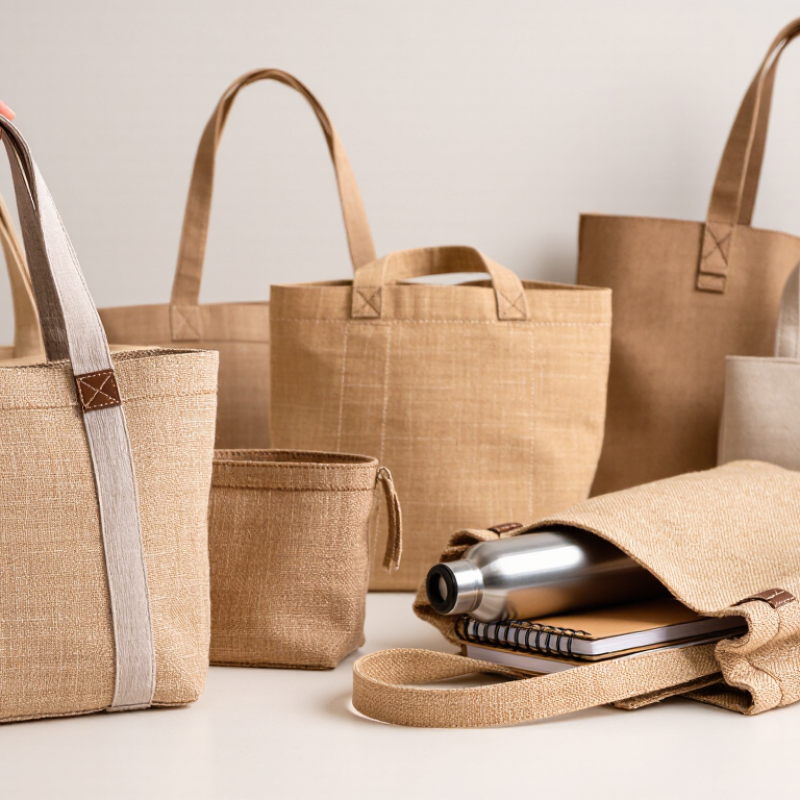
Choosing Promotional Jute Bags in 2026 is not just a matter of picking a natural-looking tote. The right choice depends on how people will use it, what it must carry, and how the finished bag will represent your brand. A market-stall giveaway may need a different size and handle strength than a conference bag holding a notebook and water bottle. Small details matter. Check the bag’s dimensions, fabric weight, stitching, handle attachment, and stated material composition before comparing prices. Jute can feel sturdy, but construction and blends vary. A rustic appearance alone does not guarantee durability.

Request a physical sample when possible. Load it with realistic items, inspect the seams, and check whether the print remains clear across the available artwork area. Ask the supplier for written specifications and confirm what is included in the quoted price, such as printing, packaging, and delivery. These practical checks make comparisons more dependable than judging from a product photo. They also help reveal trade-offs: a heavier bag may feel more substantial, yet cost more to ship. There is no perfect specification for every campaign. Even a careful selection can miss a detail, so keep a simple checklist and record why each option fits its intended use. A thoughtful choice balances appearance, function, budget, and credible product information.
How to Choose Promotional Jute Bags in 2026

Define Campaign Goals and Identify the Intended Audience

Before choosing a jute bag, decide what the campaign must change: brand recall, event attendance, repeat visits, or product sampling. A vague goal leads to vague quantities. For a trade-show campaign, set a measurable target, such as distributing 400 bags and tracking QR-code visits over two weeks. For a neighborhood store, a smaller batch tied to a purchase threshold may be more useful. Keep the measure simple.

Then identify who will carry the bag and where. Commuters may value long handles and room for a lunch container; market shoppers may prefer a wide gusset for produce. Ask a few intended recipients about bag size, weight, and whether they would reuse it. Their answers may contradict the team’s assumptions. That is useful, even if the sample is small.

Consider age, mobility, shopping habits, and the event setting, not just job titles or broad demographic labels. Choose print placement and dimensions around actual routines. If visibility matters, estimate how often people will carry the bag in public. If your audience rarely carries totes, another giveaway may fit better.

Jute has texture and natural variation, so test a printed sample under ordinary indoor and outdoor light before ordering. One detail is easy to miss: a durable bag only helps when people want to keep using it.

Compare Jute Materials, Weights, and Bag Construction

Jute selection starts with the intended load, not the fabric’s rustic look. A fine, tightly woven jute can suit brochures or lightweight gifts, while coarser, heavier cloth is better for groceries and repeated use. Textile Exchange’s Materials Market Report 2024 estimated global fiber production at about 124 million tonnes in 2023. That figure covers all fibers, not jute alone, but it is a useful reminder: “natural” describes origin, not durability.

Compare fabric weight in grams per square metre, then inspect the weave and seams. Higher GSM often feels sturdier, but it does not guarantee a longer-lasting bag. Check a filled sample for loose threads, stretched handles, and sagging corners. Feel the difference. A reinforced base helps distribute weight; securely stitched handles matter when a bag carries books or jars. Handle length also changes comfort: short straps can dig into a shoulder.

Ask suppliers for the fabric weight, fiber composition, and construction details in writing. Test the bag with the load it will actually carry, and repeat the test after several uses. That small step is easy to skip. It can also expose a weak seam before a large order is placed. Jute varies naturally, so color and texture may differ between batches; approve a physical sample rather than relying on a product image.

Choose Branding, Printing, and Customization Options

Treat branding as part of a jute bag’s function, not a decoration added at the end. Choose a logo size that stays readable when the bag is filled and its sides fold. A small mark near the center may suit a compact tote, while a wider design can work on a larger front panel. Keep it simple. Natural jute has a coarse, uneven weave, so fine lines and tiny lettering may print poorly.

Ask the printer which methods suit the bag’s texture and artwork. Screen printing can create clear, solid shapes, but intricate details may lose definition. Request a physical sample or printed proof before approving a full order. Check the ink contrast in daylight, then gently rub the printed area to spot early fading or transfer. Dark ink often stands out against natural jute, though the result can vary between batches.

Customization can include handle length, gusset depth, lining, pockets, and woven labels. Match these choices to how recipients will use the bag: a wider base can hold groceries, while longer handles sit more comfortably over a shoulder. Ask for finished measurements, since stated dimensions may not reflect usable space. I may be overthinking handle color, but it can compete with a bold logo; a sample makes that trade-off easier to judge.

Check Supplier Standards, Sustainability Claims, and Compliance

Choosing promotional jute bags in 2026 starts with checking the supplier, not trusting the word “natural.” Ask for the names of the spinning mill and sewing site, plus batch-specific material and chemical test reports. Compare those documents with the actual bag: fabric weight, stitching, handles, lining, and printed areas. A laminated or heavily coated bag may be harder to reuse or recycle than its jute fabric suggests. Ask again.

FAOSTAT reports roughly 3.8 million tonnes of jute, kenaf, and allied fibres produced worldwide in 2022. That scale makes traceability worth checking, rather than assuming every jute product comes from a responsible source.

Review sustainability claims against recognized standards and their stated scope. A certificate may cover one factory or material, not the finished bag or every production site. Request the certificate number, validity dates, and chain-of-custody evidence; confirm these directly with the issuing organization. The OECD Due Diligence Guidance for Responsible Supply Chains in the Garment and Footwear Sector offers a practical framework for tracing risks and documenting corrective action. For environmental context, UNEP’s 2023 report says plastic pollution could fall by 80% by 2040 if existing solutions are scaled; that projection does not prove a jute bag is automatically better. Check destination-market labeling and restricted-substance requirements, and keep supplier declarations with test records. One detail often gets missed: ask how rejected bags and production scraps are handled. A tidy certificate is useful, but it is not the whole story.

Set the Budget, Order Quantity, and Delivery Timeline

Set a landed-cost budget before comparing jute bag quotes. Include printing, artwork setup, sample fees, freight, duties where applicable, and a small reserve for changes. Small orders cost more. Ask suppliers to quote the same bag size, fabric weight, print area, and packaging method; otherwise, low unit prices can hide important differences. Our first estimate is often wrong because freight and finishing are easy to overlook.

Order quantity should follow confirmed distribution, not an optimistic guess. Count recipients, event staff, and planned replacements, then add a modest reserve for late registrations or damaged bags. The Advertising Specialty Institute’s 2023 Ad Impressions Study estimated about 3,300 impressions per promotional bag. That figure is an industry average, not a promise for every jute bag; actual exposure depends on how often recipients reuse it. A sturdy handle and useful size may matter more than printing a larger logo.

Build the delivery timeline backward from the event or campaign date. Allow time for artwork approval, a physical sample, production, and shipping, and ask the supplier to confirm each stage in writing. Request the latest date for approving the proof and the expected dispatch date. Dates slip. For 2026 campaigns, confirm material availability early, especially for custom colors or larger orders, and keep a few days of buffer for transit delays.

How to Choose Promotional Jute Bags in 2026 - Set the Budget, Order Quantity, and Delivery Timeline
Order quantity Example bag specification Indicative unit price (USD) Estimated product budget Typical production time Planning notes
100–250 Small, unlined jute tote; one-color print $3.00–$6.00 $300–$1,500 2–4 weeks Useful for a small event or trial order. Setup charges and low-quantity pricing can increase the per-bag cost.
500–1,000 Medium unlined tote; one-color print; standard handles $1.80–$4.00 $900–$4,000 3–5 weeks A practical range for conferences and customer giveaways. Confirm print area, bag dimensions, and handle length before approval.
1,000–3,000 Medium tote; one- or two-color print; reinforced handles $1.50–$3.50 $1,500–$10,500 4–6 weeks Higher quantities may reduce the unit price, but the total commitment and storage needs increase.
500–2,000 Large jute tote with cotton lining, gusset, and printed design $3.50–$7.50 $1,750–$15,000 5–8 weeks Lining, pockets, closures, and custom dimensions add material and labor costs. Request a sample for fit and finish.
1,000–3,000 Laminated jute shopping bag; printed panels; reinforced base $2.50–$6.00 $2,500–$18,000 4–7 weeks Lamination can improve shape retention and wipe-clean practicality; check material composition and recycling requirements.
Budget and timeline assumptions: Price and lead-time ranges are indicative planning estimates, not supplier quotations. They assume standard construction and artwork supplied ready for print; samples, tooling or setup, taxes, packaging, freight, customs duties, and delivery to the final address are not included. Allow additional time for sample approval, artwork revisions, and international shipping. Confirm the final specification, minimum order quantity, production schedule, and landed cost with suppliers before placing an order.
Call Now Button