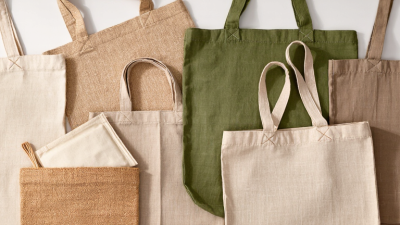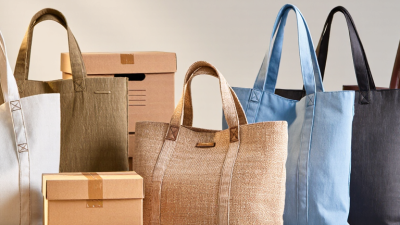
Packaging choices now carry measurable environmental stakes. The OECD’s Global Plastics Outlook reports that the world generated 353 million tonnes of plastic waste in 2019. Packaging made up 40% of that total. Those figures explain why reusable bags attract attention, but they do not prove every tote is a better choice.
UNEP’s 2023 report, Turning off the Tap, models how coordinated changes across production, reuse, and recycling could sharply reduce plastic pollution. A bag is only one small part of that system. Its material, weight, durability, shipping distance, and actual reuse all matter. A thick cotton tote left in a cupboard may deliver little benefit. A lighter bag used repeatedly may perform better, depending on how it is made and transported.
For bulk buyers, those details become practical decisions. Check fiber content, stitching, handle strength, supplier documentation, minimum order quantities, and sample quality before committing. Ask how claims such as “recycled” or “organic” are verified. Compare landed cost, not just unit price. Small print matters.
This guide outlines 10 tips for buying Eco Friendly Tote Bags in bulk, with attention to sourcing, product testing, and realistic sustainability claims. Some questions have no neat answer. That is worth admitting. A responsible purchase is not defined by a green label alone; it depends on evidence, use, and honest trade-offs.
Packaging deserves attention when planning a tote order. The U.S. Environmental Protection Agency reported that containers and packaging made up 28.1% of municipal solid waste generated in 2018. That figure covers many packaging types, not tote bags alone, but it shows why avoiding unnecessary packaging matters. Define the bag’s job before choosing a quantity: daily retail shopping, event handouts, or staff supplies create very different demand.
Tip
Estimate monthly use from real activity. If a shop gives out about 240 bags each month, a three-month order starts near 720 bags. Add a modest buffer only if seasonal demand or delivery delays justify it. A large discount can make excess stock look sensible. It may still leave cartons sitting in storage.
Ask suppliers for the bag’s dimensions, material weight, packing method, and minimum order quantity. These details help compare useful capacity and shipping needs, not just price per unit. The EPA’s 2018 data is a useful waste-management context, not proof that one tote material is automatically greener. Small orders can also mean more frequent shipments, so there is no perfect number. Review sales or distribution records after the first order, then adjust the next quantity. A tidy forecast can be wrong. That is worth checking.
When comparing tote materials in bulk, look beyond the word “recycled.” Recycled polyester accounted for 14.7% of global polyester production in 2022, according to Textile Exchange. That figure describes polyester production, not all fabric production, and it does not tell you how much recycled content a particular bag contains. Ask suppliers for product-specific documentation and the percentage of recycled fiber. Check whether handles, lining, and thread use the same material. Details matter.
Request a sample before approving a large order. Feel the fabric, inspect the seams, and test how the bag holds a few books or groceries. Recycled polyester can be lightweight and quick-drying, but its quality varies with yarn, weave, and construction. A thin sample may sag under weight. Not ideal. Compare it with cotton or recycled cotton, too: each has different care needs, weight, and durability. Ask about fabric weight, printing method, and care instructions, then compare quotes on the same specifications. Bulk pricing can hide trade-offs. I once focused too much on the unit cost; the handles were uncomfortable when carrying a full bag. Test that detail. A clear sample review and written material specifications make purchasing decisions more dependable.
| Tip | Material or purchasing factor | Verified data or standard | What to check before ordering |
|---|---|---|---|
| 1. Compare material options | Recycled polyester, conventional polyester, cotton, and other plant-based fibers | Textile Exchange reported that recycled polyester represented 14.7% of global polyester production in 2022. | Compare the actual fiber composition and the supplier’s evidence for any recycled-content claim. |
| 2. Confirm the percentage and denominator | Recycled-content claims | The 14.7% figure refers to recycled polyester as a share of polyester production, not as a share of all fiber production. | Ask whether the bag is 100% recycled polyester or a blend, and request the percentage by weight. |
| 3. Ask what “recycled” means | Pre-consumer and post-consumer recycled material | Recycled-content claims can refer to different types of input material; the claim should identify what is included. | Request a written breakdown of recycled content and supporting supply-chain documentation. |
| 4. Verify recycled-content documentation | Recycled polyester or other recycled fibers | The Global Recycled Standard (GRS) includes requirements for recycled-content verification and chain of custody. | Check that any certificate is current and covers the relevant material, facility, and product claim. |
| 5. Check organic-cotton claims | Organic cotton and cotton blends | GOTS labeling criteria require at least 95% certified organic fibers for “organic” and at least 70% for “made with organic.” | Confirm the exact label category and certified fiber percentage for the finished product. |
| 6. Review every fiber in a blend | Blended fabrics, linings, handles, and thread | A product’s material claim should describe the actual materials used; a fabric blend is not the same as a single-fiber fabric. | Request a full material specification covering the body, lining, handles, closures, and trims. |
| 7. Specify weight and dimensions | Fabric weight, bag size, and handle length | Fabric weight is commonly stated in grams per square metre (g/m²); dimensions and weight should be confirmed for the specific product. | Set required measurements and request a sample to confirm capacity, comfort, and construction. |
| 8. Assess construction for repeated use | Stitching, seams, handle attachment, and load capacity | Durability depends on the product’s fabric and construction; a material name alone does not establish a bag’s service life. | Ask for the tested load capacity and inspect seams and handle reinforcements on a pre-production sample. |
| 9. Separate chemical-safety claims from environmental claims | Dyes, prints, coatings, and finishes | OEKO-TEX STANDARD 100 tests textile articles for specified harmful substances; it is not, by itself, proof that a product is sustainably made. | Request relevant test documentation for the finished bag and assess environmental claims separately. |
| 10. Check order details before approving production | Bulk quantity, packaging, printing, and delivery | There is no single material or order specification that guarantees a lower overall impact in every use case. | Approve a sample, confirm packaging and print details, and compare quotations using the same specifications. |
Data references: Textile Exchange, Materials Market Report 2023; Global Recycled Standard (GRS); Global Organic Textile Standard (GOTS); OEKO-TEX STANDARD 100.
Organic cotton reportedly made up about 1.4% of cotton supply in 2021/22. Treat that figure as context, not proof that any particular tote is sustainable. A low supply share can make sourcing details harder to verify, especially when a quote simply says “eco cotton.” Ask what percentage of each bag is organic cotton, which materials make up the rest, and whether documentation covers the finished product. Small details matter.
Tip: Request current certificates and confirm their scope. A document may cover the raw fiber, but not the sewing, lining, or printed design. Check the product description against the paperwork, and ask the supplier to explain any mismatch. If the answer stays vague, pause before ordering hundreds of bags.
Tip: Test one sample before approving bulk production. Feel the fabric, inspect the seams, and rub a damp white cloth gently over the print. Compare the sample with the stated fiber content and weight. These checks do not prove a full supply chain, and I wouldn’t pretend they do. Still, they can reveal weak stitching, unexpected blends, or unclear claims before those issues arrive in a crowded delivery box.
Buying eco-friendly tote bags in bulk starts with strength, not price. Check stitching, handle attachment, and fabric recovery after loading. A sample filled with groceries can reveal loose seams or uncomfortable straps. Ask for test details, but verify them with your own use. Small details matter. A heavy-looking bag is not automatically durable.
Tip: Load one sample with the weight customers are likely to carry. Lift it repeatedly, then inspect the seams and handles. Estimate expected reuse honestly; a bag used twice has a different impact from one carried weekly for years. These estimates are imperfect. Habits vary, and bags get lost.
Compare life-cycle impact alongside unit cost. Consider material production, shipping weight, washing needs, and likely disposal options in your area. Request clear information about recycled content and care instructions, rather than relying on broad “eco-friendly” wording. A lower-impact material may still perform poorly if the bag wears out quickly. Conversely, a sturdy bag is not automatically a better choice if people rarely reuse it. Bulk orders also deserve a realistic trial quantity: leftover stock has a footprint too.
Reuse matters: in a UK Environment Agency life-cycle assessment, paper bags needed 3 uses, LDPE bags 4, non-woven polypropylene bags 11, and cotton bags 131 to have a lower global-warming impact than a conventional HDPE carrier bag used once. Actual results depend on bag specifications, production, and disposal, so treat these figures as study-specific—not universal break-even points.
Source: UK Environment Agency, Life cycle assessment of supermarket carrier bags (2011).
When buying eco-friendly tote bags in bulk, ask for certification documents before comparing prices. Check the certificate number, issuing body, expiry date, and the materials it covers. A certificate may apply to the fabric, not the finished bag. Verify that the quoted product matches the certified material and that the supplier can explain any exclusions. Ask for proof.
Print method affects appearance, durability, and cost. Request details about ink type, print placement, and color limits, then compare them with your artwork. A sample printed on the actual bag is more useful than a digital mock-up. Examine seams, handle length, and print edges in good light. If possible, wash or rub the sample as the intended user might. One test is not a guarantee, but it can reveal obvious problems.
Confirm the minimum order quantity for each size, color, and print design; suppliers may count variations separately. Get the unit price and setup charges in writing. Clarify production time, proof approval deadlines, packaging, shipping method, and who pays for unexpected freight costs. Set a delivery date with some buffer before your event. I once focused too much on the quoted arrival date and overlooked proofing time. That was avoidable. Ask how defects or shortages are handled, and keep the answer with your order records.