Why Are Water Bottle Labels Important for Businesses?

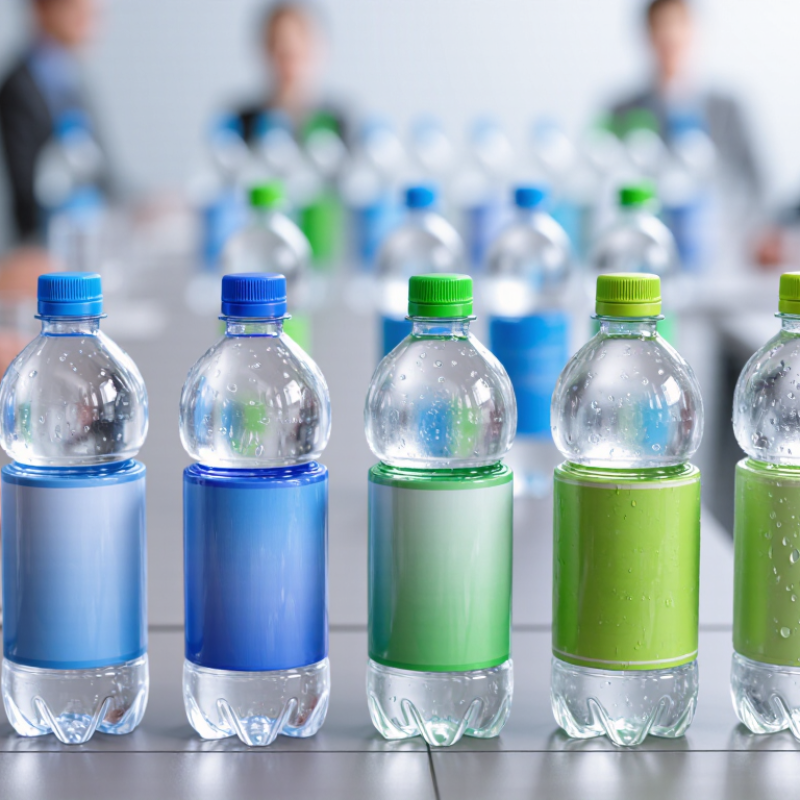
At a morning meeting, a chilled bottle can feel like a small courtesy. Its label, though, speaks before anyone takes a sip. For a business, a water bottle label can carry a logo, identify the product, and help customers recognize the brand later. It also gives staff a practical way to distinguish bottles during events, deliveries, or busy service shifts. Small details matter: a label that stays readable in a cooler is more useful than one that wrinkles or smears after a few minutes. First impressions count.

A thoughtful label supports more than appearance. Clear product information and accurate brand details can build confidence, while consistent colors and typography help connect packaging with other company materials. The exact information needed may vary by product and market, so businesses should verify claims and label requirements with qualified sources before printing. That step is easy to miss. It is also worth considering the bottle itself: labels should suit its shape, storage conditions, and intended use. A beautiful design is not much help if key text sits under a thumb or disappears behind condensation. No label can replace safe product handling or dependable service, either. Businesses sometimes expect packaging to do too much. Its role is simpler: make the bottle recognizable, communicate clearly, and reflect the care behind the product. When those basics are right, even a modest bottle can leave a more considered impression.
Why Are Water Bottle Labels Important for Businesses?

How Water Bottle Labels Serve a 15.4-Billion-Gallon U.S. Market (IBWA, 2023)

Why Are Water Bottle Labels Important for Businesses?

The IBWA’s 2023 figures put U.S. bottled water consumption at about 15.4 billion gallons. That scale creates many moments when a label must communicate quickly: in a cooler, on a store shelf, or in a delivery crate. Clear product identification and readable details help shoppers make choices and staff handle inventory. A label is small, but it carries useful information.

Labels also help businesses present a consistent identity across different bottle sizes and sales settings. Material matters. A label that wrinkles when chilled or peels away in condensation can look careless and obscure key details. Businesses should check legibility, adhesion, and print quality on the actual bottle, including after refrigeration. A polished design alone is not enough. It may still fail in a wet cooler.

Tips: Test a sample bottle with cold water and damp hands. Check whether required information stays readable, and confirm details with qualified regulatory guidance. Ask a few people to find the product name and key facts quickly. Their hesitation can reveal a design problem. Small tests help, though they cannot predict every store condition.
Which Label Details Must Follow FDA Rules Under 21 CFR Part 101?

For a bottled-water label, FDA rules under 21 CFR Part 101 cover several basic details. The principal display panel needs a statement of identity, such as “bottled water,” and a net-quantity declaration. The quantity must appear clearly, typically near the bottom of the front panel, in both U.S. customary and metric units. Small type or a crowded design can make compliant information hard to notice.

The label must also identify the responsible business by name and place of business. If the product contains added ingredients, such as flavor or minerals, an ingredient statement may be required. Plain water and certain products may qualify for specific labeling exemptions, so requirements depend on the formula and product category. Nutrition Facts may also be exempt in some cases, but a nutrient or health claim can change what information is needed. Check the exact product, not just the bottle template.

Claims need care. Words such as “spring” or “mineral” have defined meanings for bottled water, and misleading wording can create compliance problems. FDA requirements also address label prominence and readability; a tiny line on a curved bottle is easy to miss. It’s a detail worth revisiting. Businesses should review the finished label against current regulations and seek qualified regulatory advice when the product or claim is unusual.

Why Are Water Bottle Labels Important for Businesses? - Which Label Details Must Follow FDA Rules Under 21 CFR Part 101?

Label detail What the rule generally requires Relevant FDA regulation Why it matters to a business
Statement of identity The principal display panel must identify the food by its common or usual name, or an appropriate descriptive name. The wording must not be false or misleading. 21 CFR 101.3 Helps customers understand what the product is and reduces the risk of a misleading product description.
Net quantity of contents Declare the net amount of the product in the package using the required units and format. The statement generally belongs in the bottom 30 percent of the principal display panel and must meet minimum type-size rules based on panel area. 21 CFR 101.105 Allows shoppers to compare package quantities and helps ensure the declared amount is clear and properly placed.
Name and place of business Give the name and place of business of the manufacturer, packer, or distributor. If the named business is not the manufacturer, use qualifying wording such as “Distributed by” where required. 21 CFR 101.5 Provides a responsible business contact for consumers, retailers, and regulators.
Ingredient list When a product contains two or more ingredients, list them by their common or usual names in descending order by weight. A single-ingredient food generally does not need an ingredient list. 21 CFR 101.4 Communicates what has been added to the water and supports accurate product information.
Nutrition Facts Nutrition labeling is required unless an applicable exemption applies. A food with insignificant amounts of the nutrients and food components covered by the rule may qualify for an exemption; nutrition or health claims can affect exemption eligibility. 21 CFR 101.9, including 101.9(j)(4) Businesses should confirm the product’s ingredients, nutrient content, and claims before deciding whether a Nutrition Facts label is required.
Major food allergen declaration If a product contains a major food allergen as an ingredient, applicable federal law requires it to be identified in the prescribed manner. This is relevant to added ingredients, not a claim that water itself is an allergen. 21 CFR 101.4 and 21 U.S.C. 343(w) Accurate ingredient and allergen information helps protect consumers and supports compliant packaging when ingredients are added.
Label language Required label information must appear in English, subject to the regulation’s provisions for foods distributed solely in certain U.S. territories. If another language appears, required information generally must also appear in that language. 21 CFR 101.15(c) Helps ensure required information remains accessible when a label uses multiple languages.
Truthful product descriptions and claims Label statements must not be false or misleading. Claims about nutrients or health effects may have specific definitions, conditions, and labeling consequences. 21 CFR 101.18; 21 CFR 101.13 and 101.14 Reviewing claims before printing helps avoid inaccurate marketing and labeling compliance problems.
Water-specific identity and source statements Some terms and source descriptions for bottled water are governed by FDA’s bottled-water standard of identity, which is outside Part 101. Use terms such as “spring water” only when the applicable definition and conditions are met. 21 CFR 165.110 Correct water-type and source wording helps prevent a product from being described in a way that does not match its regulatory definition.
Overall label review Part 101 requirements depend on the product, its ingredients, package, and claims. Other federal or state requirements may also apply; this table is a general reference, not a substitute for reviewing the specific label. 21 CFR Part 101; other rules may apply A documented review before production can help reduce relabeling costs, shipment delays, and avoidable compliance risks.

How GS1’s 12-Digit UPC-A Codes Support Retail Identification

A water bottle label does more than display flavor and volume. In retail, its UPC-A barcode gives scanners a consistent way to identify the exact item at checkout and during inventory counts. GS1’s UPC-A format represents a 12-digit GTIN, including a final check digit that helps detect scanning or entry errors. The number itself does not describe every product detail; it links the bottle to product information in a retailer’s system.

The stakes are practical. IHL Group’s 2023 Inventory Distortion report estimated that global retail lost $1.77 trillion to out-of-stocks and overstocks. Accurate item identification cannot fix every inventory problem, but it helps staff record the right bottle against the right product listing. On a busy shift, that matters. A worker scanning a chilled bottle should not have to guess whether two similar sizes share a code.

Label design still needs attention. A barcode placed across a curved seam, covered by condensation, or printed with weak contrast may scan poorly. Small detail. Businesses should test labels on actual bottles and verify that the barcode remains readable after chilling and handling. GS1’s General Specifications define the technical requirements for barcode construction, while retailers may set additional packaging rules. A UPC-A code is useful, not magic; accurate product records and readable printing still matter.

Why Label Materials Matter in EPA’s 28.1% Packaging-Waste Stream (2018)

EPA’s Advancing Sustainable Materials Management: 2018 Fact Sheet reports that containers and packaging made up 28.1% of U.S. municipal solid waste generated that year, or 82.2 million tons.

A bottle label is a small part of that stream. Small part. Big consequence.
Its face stock, ink, adhesive, and sleeve can affect how a package is identified and processed. The Association of Plastic Recyclers’ Design Guide for Plastics Recyclability treats these components as relevant design factors, not mere decoration.

For a PET bottle, a dense full-body sleeve may obscure the bottle from sorting equipment, while an incompatible label or adhesive can complicate recycling processes. The outcome depends on local equipment and material combinations, so a label that works in one system may not work equally well elsewhere.

That detail is easy to miss. Businesses can ask suppliers for documented material specifications and test labels on filled bottles, including after chilling or condensation. A label that peels in a cooler is a real operational problem, even if it looks excellent on a sample. It is also tempting to treat recyclability as a simple yes-or-no claim; in practice, design choices and collection systems both matter.

How 46.4 Gallons per Capita Shapes U.S. Bottled-Water Branding (IBWA, 2023)

IBWA reported U.S. bottled-water consumption of 46.4 gallons per person in 2023. That figure signals a familiar product with a crowded shelf and many buying occasions. A label may have only a few seconds to help someone identify the water, read the volume, and distinguish one package from another. Clear type and strong contrast matter, especially under bright store lights or on a cold, wet bottle.

Small detail, big effect. Businesses can use labels to present verified product information, explain packaging features, and make their visual identity easy to recognize. A consistent color system across bottle sizes can help shoppers find the same product again. So can readable text that stays clear around curves, seams, and condensation. The 46.4-gallon figure is useful context, not proof that every shopper wants the same message. Some labels still try to say too much. A long claim in tiny print may look impressive on a design screen but become unreadable in someone’s hand. It is worth testing labels on actual bottles, at realistic distances, before production. That step is easy to overlook, and sometimes the simplest layout performs better.

Call Now Button