
Why Choose Tempura Batter for Your Business?
For restaurants, caterers, and food manufacturers, Tempura Batter can help turn everyday ingredients into crisp, appealing menu items. Its light coating lets the flavor and texture of vegetables, seafood, or other suitable ingredients remain noticeable. That balance matters. Customers want a satisfying crunch, but they do not want the batter to overwhelm the food.
A dependable batter can also support more consistent preparation across busy shifts. Staff can follow a repeatable mixing and frying process, helping reduce guesswork during service. Still, results depend on practical details: ingredient moisture, oil temperature, portion size, and the time between frying and serving. Small tests help. A coating that works well in one kitchen may behave differently with another fryer or menu item.
For business buyers, choosing Tempura Batter is not only about texture. Consider how easily it mixes, whether its instructions suit your workflow, and how reliably it performs at your expected volume. Review supplier specifications, test the product with your own ingredients, and record the results before making a larger commitment. Not every menu needs the same coating. That is worth remembering. A careful trial can reveal where the batter saves time, where staff need more training, and whether the finished product holds its quality during service. The best choice is the one that fits your operation, not simply the one with the boldest claims.
What Tempura Batter Is and How It Works
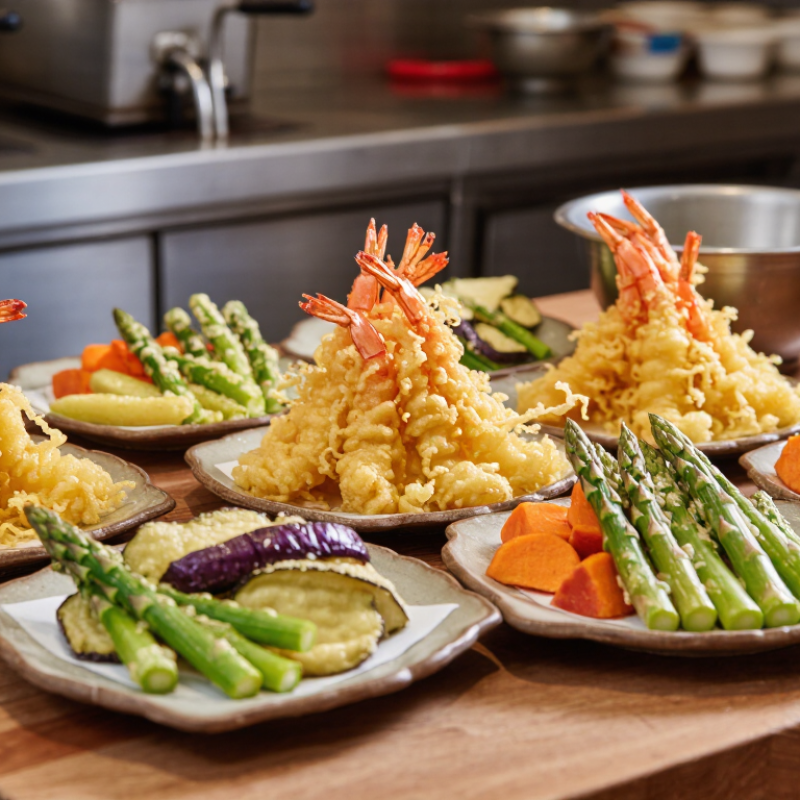
Tempura batter is a light coating made by mixing flour, often with starch, and cold water. Some kitchens add egg, while others keep the mixture simple. Its texture should be thin enough to cling to vegetables, seafood, or other ingredients without hiding their shape. Think of a broccoli floret with a delicate, uneven layer rather than a thick shell.
Keep it cold. That matters.
When batter meets hot oil, its water turns to steam and escapes. The coating sets around the food, creating a crisp surface while the inside cooks. A loose, cold mixture can help produce a lighter texture, though results also depend on oil temperature, portion size, and how wet the ingredients are. If the oil is too cool, the coating may absorb more oil; if it is too hot, it can brown before the food is ready. A thermometer and a small test batch offer useful checks.
Mix gently. A few small lumps are not necessarily a problem; overmixing can encourage a tougher coating. For a business kitchen, consistency comes from measuring ingredients, keeping the batter chilled, and using it soon after mixing. It is not foolproof. Different flours and changing kitchen conditions can affect thickness, so staff may need to adjust the water slightly. Watch how the batter falls from a spoon: it should coat, then drip away in a thin ribbon.
Why Choose Tempura Batter for Your Business? — What Tempura Batter Is and How It Works
| Business Dimension | What Tempura Batter Is | How It Works | Practical Business Consideration |
|---|---|---|---|
| Basic composition | A light coating typically made from wheat flour and cold water; some recipes also include egg or starch. | Mixing flour with liquid creates a pourable batter that adheres to the surface of prepared ingredients. | Ingredient choices affect flavor, texture, allergen information, and suitability for different menu needs. |
| Gluten development | Unlike many breading systems, tempura batter is generally mixed briefly rather than kneaded. | Limited mixing helps reduce gluten development, supporting a lighter, less chewy coating. | Consistent mixing procedures help teams avoid an overly dense or tough coating. |
| Cold batter | Many tempura methods use chilled water and keep the batter cold before frying. | Cold batter can slow gluten formation during mixing; when it meets hot oil, moisture rapidly turns to steam. | Prepare manageable batches and keep them cold according to food-safety procedures; do not rely on cold batter as a food-safety control. |
| Frying and crust formation | The batter forms a thin layer around vegetables, seafood, or other prepared ingredients. | Hot oil cooks the coating, while escaping moisture contributes to a crisp exterior. The result depends on batter, ingredient moisture, and frying conditions. | Use a consistent frying process and avoid overcrowding, which can lower oil temperature and affect cooking quality. |
| Menu applications | Tempura batter is commonly used for items such as vegetables and seafood. | A light coating can add a crisp contrast without covering the ingredient as heavily as some thicker coatings. | Choose ingredients with suitable size and moisture levels, and verify that each item is cooked safely and thoroughly. |
| Service and quality | Freshly fried tempura is valued for its crisp texture. | Steam escaping from hot food can soften the coating over time, especially when items are covered or stacked. | Fry close to serving time where possible, allow excess oil to drain, and use holding practices that protect food quality and safety. |
| Allergens and dietary needs | Standard recipes often contain wheat; recipes that include egg contain an additional common allergen. | Ingredients and shared frying oil or equipment can create allergen and cross-contact considerations. | Check supplier specifications, maintain accurate allergen information, and follow local labeling and cross-contact requirements. |
Note: Tempura recipes and results vary by ingredients, mixing method, portion size, and frying conditions. Follow applicable food-safety requirements and product instructions.