Why Choose Eye Massagers for Global Sourcing?
Why choose Eye Massagers for global sourcing? The answer begins with changing consumer routines, not simple product excitement. Many users seek portable relief after long hours with screens, travel, or office work. A compact eye massager can fit beside a laptop, inside a suitcase, or on a bedside table. This practical setting makes the category attractive to retailers and distributors.
Global sourcing also creates room for product differentiation. Buyers can compare heating functions, gentle air compression, vibration settings, battery capacity, foldable designs, and washable contact surfaces. Yet specifications alone do not prove quality. Experienced importers should inspect samples, review material information, and test controls under repeated use. Small details matter, including button placement, charging stability, noise levels, and pressure around the temples.
Reliable sourcing requires more than a competitive quotation. Suppliers should provide clear technical files, consistent packaging details, traceable production information, and evidence of applicable market compliance. Independent inspections can reveal loose hinges, uneven heating, weak straps, or unclear user instructions. These issues may seem minor. They can damage trust quickly.
Eye Massagers are not a universal solution. They should not be marketed as medical treatment without appropriate evidence and authorization. Responsible buyers also need transparent claims, realistic warranties, and responsive after-sales support. I have found that attractive samples sometimes hide inconsistent production. That possibility deserves attention. A careful sourcing process balances design appeal, user comfort, regulatory responsibility, and long-term supplier reliability. Done well, it can turn a trend-sensitive product into a dependable addition to global retail portfolios.
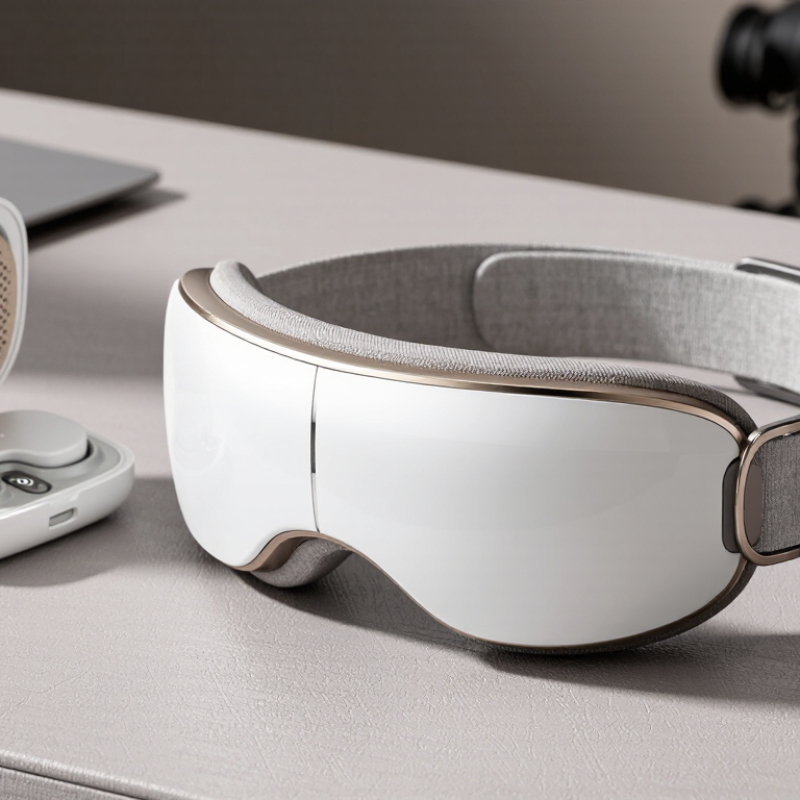
What Are Eye Massagers and How Do They Work?
Eye massagers are wearable devices shaped to rest around the eye area. They do not massage the eyeballs. Instead, they apply gentle pressure to the surrounding temples, brow line, and upper cheeks. Most models combine rhythmic air compression with vibration or mild warmth. Small air chambers inflate and release in repeated cycles. This creates a soft, pulsing sensation.
The experience is often calming, but it is not universally relaxing. Some users prefer warmth, while others find pressure uncomfortable. Settings should remain adjustable. A responsible design avoids direct force on the eyes and provides clear usage limits. Eye massagers should not be presented as treatments for medical conditions. Users with eye disorders, recent surgery, or sensitivity to pressure should seek professional advice before use.
For global sourcing, buyers should examine more than appearance and packaging. Check skin-contact materials, battery quality, charging protection, noise levels, and cleaning instructions. Ask suppliers for test reports covering electrical safety and the requirements of each target market. Product warnings need accurate translation. Small details matter. A poorly fitted mask may press unevenly or trap heat. I would also question exaggerated relaxation claims, because comfort depends on facial shape, pressure settings, and personal tolerance. Sample testing with different users can reveal problems that specifications miss.
Which Eye Massager Features Matter in Global Sourcing?
For global sourcing, an eye massager should be judged by measurable features, not attractive packaging. Heat control matters because gentle warmth can feel soothing, while excessive heat creates avoidable safety concerns. Look for adjustable temperature settings, timed shutoff, and clear user instructions. Consistency matters. Pressure should remain mild and evenly distributed around the orbital area. Soft, skin-friendly contact materials help reduce friction during repeated use. A flexible frame is useful when face shapes differ across markets. However, “universal fit” is often an optimistic claim. Samples should be tested on different users, not one comfortable volunteer.
Suppliers should also disclose battery type, charging method, operating time, and expected recharge cycles. These details affect shipping plans, after-sales support, and customer trust. Check electrical safety documentation and market-specific compliance before placing a large order. Do not rely on a certificate image alone. Verify its issuer, scope, validity, and matching model number. Noise level deserves attention too. A quiet motor is more suitable for offices, travel, and shared bedrooms.
From practical sourcing experience, simple controls usually reduce training and return problems. Physical buttons may be easier for older users than small touch controls. Packaging should protect the device without adding unnecessary bulk. One weakness remains: comfort can vary after ten minutes, even when first impressions are positive. Longer wear tests are essential. Feature lists look impressive, but repeatable performance matters more.
How Do Eye Massagers Meet Different Market Needs?
Why Choose Eye Massagers for Global Sourcing?
How Do Eye Massagers Meet Different Market Needs?
Eye massagers address a growing comfort problem caused by prolonged screen use. The Vision Council reported in 2023 that 104 million American adults experienced digital eye strain. This demand is not identical across regions. Office workers may prefer gentle compression and quiet operation. Travelers often need compact designs, USB-C charging, and protective cases. Older users may value larger controls and clearer instructions.
Global sourcing works best when products reflect local habits, not assumptions. Adjustable heat settings can support users in colder climates, while breathable materials suit warmer markets. Some consumers want short five-minute sessions. Others prefer longer routines before sleep. A 2024 industry analysis from Grand View Research identified wellness technology as a continuing growth area, but market forecasts are not guarantees. Product claims still need careful testing and responsible wording.
Tips: Ask suppliers for temperature tests, pressure measurements, battery reports, and material certifications. Check whether instructions explain that eye massagers support relaxation, rather than treat myopia or medical conditions. Include low-noise samples for practical evaluation. Small details matter. A poorly fitted mask can reduce repeat use. One overlooked issue is cultural comfort with vibration and music. Local testers can reveal this earlier than spreadsheets. That feedback may feel inconvenient, but it improves sourcing decisions.
What Should Buyers Evaluate in Suppliers and Products?
Global sourcing of eye massagers can open access to growing wellness demand, but supplier evaluation needs more than attractive packaging. The Global Wellness Institute reported that the global wellness economy reached $5.6 trillion in 2022 and may reach $8.5 trillion by 2027. This supports category interest, not automatic product quality. Buyers should verify production capacity, quality records, export experience, and corrective-action procedures. A polished sample can mislead.
Safety evidence matters. Ask for electrical, battery, material, and biocompatibility test reports from competent laboratories. For household products, relevant requirements may include IEC 60335-1, transport testing such as UN 38.3, and applicable chemical restrictions. Medical claims require much stricter review. ISO 9001 certification helps assess process control, while ISO 13485 may be relevant when the product is regulated as a medical device. Requirements differ by destination.
Test the product on real users, not only on a factory desk. Check heat consistency, air-pressure comfort, massage timing, noise beside a sleeping partner, charging stability, and fit across different face shapes. The World Health Organization estimates that at least 2.2 billion people have near or distance vision impairment, yet an eye massager should never be presented as a treatment without evidence. Request independent performance data, warranty terms, spare-part plans, and complaint statistics. Also inspect factory traceability and packaging durability. I would not trust verbal promises alone. Even experienced buyers can overlook long-term battery decline or uncomfortable pressure after repeated use. Reliability is learned through records, samples, and honest follow-up.
How Can Businesses Manage Quality, Compliance, and Costs?
Why Choose Eye Massagers for Global Sourcing?
Global sourcing can reduce production costs, but quality control must lead the decision. Businesses should define pressure levels, heat settings, battery capacity, noise limits, and skin-contact materials before supplier discussions. Ask for production samples from several factories. Test them repeatedly, not just once. A device may feel comfortable for ten minutes but create discomfort after longer use. Independent laboratory testing can verify electrical safety, electromagnetic compatibility, battery performance, and material safety. Compliance documents should match the exact model and production site. Sometimes, paperwork looks complete but lacks traceable details.
Costs involve more than the factory quotation. Calculate tooling, packaging, inspections, shipping, import duties, warranty claims, and possible returns. A lower unit price may hide weak batteries, inconsistent motors, or poor packaging. A pilot order can reveal these problems before large-scale purchasing. Use written quality standards and acceptance criteria. Supplier audits also help, although one visit cannot prove consistent production. This is where sourcing decisions require judgment, not assumptions.
Tips: Keep a sample log. Record every defect. Compare suppliers fairly. Request batch traceability. Recheck documents annually. Leave room for improvement; even experienced buyers can underestimate after-sales costs.