
A Tower Clamp is a mechanical fitting used to connect, secure, or position components on a tower structure. It may hold cables, brackets, pipes, antennas, or access equipment against steel members. Its basic purpose is simple: create a firm connection without damaging the tower. However, its performance depends on correct selection and installation.
Most tower clamps use U-bolts, saddle plates, bolts, and threaded nuts. When the fasteners are tightened, the clamp presses around or against the tower member. Friction and mechanical contact help resist movement, vibration, and moderate operational loads. In practice, an installer may place a clamp around a round tube, align the attached bracket, and tighten each nut evenly. Uneven tightening can twist the fitting or reduce contact strength. Small details matter.
Material choice matters too. Galvanized steel can provide useful corrosion resistance outdoors, while stainless steel may suit specific environments. Compatibility should be checked carefully. Mixed metals can create corrosion concerns. The tower’s shape, diameter, surface condition, load direction, and expected vibration all influence the correct clamp design. A clamp that fits visually may still be unsuitable. That assumption can fail.
Reliable work follows the manufacturer’s instructions and the tower engineer’s requirements. Inspectors should check thread condition, bolt seating, corrosion, deformation, and possible loosening. Torque values should come from approved technical documentation, not guesswork. Weather exposure can change the connection over time. A practical inspection may reveal rust beneath a washer or a bracket that has shifted only a few millimeters. Those signs deserve attention. Tower Clamp systems are dependable when treated as engineered connections, not quick accessories.
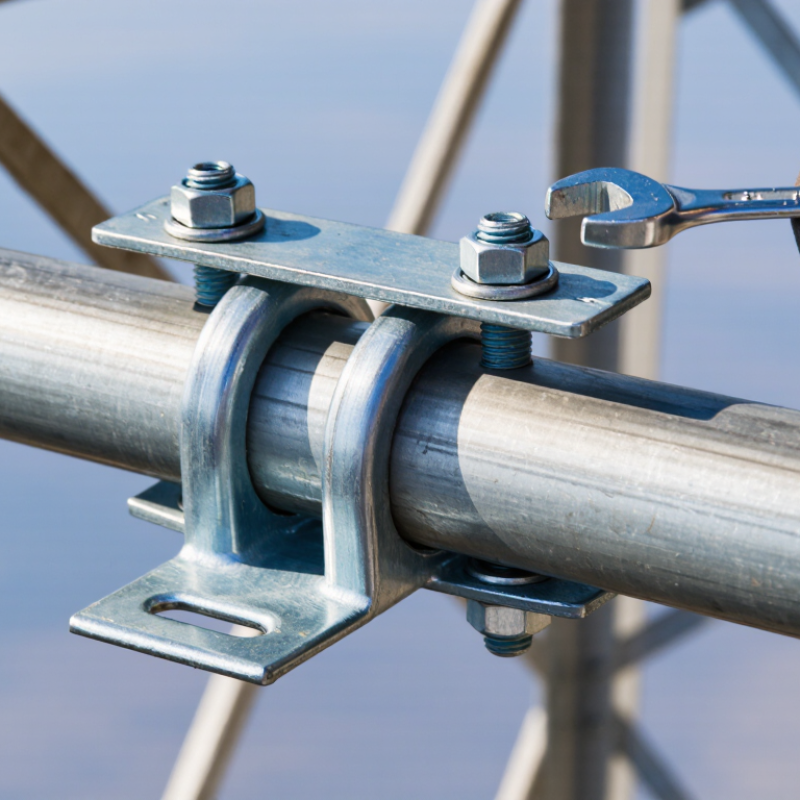
A tower clamp is a mechanical fitting used to secure cables, pipes, brackets, or equipment to a tower structure. It usually contains a shaped body, bolts, nuts, and sometimes a protective lining. The clamp grips a tower member without requiring drilling or welding. Its purpose is simple: maintain a firm connection while transferring loads safely into the structure.
In field work, technicians select a clamp according to the tower’s profile, material, load, and environmental exposure. A properly fitted clamp prevents movement caused by wind, vibration, and temperature changes. It also keeps attached equipment aligned during routine operation. Galvanized or corrosion-resistant components are common in outdoor installations. Small details matter, especially thread condition and contact pressure.
Installation requires more than tightening every bolt as hard as possible. Excessive force can deform the tower member or damage the clamp. Insufficient force may allow gradual slipping. Not always obvious. Experienced workers check the manufacturer’s torque guidance, inspect mating surfaces, and confirm that the load remains within the rated capacity. They also examine the connection after severe weather or maintenance activity. A visual inspection alone can miss hidden corrosion or uneven loading. This is where my own early assumption needed correction: a clamp that looks secure may still be poorly positioned. Reliable practice combines measurement, inspection, and documented checks. Schedules may vary, but neglecting them is rarely wise.

A tower clamp is a mechanical fitting used to connect, support, or position components on a tower structure. It works by tightening bolts around a structural member, creating normal force at the contact surface. The resulting friction helps resist movement and transfer load.
The chart shows an example friction-resistance calculation using a constant total clamping force of 20 kN. Friction resistance is estimated as F = μN, where μ is the friction coefficient and N is the clamping force. Actual capacity depends on clamp design, material, surface condition, bolt torque, alignment, and applicable engineering standards.
A tower clamp joins cables, braces, or structural members without drilling the tower steel. Its main parts include a clamp body, saddle, bolts, nuts, and washers. The body transfers pressure around the member. The saddle spreads the load across a wider contact area. High-strength steel is common because it resists tension, vibration, and repeated loading. Hot-dip galvanized coatings improve corrosion resistance in outdoor environments.
Material choice matters. The World Steel Association reported about 1.89 billion tonnes of crude steel production in 2023. That scale supports steel’s availability, but not every steel grade suits tower work. Stainless steel helps in coastal areas, while aluminum reduces weight but requires careful contact design. Galvanic corrosion can occur when dissimilar metals touch. EN 1993-1-8 and ASCE 10 provide useful principles for connection design, though project requirements still control. A clamp may look simple. Its failure risks are not.
Tips: Check the clamp body, bolt grade, washer fit, and coating damage before installation. Use a calibrated torque tool and follow the engineer’s specified value. Do not guess torque from bolt size alone. Inspect for slipping marks, rust, ovalized holes, and loose nuts after severe wind. Field experience shows that poor alignment causes problems, even when the hardware appears strong. One detail is easy to miss: paint or dirt between contact surfaces can reduce friction. That assumption deserves review.
A tower clamp is a metal fitting that secures equipment, cables, or support arms to a tower leg. Its job is simple: hold firmly without damaging the tower surface. The correct clamp must match the tower’s shape, diameter, material, and expected load. A poor fit can shift under wind or vibration.
How a tower clamp works step by step begins with inspection. A technician checks the tower member for cracks, rust, loose bolts, or uneven surfaces. The clamp is then placed around the tower section, with its contact plates sitting evenly. Bolts pass through the clamp body, and washers and nuts are fitted by hand. This keeps the assembly aligned before tightening. The technician tightens each nut gradually, alternating sides. A calibrated torque wrench should confirm the required torque. Over-tightening may deform the tower, while under-tightening can allow movement. The mounted item is checked for level, clearance, and unwanted rotation. A gentle manual check is useful, but it cannot replace a torque measurement.
Tips: Clean dirt from contact areas, but do not remove protective coatings unnecessarily. Recheck bolt tension after initial loading and during scheduled inspections. I have found that small alignment errors become obvious when cables pull sideways. Weather can change the result, too. Document the clamp size, torque reading, inspection date, and any concern that still needs review.
| Category | Item or Step | How It Works | Key Technical Detail | Result or Check |
|---|---|---|---|---|
| Definition | Tower Clamp | A mechanical fastening device used to attach equipment, cables, brackets, or structural members to a tower leg or tower brace. | The clamp transfers holding forces through friction, bearing, and the connected hardware. | A secure attachment without drilling, welding, or permanently modifying the tower member. |
| Main Parts | Clamp Body or Saddle | Wraps around or bears against the tower leg, tube, angle, or brace. | The contact profile should match the tower member geometry as closely as possible. | Even contact reduces local stress and helps prevent slipping. |
| Main Parts | U-Bolts, Studs, or Bolts | Pass through the clamp body and draw the clamp tightly against the tower member. | Fastener size, grade, spacing, and tightening torque must follow the applicable engineering specification. | The joint develops the required clamping force without overstressing the hardware. |
| Main Parts | Nuts and Washers | Washers distribute the nut load, while nuts provide the threaded tightening connection. | Locking features may include prevailing-torque nuts, lock washers, or specified thread-locking methods. | The fastener connection remains resistant to loosening caused by vibration and wind-induced movement. |
| Preparation | Identify the Tower Member | The installer confirms whether the attachment point is a round tube, angle section, channel, or another approved member. | Member dimensions and section type must match the clamp’s permitted range. | The selected clamp fits correctly and does not bear on an unsuitable edge or surface. |
| Step 1 | Inspect the Attachment Area | The tower member and clamp surfaces are checked for corrosion, cracks, deformation, dirt, and damaged coatings. | A clamp must not be installed over a severely weakened or distorted member. | The contact surfaces are clean, sound, and suitable for fastening. |
| Step 2 | Position the Clamp | The clamp body is placed around or against the tower member at the approved location. | The clamp should sit squarely, with full intended contact and adequate clearance for the fasteners. | The load path is aligned with the tower member and attached equipment. |
| Step 3 | Install the Fasteners | U-bolts, studs, or bolts are inserted through the clamp and fitted with the specified washers and nuts. | Threads should engage correctly, and damaged or mismatched hardware should not be used. | All fasteners are hand-tight and correctly oriented before final tightening. |
| Step 4 | Tighten Evenly | Nuts are tightened progressively and alternately so the clamp remains centered and balanced. | Final torque must come from the approved design, installation, or structural specification—not a generic value. | The clamp develops the required preload without bending the body or crushing the tower member. |
| Step 5 | Attach the Supported Item | A bracket, cable tray, antenna support, safety component, or other approved item is connected to the clamp. | The attachment must be compatible with the clamp’s rated direction and allowable loads. | The supported item is aligned and does not impose unintended bending or prying forces. |
| Step 6 | Verify the Installation | The installer checks seating, fastener engagement, torque marks, clearances, and signs of movement. | Inspection should follow the applicable tower, workplace-safety, and structural requirements. | The completed connection is documented and released for service. |
| Working Principle | Clamping Force | Fastener tension presses the clamp against the tower member and creates normal contact force. | Friction resists sliding, while the clamp body and tower member carry bearing and localized forces. | The attached equipment stays in position under its designed service loads. |
| Maintenance | Routine Inspection | The clamp is periodically checked for corrosion, loose nuts, deformation, coating damage, and evidence of slipping. | Inspection frequency depends on site exposure, tower use, loading, and applicable safety procedures. | Early defects can be corrected before they reduce connection reliability. |
Important: Actual clamp capacity, fastener grade, allowable tower-member dimensions, and installation torque must be confirmed from the project’s structural calculations and approved installation instructions.
A tower clamp is a mechanical fitting that secures equipment to a tower member. It transfers the equipment’s load into the tower structure. Most designs use bolts, plates, or shaped jaws to create controlled pressure. The clamp should hold firmly without crushing the steel tube or angle. Small details matter.
Common tower clamps include:
U-bolt clamps wrap around round pipes and are widely used for cable supports and small antenna brackets. Angle clamps fit lattice tower legs or cross-members with flat contact plates. Beam clamps attach accessories to structural sections without drilling, which can protect the tower’s coating. Swivel clamps allow adjustable positioning for braces, pipes, or safety components. That flexibility can help during field installation.
Tower clamps appear in communication towers, lighting structures, utility towers, and industrial platforms. Technicians use them for antennas, cable trays, waveguides, cameras, grounding conductors, and access equipment. On a windy site, vibration can loosen a poorly tightened connection. Installation teams should check bolt torque, contact surfaces, corrosion, and clearance around cables. A clamp can look secure and still be unsuitable. The wrong diameter is a common mistake. Load calculations also need realistic wind exposure, equipment weight, and maintenance access. I would not rely on appearance alone. Periodic inspections remain important, especially after severe weather or structural modification.
A tower clamp secures cables, antennas, ladders, or structural members to a tower. It transfers loads through bolts, plates, and contact surfaces. Correct fit matters more than appearance. A clamp can look tight and still be unsafe.
Safety begins with a documented load check. Engineers should verify clamp capacity, bolt grade, tower geometry, and wind forces. The ANSI/TIA-222-H standard requires structural evaluation for communication structures and attached equipment. OSHA reported 395 fatal falls among 1,069 construction deaths in 2022. This figure shows why small installation errors deserve serious attention. Installers should use certified fall protection, inspect anchor points, and stop work during lightning or unsafe winds. Tighten bolts with a calibrated torque wrench. Guesswork is not a method. Also, avoid crushing galvanized members or mixing metals that encourage galvanic corrosion. The weak point is often overlooked.
Tips: Clean contact surfaces before installation. Check threads, washers, and locking devices. Mark completed bolts after torque verification. Photograph each clamp position for maintenance records. Inspect clamps after severe storms, unusual vibration, or equipment changes. Look for rust, cracked plates, loose hardware, cable abrasion, and shifted alignment. NATE safety guidance emphasizes documented inspections, qualified workers, and rescue planning for tower work. A practical schedule is useful, but exposure determines frequency. Coastal salt, industrial pollution, and freeze-thaw cycles may require shorter intervals. Recheck assumptions when the tower changes.