Top 10 Printed Bags Manufacturers for Global Buyers
Printed Bags can turn an everyday package into a visible part of a brand. For global buyers, choosing a manufacturer involves more than comparing quotes. Paper weight, fabric strength, print clarity, handle attachment, and packing methods all affect the finished order. A sample may look sharp under showroom lights, yet behave differently after repeated handling. Details matter.
This guide introduces ten manufacturers serving buyers across different markets and project sizes. It considers practical factors such as product range, customization options, production capacity, communication, and quality controls. Buyers should confirm specifications directly, including material composition, printing method, color expectations, minimum order quantity, and delivery schedule. Ask how samples are approved and how defects are handled. Small checks can prevent large surprises.
The list is a starting point, not a universal ranking. Supplier capabilities change, and a strong fit for one campaign may not suit another. Some details may be difficult to compare from public information alone. That deserves attention. Request current documentation and assess claims against your own requirements, rather than relying on a polished catalog. The right partner should explain trade-offs clearly, from cost and lead time to durability and finish. A thoughtful review can help buyers narrow their options and choose Printed Bags that match both the product and the customer experience. No shortlist is perfect.
Classify Printed Bag Formats and Materials Using ISO 12647 Print-Quality Controls
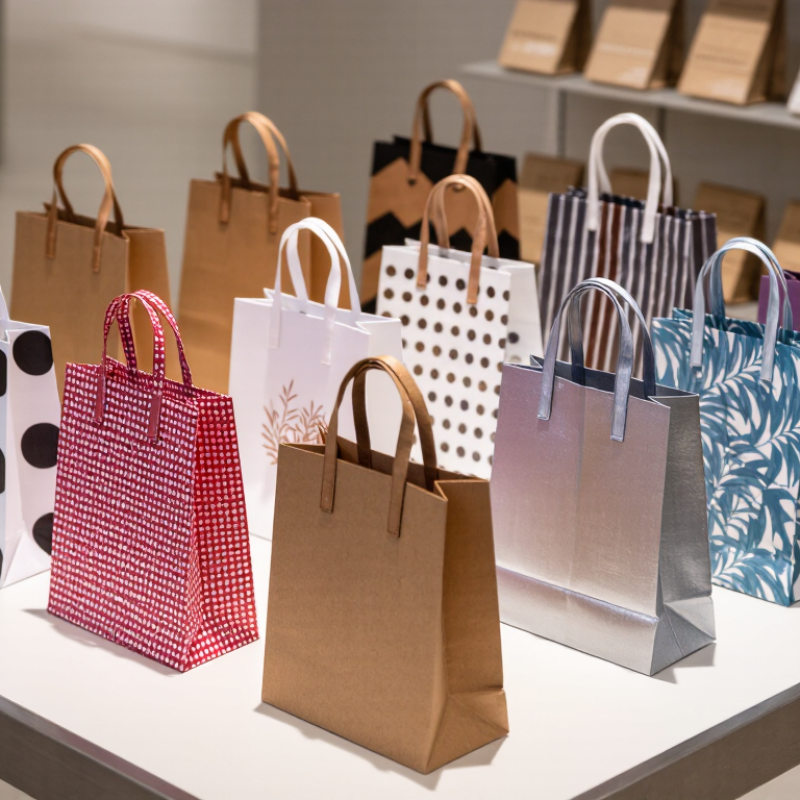
Printed bags should be classified by both construction and print surface. Common formats include flat paper bags, gusseted carriers, and stand-up pouches. Materials may include uncoated paper, coated paper, plastic film, or multi-layer laminates. These surfaces absorb or reflect ink differently. A design that looks bright on coated paper may appear dull on kraft paper.
ISO 12647 provides process-control guidance for consistent printing; it is not a bag-design standard or a guarantee of suitability for every use. Buyers can ask manufacturers which parts apply to their process, such as flexographic, gravure, or offset printing. Useful checks include color targets, tone values, ink coverage, registration, and proof-to-production comparisons. Small registration shifts can make fine text look soft. Measure color under agreed viewing conditions.
The specification should name the bag format, substrate, finish, and approved color reference. Requesting a press proof on the actual material is more reliable than judging a screen image. One limitation deserves attention: laminated films and textured papers may not match standard proofing conditions neatly. Results can vary. Record agreed tolerances and inspect samples from the production run, not just the first approved sheet.
| No. | Printed Bag Format | Common Materials | Common Print Process | Relevant ISO 12647 Control Approach | Buyer Checks |
|---|---|---|---|---|---|
| 1 | Flat paper shopping bag | Kraft paper, coated paper, or uncoated paper | Flexographic or offset printing, depending on stock and run requirements | For flexographic production, ISO 12647-6 provides process-control guidance. Agree on the applicable print condition, proofs, and measurement method with the printer. | Confirm paper shade, ink appearance, registration, and whether the handles and folds affect the printed area. |
| 2 | Twisted-paper-handle shopping bag | Kraft paper or coated paper | Flexographic or offset printing | Apply the relevant process controls for the selected printing method; ISO 12647-6 is relevant when the job is printed flexographically. | Review print alignment near folds, handle attachment zones, and areas covered during bag construction. |
| 3 | Paper SOS (self-opening square) bag | Kraft paper, including food-contact grades where specified | Flexographic printing is commonly used for high-volume paper-bag production | For flexographic printing, use agreed process conditions and control targets consistent with ISO 12647-6 where applicable. | Specify intended use, paper grade, ink suitability, print coverage, and any required food-contact documentation. |
| 4 | Woven polypropylene shopping bag | Woven polypropylene fabric, sometimes with a laminated film surface | Flexographic printing or screen printing, depending on construction and artwork | ISO 12647-6 may be relevant to flexographic printing; ISO 12647-5 addresses screen printing. Confirm the standard part and print condition applicable to the actual process. | Check fabric texture, ink adhesion, abrasion resistance, seam placement, and print consistency across the panel. |
| 5 | Nonwoven polypropylene tote | Spunbond polypropylene nonwoven fabric | Screen printing, flexographic printing, or digital printing, according to order size and design | ISO 12647-5 is relevant to screen printing and ISO 12647-6 to flexographic printing. Do not assume either part directly governs a digital process. | Ask for a sample on the actual fabric and verify color, adhesion, opacity, and resistance to handling. |
| 6 | Stand-up pouch | Flexible laminates such as PET, PE, or PP structures; barrier layers may be included for product needs | Flexographic or gravure printing; digital printing may be offered for some jobs | ISO 12647-6 applies to flexographic process control. For gravure or digital work, establish process-specific specifications rather than treating ISO 12647-6 as directly applicable. | Confirm laminate structure, sealing compatibility, barrier requirements, and whether artwork registration is affected by converting. |
| 7 | Flat-bottom flexible pouch | Printed flexible-film laminates, selected for the contents and packaging requirements | Flexographic or gravure printing | Use ISO 12647-6 where the process is flexographic; agree separate characterization and acceptance criteria for gravure printing. | Review color consistency, print-to-seal clearance, laminate specification, and any required migration or compliance documentation. |
| 8 | Reclosable zipper pouch | Flexible plastic films, commonly with a zipper component and optional laminate layers | Flexographic, gravure, or digital printing, depending on the production setup | Match quality controls to the actual process. ISO 12647-6 is specifically relevant to flexographic printing, not a universal standard for all pouch printing methods. | Check zipper placement, seal area, artwork clearance, film compatibility, and repeatability of color across the web. |
| 9 | Garment or merchandise poly mailer | Polyethylene film, including options with recycled content where specified | Flexographic printing is widely used for film packaging; digital processes may be available for suitable runs | For flexographic work, consider ISO 12647-6 process controls and agree measurement conditions for the film substrate. | Verify film thickness and properties, ink adhesion, print scuffing, closure design, and recycled-content claims if required. |
| 10 | Reusable laminated shopping bag | Woven polypropylene or nonwoven fabric with a laminated film surface | Flexographic or screen printing; digital printing may suit selected applications | Use the ISO 12647 part relevant to the chosen process—ISO 12647-6 for flexographic printing or ISO 12647-5 for screen printing—and document agreed tolerances. | Assess lamination, print adhesion, fold and seam locations, handle strength, and performance after repeated use. |
Related Posts
-

Ultimate Checklist for Sourcing Printed Bags That Meet Your Business Needs
-
How to Choose the Right Shopping Bags for Your Business?
-

Your Ultimate Guide to Sourcing High-Quality Promotional Reusable Bags: Trends and Insights for Global Buyers
-
How to Identify Top Manufacturers for Best Promotional Reusable Bags Worldwide
-

Top 10 Eco Friendly Bags Tips for Sustainable Shopping Options?
-
Discover the Environmental Impact of Hessian Bags: A Sustainable Choice for Today's Consumer