
Global buyers sourcing Crispy Bread Crumbs need more than a competitive quotation. Particle size, color, moisture, seasoning, and frying performance can all affect the finished product. A crumb that looks golden in a sample may behave differently in a commercial fryer. Small details matter.
Reliable sourcing also depends on traceability and repeatability. Buyers should check ingredient specifications, allergen controls, production capacity, packaging, and export documentation. Ask suppliers for recent batch data and test samples in the intended recipe. Supplier directories can look complete; they rarely prove consistency across shipments. That gap deserves attention.
Food-system reports offer useful context, but not a direct market-size estimate for bread crumbs. UNEP’s Food Waste Index Report 2024 estimates that 1.05 billion tonnes of food were wasted worldwide in 2022, across households, food service, and retail. FAO’s food-loss reporting also highlights losses between harvest and retail. These figures do not measure crumb demand. They do, however, underline why ingredient efficiency and dependable supply deserve scrutiny. Public data specific to international bread-crumb trade remains limited, so buyers should compare suppliers using verifiable specifications rather than broad market claims. The profiles ahead focus on practical sourcing factors, including product range, manufacturing capabilities, quality controls, and communication. No supplier is ideal for every application. The best fit depends on the coating, destination market, and required delivery schedule.
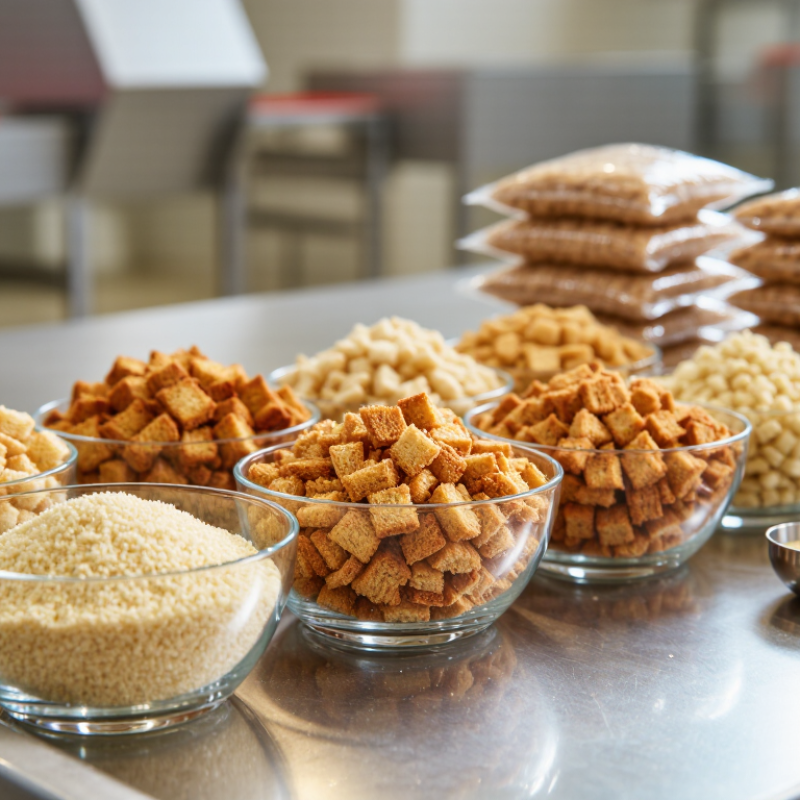
Crispy bread crumbs are made from baked bread that is dried and broken into pieces. Their size and shape affect both appearance and bite. Fine crumbs form an even coating, while larger flakes create a rough, crunchy surface. Texture matters.
Across markets, these crumbs are used on fish, vegetables, poultry, and baked casseroles. Food producers also add them to prepared meals for contrast. In kitchens, a quick test can reveal more than a label: coat a small piece, cook it, and check whether the crust stays crisp without becoming too dark.
For global buyers, practical details matter. Ask suppliers about particle size, moisture level, ingredient declarations, packaging, and batch consistency. These factors influence shelf life, handling, and results on production lines. A crumb that performs well in a dry test kitchen may soften in humid conditions or during long transit. That deserves attention.
Regional preferences also differ; some buyers favor a light, delicate coating, while others want visible flakes and a stronger crunch. Specifications help, but they cannot predict every kitchen or recipe. A trial shipment is useful, though even that may not capture seasonal changes in storage and preparation.

Crispy bread crumbs start with bread chosen for its flavor, structure, and moisture level. The loaves are baked, cooled, and dried until they are firm enough to mill. Drying requires care: too little can leave soft clumps, while too much may create a toasted, bitter note. Then the bread is ground and passed through screens to separate particle sizes. Small details matter.
Suppliers commonly grade crumbs by particle size, color, moisture, and texture. Fine crumbs coat evenly, while larger flakes create a more visible crunch. Color is checked against the buyer’s target, since bread type and baking conditions can shift crumbs from pale gold to deeper brown. Moisture and crispness also need routine checks. A simple hand squeeze can reveal clumping, but it cannot replace measured quality-control tests.
A useful grade depends on its final application, not just its appearance in a sample bag. For example, crumbs used as a coating may need consistent coverage and a firm bite after cooking. Buyers can request sieve data, moisture specifications, and representative samples from several production batches. No single grade suits every line. Even careful screening may leave some variation, so suppliers and buyers should agree on acceptable limits before ordering. One point is easy to overlook: a very crisp crumb can still absorb oil or moisture differently than expected.
International buyers usually compare three supplier types: direct manufacturers, ingredient distributors, and specialty food-service suppliers. Direct manufacturers may offer closer control over crumb size, toast level, and production schedules. Ask whether they can provide coarse crumbs for frying or finer grades for coatings. A sample tells you more than a product sheet. Check the color and crunch after cooking.
Distributors can combine several grades in one shipment and may hold stock nearer to your destination. This can help smaller buyers, though added handling may affect lead times or cost. Specialty suppliers often support tailored pack sizes, such as sealed 10-kilogram bags for kitchens or larger sacks for processors. Request recent product specifications, allergen information, packaging details, and export documents relevant to your shipment. Confirm how the supplier manages moisture; crumbs that absorb humidity can lose their crispness. Ask about storage conditions, too. Not every supplier gives equally clear answers, and that is worth noticing. Compare trial batches under your own cooking conditions before committing to recurring orders.
| Supplier Type | Typical Products | Strengths for Global Buyers | Best Suited For | Key Checks Before Ordering |
|---|---|---|---|---|
| Specialist bread crumb manufacturers | Coarse and fine crumbs, panko-style crumbs, toasted crumbs, and seasoned varieties | Focused production capabilities; may offer multiple particle sizes, colors, and formulations | Food processors and ingredient buyers seeking consistent specifications or repeat supply | Particle-size range, color consistency, moisture limits, allergen controls, and export documentation |
| Large bakery producers with crumb operations | Crumbs made from baked bread, including white, wheat, and specialty-bread formats | Access to established baking processes and a range of bread-based raw materials | Buyers who need particular bread characteristics or a dependable production program | Raw-material specifications, production capacity, shelf-life data, and lot-traceability procedures |
| Private-label and contract manufacturers | Custom crumb blends, private-label packs, and buyer-specific formulations | Can support tailored recipes, packaging formats, and market-specific labeling requirements | Retailers, food brands, and importers developing products under their own labels | Minimum order quantities, formulation ownership, packaging approvals, lead times, and label compliance |
| Food ingredient distributors | Packaged standard and specialty crumbs sourced from multiple producers | May consolidate products, provide local inventory, and serve smaller or mixed orders | Buyers needing flexible purchasing, regional availability, or several ingredients from one channel | Country of origin, manufacturer details, stock status, storage conditions, and certificate availability |
| Foodservice wholesalers | Ready-to-use crumbs in commercial kitchen and foodservice pack sizes | Established distribution routes and formats suited to restaurants, caterers, and institutional kitchens | Foodservice operators and buyers prioritizing convenient replenishment | Pack size, delivery coverage, ingredient declaration, best-before period, and handling requirements |
| Regional grain and bakery ingredient processors | Crumbs produced from locally available bread or grain-based inputs | Potential access to regional sourcing and products aligned with local market preferences | Importers seeking regional supply options or locally relevant product characteristics | Input origin, food-safety program, contaminant controls, production consistency, and export readiness |
Supplier capabilities vary by facility and destination market. Confirm product specifications, applicable food-safety requirements, packaging, shipping terms, and import documentation directly with each supplier.
Compare suppliers against one written specification, not attractive sample bags. Record crumb size, color range, moisture, salt, seasoning, and intended use. Ask for sieve analysis and a current certificate of analysis for each production lot. Small differences show up fast: uneven crumbs brown patchily, while excess fines can burn before larger pieces crisp.
Food safety deserves equal weight. The WHO’s 2015 report, Estimates of the Global Burden of Foodborne Diseases, attributed about 600 million illnesses and 420,000 deaths worldwide to contaminated food each year. The estimate covers all foods, not breadcrumbs, but it shows why supplier controls matter. Request hazard-analysis documents, allergen controls, sanitation records, and lot-level traceability. Check that the answers match the actual production site. Paperwork alone is not proof.
Compare delivered cost, minimum order, lead time, packaging integrity, and capacity during seasonal demand. For export shipments, test a sealed sample after transit; humidity can soften crisp crumbs. Define acceptance limits before purchase, then compare at least two production lots. I would not overvalue a perfect showroom sample. It may not represent routine output. One limitation: application matters. Coating crumbs and topping crumbs need different performance tests.
Global buyers should assess crispy bread crumbs by more than price and color. Ask suppliers for ingredient specifications, allergen controls, lot-level traceability, and evidence that microbial hazards are managed. Check moisture limits and packaging performance; crumbs can lose crispness when exposed to humid air. The FAO’s The State of Food and Agriculture 2023 estimated that 13.2% of food was lost between harvest and retail in 2021. That broad figure is a useful reminder: delays and poor handling matter. Paperwork helps, but it cannot show every loading condition.
Shipping plans should match the product’s sensitivity. Request sealed, food-grade inner packaging, then confirm that cartons resist crushing and remain dry in transit. Before loading, inspect the container for leaks, residue, odors, and visible moisture. Agree on shipment records, lot identification, and a clear process for reporting damaged goods. The WHO’s 2015 estimates attributed 600 million foodborne illnesses and 420,000 deaths worldwide to contaminated food each year. Those figures concern food broadly, not bread crumbs specifically, but they underline why supplier controls deserve scrutiny. A clean audit is reassuring. It is not a guarantee. Include realistic lead times and destination-specific import checks; even careful plans can miss a humid transfer point.
Lower water activity helps keep dry breadcrumbs stable during storage and shipping, but it does not destroy pathogens. Ask suppliers for water-activity specifications, validated pathogen-control measures, and moisture-barrier packaging. These approximate growth limits vary with conditions and are not product safety limits.
Source: U.S. FDA, Bad Bug Book.