
Top Appliance Injection Parts Manufacturers in China

China remains a major manufacturing base for refrigerators, washing machines, air conditioners, and kitchen appliances. Its supply chain combines mold engineering, injection molding, surface finishing, and large-scale assembly. This concentration makes Chinese suppliers important partners for global appliance brands seeking consistent Appliance Injection Parts.

Industry data supports this position. The China Household Electrical Appliances Association regularly reports strong domestic production and export activity across major appliance categories. The National Bureau of Statistics of China also tracks extensive manufacturing output, providing useful evidence of China’s industrial capacity. Meanwhile, Grand View Research and Fortune Business Insights identify continued growth in injection molding and home appliance markets, driven by lightweight designs, smart functions, and energy-efficiency requirements. These reports do not rank individual factories, however. That limitation matters.

This guide examines leading Chinese manufacturers through practical criteria, including mold accuracy, resin control, dimensional inspection, production capacity, and export experience. A reliable supplier should explain its tooling process clearly. It should also provide material certificates, sample approval records, and traceable quality reports. Details matter: a warped refrigerator handle, a weak washing-machine panel, or a poorly fitted air-conditioner grille can create costly assembly delays. Factory audits remain valuable. Online claims can look polished.

The phrase “top manufacturer” is not absolute. Rankings may change by product category, certification, tooling strength, or order volume. Buyers should verify current equipment, quality systems, lead times, and after-sales support before signing contracts. This article offers a structured starting point, not a substitute for technical due diligence.
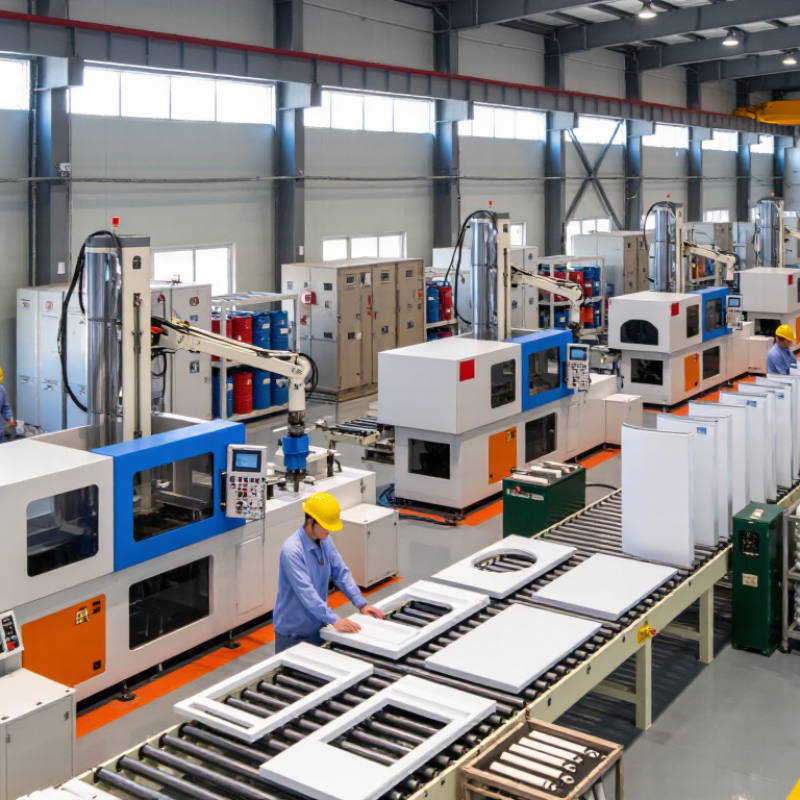
Top Appliance Injection Parts Manufacturers in China

What Are Appliance Injection Parts?

Appliance injection parts are components made by forcing heated plastic into a shaped mold, then cooling it until it holds its form. They can include refrigerator door bins, washing-machine control housings, dishwasher spray-arm components, and clips that secure internal panels. Some parts are visible; others sit behind a cover and guide movement, airflow, or wiring. Small details matter. A clip that flexes too little may snap during assembly, while an oversized opening can leave a panel loose.

Manufacturers select materials according to heat, moisture, impact, and cleaning exposure. They also consider wall thickness, ribs, draft angles, and mold placement, since these features affect strength and consistent production. For example, a thin, uneven wall may cool at different rates and warp. Fit should be checked in the actual appliance assembly, not only on a drawing. Still, “appliance injection part” is a broad term; two parts that look alike may face very different stresses. That distinction is easy to overlook. A careful review of dimensions, material data, and sample performance helps clarify whether a part is suitable for its intended use.

Top Appliance Injection Parts Manufacturers in China — What Are Appliance Injection Parts?

About the chart: Appliance injection parts are components formed by injecting molten plastic into a mold. This chart compares representative densities of commonly used molding plastics, in grams per cubic centimeter. Values are typical approximations; exact density varies by grade and formulation.

How Appliance Injection Parts Are Designed and Manufactured

Appliance injection parts begin with the job they must perform: support a motor, guide airflow, seal a panel, or withstand repeated opening. Designers translate those demands into CAD models and specify material, load, temperature, and appearance. A refrigerator liner needs broad, even walls; a control-panel housing needs secure screw bosses and clean openings. Small details matter. Uneven wall thickness can cause sink marks or warping, so engineers use ribs and gradual transitions instead of simply adding bulk.

Before steel tooling is cut, teams review draft angles, parting lines, and gate locations. Mold-flow simulation can flag likely weld lines, trapped air, and uneven filling, though it cannot replace a physical trial. Prototype parts help check fit against neighboring components. Not always. A design that looks sound on screen may still need adjustment after molding.

Material choices affect cost, durability, and end-of-life options. The OECD’s Global Plastics Outlook (2022) estimates that 353 million tonnes of plastic waste were generated worldwide in 2019, and only 9% was ultimately recycled. That figure makes material identification and simpler part construction practical design concerns. In production, mold temperature, injection pressure, cooling time, and packing pressure are monitored to limit defects across batches. Operators also inspect dimensions and surface finish; a small flash at a snap-fit can make assembly unreliable. The difficult part is balancing strength, cycle time, and recyclability—one target can compromise another.

Leading Appliance Injection Parts Manufacturers in China

Leading appliance injection parts manufacturers in China combine mold design, material selection, and production control. Their work may include refrigerator liners, washing-machine housings, control panels, and small internal brackets. Each part has different demands. A visible panel needs an even surface, while a hidden bracket must fit reliably under repeated vibration.

Experienced manufacturers review drawings before cutting a mold. They may check wall thickness, draft angles, gate locations, and likely shrinkage. These details can reduce warping and difficult assembly. A useful supplier can also explain resin options and provide samples for fit and finish checks. Ask how dimensions are measured and how production batches are tracked. Clear records matter.

Quality is not just a polished sample. Buyers should compare sample parts with approved drawings, inspect color and surface consistency, and discuss how defects are handled. Small details matter. A factory visit or a documented process review can reveal whether machines, molds, and inspection tools are maintained. Still, a checklist cannot catch everything; early trial runs sometimes expose issues that drawings miss. That is worth planning for. Manufacturers that respond with specific corrective actions are easier to assess than those offering broad promises.

Top Appliance Injection Parts Manufacturers in China - Leading Appliance Injection Parts Manufacturers in China

Capability ranges are indicative industry examples, not verified specifications or rankings of individual manufacturers.
Manufacturer profile Typical appliance parts Common materials Indicative injection machine range Relevant production capabilities Supplier evaluation points
Large-part appliance molding Refrigerator liners, washing-machine panels, air-conditioner housings HIPS, ABS, PP Approximately 800–3,000 tonnes, depending on part and mold design Large-part molding, cosmetic surface control, dimensional inspection Part size limits, appearance standards, warpage control, production capacity
Precision component molding Knobs, clips, brackets, internal supports, small gears ABS, POM, PA, PC Approximately 50–500 tonnes Tight-tolerance molding, insert molding, process monitoring Critical dimensions, material traceability, inspection plan, tool maintenance
Functional housing and enclosure molding Motor covers, pump housings, control boxes, appliance bases PP, ABS, PC/ABS, glass-filled PA Approximately 100–1,000 tonnes Ribbed-part molding, threaded inserts, assembly and functional checks Heat and impact requirements, screw-boss strength, fit testing
Overmolding and soft-touch components Seals, grips, buttons, vibration-damping features TPE or TPU over PP, ABS, or compatible substrates Approximately 100–600 tonnes Two-shot or insert overmolding, bond and appearance checks Material compatibility, adhesion testing, hardness and flash control
Tooling and mold-service specialists Production molds and replacement components for appliance parts Tool steels selected for mold life, resin, and production requirements Not applicable; machine capacity depends on the molding partner Mold design, machining, sampling, repair, and preventive maintenance Mold ownership, expected cycle life, sample approval, spare-part support

Common supplier quality systems include ISO 9001; environmental and occupational health and safety systems may be assessed against ISO 14001 and ISO 45001. Confirm certification scope and validity directly with each supplier.

How to Evaluate Chinese Injection Parts Suppliers

Evaluating Chinese injection-parts suppliers takes more than comparing unit prices. PlasticsEurope reported 413.8 million tonnes of global plastics production in 2023, but abundant resin does not guarantee consistent appliance components. Ask suppliers to identify resin grades, control moisture before molding, and retain batch records. Request dimensional reports for critical features, such as clip thickness and screw-boss position. Ask for evidence.

Review the mold and process, not just sample parts. A polished sample may hide unstable cycle times or weak process controls. Request mold-maintenance logs, inspection criteria, and production records from a comparable appliance part. ISO’s 2022 Survey recorded 426,716 ISO 9001 certificates in China; certification can signal a documented system, but cannot prove that a specific molding line holds tolerances. Verify scope, recent audit findings, and corrective-action closure.

Run a pilot using your production resin and agreed acceptance limits. Measure parts across multiple cavities, then repeat after a realistic production interval. Check warpage, fit, surface finish, and packaging damage. Keep drawings, revision levels, and approved deviations aligned in writing. One limitation: a short audit cannot reveal every shift-to-shift variation. That deserves attention. I would also ask how rejected parts are isolated, who approves process changes, and whether tooling ownership and maintenance responsibilities are clearly documented before ordering.

Quality Standards and Export Capabilities of Chinese Manufacturers

Top Appliance Injection Parts Manufacturers in China

Quality Standards and Export Capabilities of Chinese Manufacturers

For appliance injection parts, quality is visible in small details: uniform ribs, clean gate cuts, and clips that fit without force. Chinese suppliers may use incoming resin checks, mold trials, dimensional inspection, and batch traceability. These steps matter. ISO’s 2022 Survey recorded 426,716 valid ISO 9001 certificates in China, indicating a broad quality-management base. Yet a certificate does not prove that every molded part meets a buyer’s drawing. Ask for recent inspection records, material specifications, and samples from production tooling.

Export capability also depends on practical controls. Suppliers need stable packaging, clear carton labels, and documented checks before shipment. The WTO reported China’s merchandise exports at about US$3.38 trillion in 2023; this is national trade data, not an appliance-parts figure. It provides context, not a guarantee. For a specific order, review defect limits, measurement methods, mold ownership terms, and lead-time assumptions. A useful audit follows one batch from resin lot to packed parts. Even then, gaps can remain. I would not treat a polished factory tour as sufficient evidence.

Call Now Button