Top China Multifilament Fishing Nets Manufacturers?
Choosing among China’s MULTIFILAMENT FISHING NETS manufacturers takes more than comparing prices. Buyers need to examine fiber type, twine diameter, mesh size, knot construction, and finishing. These details affect handling, durability, and suitability for different fishing conditions. Ask suppliers for specifications and sample panels. Feel the twine. Inspect the mesh. A neat sample matters, but it cannot prove consistent production by itself.
Fisheries gear researcher John Willy Valdemarsen’s work offers a useful reminder: netting should be assessed in relation to its intended fishing method and operating conditions. In paraphrase, not as a verbatim quotation: “Match the net to the fishery, not just the catalog.” This guide introduces Chinese manufacturers and the questions that help buyers compare them more carefully, including production capacity, customization, quality checks, and export experience. Request clear evidence for claims about strength or service life. Ask how batches are inspected, and whether sample specifications match mass production. Small differences matter. A catalog may look convincing. It may still leave important details unanswered. No single supplier is right for every buyer; the best fit depends on the target fishery, working conditions, and required specifications.
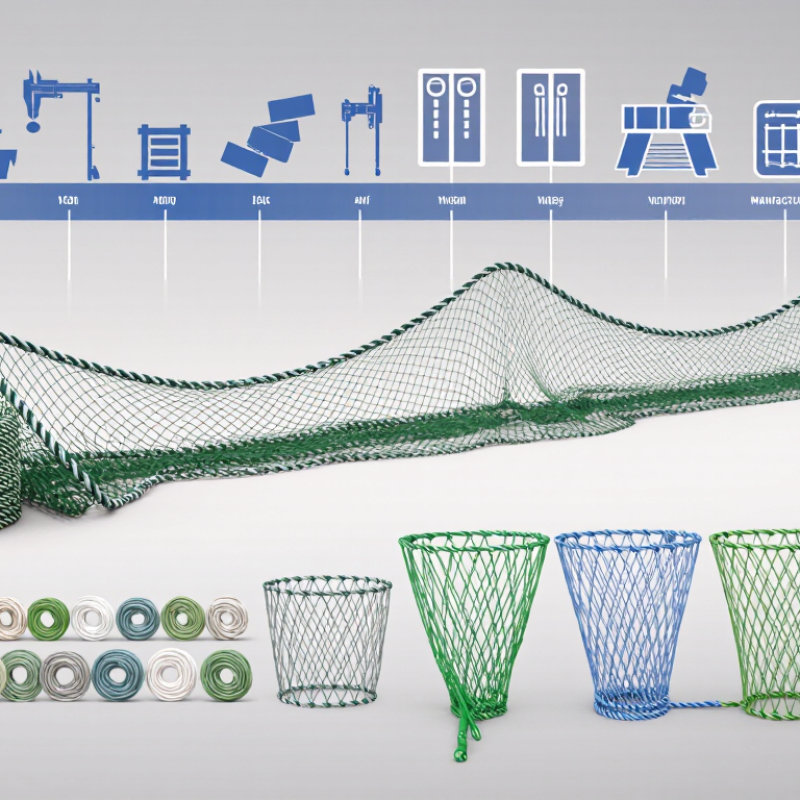
What Defines Multifilament Fishing Nets: PA6/PA66 Yarn and Net Construction
Multifilament fishing nets are built from bundles of fine filaments twisted or otherwise assembled into yarn, then formed into mesh. The two common polyamide choices are PA6 and PA66. PA66 typically tolerates higher temperatures, while PA6 can offer good flexibility and abrasion resistance. Actual performance depends on yarn denier, filament count, twist, and finishing—not polymer name alone. Small details matter.
Net construction shapes handling and fishing performance. Knotless mesh can reduce snag points, while knotted mesh may suit designs that need familiar repair methods. Check mesh opening, twine diameter, hanging ratio, and selvedge strength together; a larger opening does not automatically mean a lighter or stronger net. FAO’s 2024 State of World Fisheries and Aquaculture reports 223.2 million tonnes of global fisheries and aquaculture production in 2022. That scale gives useful context for gear demand, but it does not prove which yarn or mesh is best. Ask suppliers for test conditions, wet-strength results, and abrasion data. A tidy specification can still miss real-world wear. My own caution: compare samples after soaking and repeated handling, not only on a dry table.
PA6 vs. PA66: Typical Melting Temperature
Melting temperature is one material property to consider when selecting multifilament yarn. Typical values are approximately 220°C for PA6 and 260°C for PA66.
Net performance also depends on yarn denier, filament count, mesh size, knot construction, and finishing. These are product-specific factors, not determined by polymer type alone.
How Chinese Manufacturers Make Nets: Twisting, Knotting, and Heat Setting
Multifilament net quality begins with the yarn. Several fine filaments are twisted into strands, balancing flexibility with tensile strength. Too little twist can leave filaments loose; too much may make the yarn stiff. Operators check yarn count and tension, though small variations can still appear across a production run.
Knotting turns yarn into netting, and knot consistency matters. Uneven knots can distort mesh openings or create weak points under load. Buyers can request tests based on ISO 1805 for netting breaking force and ISO 1806 for mesh breaking force. These tests do not replace inspection, but they offer measurable checks. Look closely at knot seating and mesh dimensions.
Heat setting helps stabilize dimensions after knotting. The process uses controlled heat and tension, adjusted for the polymer; one recipe does not suit every material. Excessive heat may weaken yarn, while insufficient treatment can leave the net prone to shrinkage. The weak point is easy to miss. FAO’s The State of World Fisheries and Aquaculture 2024 reports 223.2 million tonnes of aquatic animal and algal production in 2022. That figure describes production scale, not net demand, but it underscores why consistent gear specifications matter. I would still ask manufacturers for process records and test samples. A neat-looking net is not proof of uniform performance.
Leading Chinese Manufacturers: Compare Product Range, Capacity, and Exports
China’s multifilament fishing-net manufacturers can differ sharply in product range, production capacity, and export experience. A useful comparison starts with specifications, not catalog size. Check mesh opening, twine diameter, material, knot style, and available net depths. Some suppliers may offer both knotted and knotless nets, while others focus on fewer configurations. Details matter.
Capacity should be assessed against your order, delivery schedule, and need for repeat production. Ask how the factory handles sample approval, batch checks, and seasonal demand. A large stated output does not guarantee consistent mesh measurements or dependable lead times. Request recent production records or inspection details where available. Ask for proof. A small trial order can reveal practical issues, though it cannot predict every future shipment.
For exports, compare the markets served, packaging methods, shipping options, and the clarity of export documentation. Ask whether production can follow your written specifications and whether changes are recorded before a run begins. Clear answers are more useful than broad claims. One weakness in this process: written comparisons may miss how responsive a supplier is when problems arise. Keep questions specific, and note any unanswered points before choosing a manufacturer.
How to Select a Supplier: Mesh Size, Twine Diameter, MOQ, and Lead Time
Top China Multifilament Fishing Nets Manufacturers?
How to Select a Supplier: Mesh Size, Twine Diameter, MOQ, and Lead Time
When comparing Chinese multifilament fishing-net suppliers, start with the net’s working conditions, not a catalog photo. State the target species, water depth, salinity, and whether the net will be set by hand or machine. Mesh size affects catch selectivity and water flow; confirm whether the quoted figure means stretched mesh or bar length. Ask for a measured sample. A few millimeters can matter.
Tips: Request mesh and twine measurements from the same production lot. Check knots, selvage, and coating under bright light. Keep a reference sample.
Twine diameter influences strength, drag, weight, and packing volume. Ask how diameter is measured and whether the stated value applies before or after coating. Compare samples using the same material and mesh configuration; otherwise, price comparisons can mislead. Confirm minimum order quantity by color, mesh size, and net depth, since custom combinations may raise the MOQ. Get a written lead-time breakdown covering sample approval, production, and packing. Delays happen. A reliable supplier should explain what could shift the schedule, rather than promise unusually fast dispatch. Leave room for a small trial order, even if freight makes each net cost more. It can reveal fit issues early.
Top China Multifilament Fishing Nets Manufacturers? - How to Select a Supplier: Mesh Size, Twine Diameter, MOQ, and Lead Time
Use this comparison as an initial sourcing guide. Specifications, minimum order quantities (MOQs), and production schedules are indicative planning ranges—not quotations from specific manufacturers. Confirm mesh measurement method, finished-net dimensions, material, and delivery terms with each supplier.
| Netting Application | Typical Mesh Size
(stretched) | Indicative Twine Diameter | Common Material Options | Indicative MOQ | Estimated Production Lead Time | What to Confirm |
| Fine-mesh bait and small-fish netting | 10–25 mm | 0.15–0.30 mm | Multifilament nylon (PA); polyester (PES) may be available | About 50–150 kg | About 15–30 days | Knot type, mesh count, twine construction, and finished panel size |
| Small pelagic-fish gillnetting | 25–50 mm | 0.20–0.45 mm | Nylon (PA), often supplied in knotted or knotless constructions | About 100–200 kg | About 15–35 days | Mesh size convention, hanging ratio, float line, and lead line requirements |
| General-purpose gillnetting | 50–100 mm | 0.25–0.65 mm | Nylon (PA) or polyester (PES), depending on use and required properties | About 100–300 kg | About 20–35 days | Breaking-strength data, UV treatment if required, color, and packing method |
| Large-mesh fish netting | 100–200 mm | 0.40–0.90 mm | Heavy-duty nylon (PA) or polyester (PES) | About 100–300 kg | About 20–40 days | Twine strength, selvedge reinforcement, panel dimensions, and inspection standard |
| Trawl and other heavy-duty netting | 30–100 mm | 0.50–1.20 mm | Heavy multifilament nylon (PA); construction varies by trawl section | About 200–500 kg | About 25–45 days | Net plan, panel layout, twine specification, reinforcement, and sample approval |
| Aquaculture cage and containment netting | 10–50 mm | 0.60–1.50 mm | Nylon (PA) or polyester (PES); coating and treatment options vary | About 200–500 kg | About 25–45 days | Cage dimensions, environmental exposure, coating, seams, and load requirements |
Selection tip: Ask suppliers to state mesh size in writing (including whether it is measured stretched or as bar length), identify twine by construction and denier or tex where applicable, and provide a sample plus a written production and shipping schedule. MOQ and lead time can change with customization, order volume, season, and destination.