Top BPA Free Feeding Bottle Manufacturers Worldwide
Choosing a safe feeding bottle involves more than reading a BPA-free label. Parents and buyers also need clear materials, reliable testing, thoughtful design, and consistent manufacturing quality. This guide explores the Top BPA Free Feeding Bottle Manufacturers Worldwide through those practical standards.
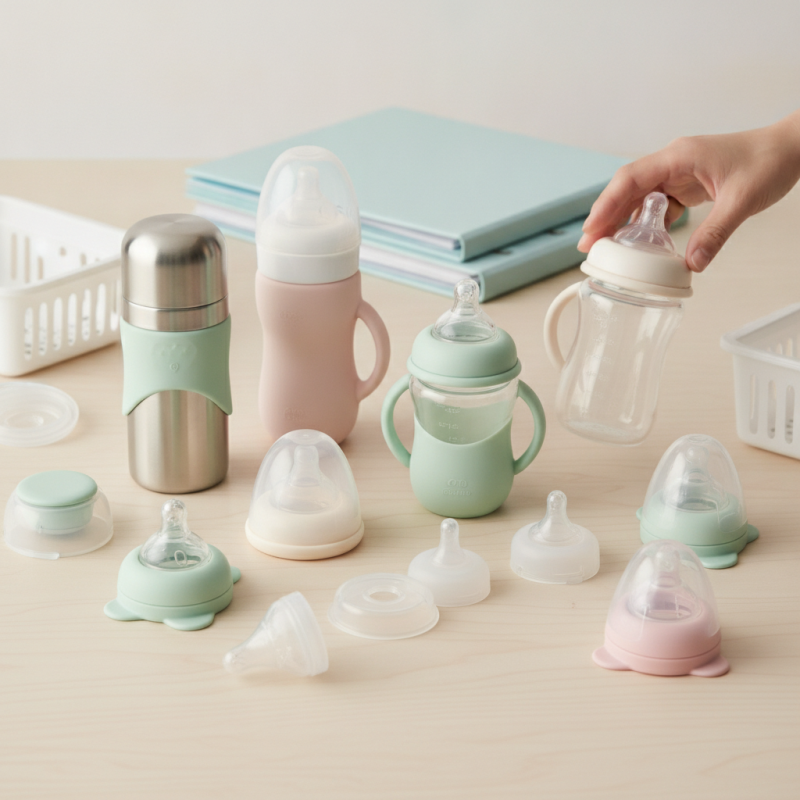
A feeding bottle bpa free product should identify its main materials, including silicone, polypropylene, glass, or stainless steel. It should also explain how components handle heat, cleaning, and daily use. Small details matter, such as smooth seams, secure caps, readable measurement marks, and nipples that resist tearing. They matter every day.
This overview considers manufacturers with documented production experience, quality-control systems, and transparent product information. Independent testing, factory audits, food-contact declarations, and traceable batch records can strengthen buyer confidence. However, certification claims are not always presented in the same way across markets. That difference deserves careful attention.
Real-world use adds another layer. A bottle may feel excellent in a showroom but become awkward beside a steaming sterilizer or inside a crowded diaper bag. Some designs are lightweight yet less stable. Others are durable but heavier for nighttime feeding. No single bottle suits every family.
The manufacturers discussed here are assessed for material choices, safety communication, ergonomic design, production capability, and customer support. These criteria do not create a perfect ranking. They create a useful starting point for responsible comparison. Product information can change, and buyers should verify current documentation before placing large orders.
What BPA-Free Feeding Bottles Are and Why They Matter
Top BPA Free Feeding Bottle Manufacturers Worldwide
BPA-free feeding bottles are made without bisphenol A, a chemical once used in some food-contact plastics. BPA can migrate into liquids, especially when containers are heated, scratched, or repeatedly washed. That is why material choice matters during daily feeding. A bottle may sit beside a warm kettle, travel in a changing bag, or face dozens of sterilising cycles.
Common alternatives include food-grade polypropylene, silicone, stainless steel, and glass. Each has practical differences. Glass resists odours and surface staining, but it is heavier and can break. Silicone feels soft and handles heat well, although it may retain oily smells if cleaning is incomplete. Polypropylene is lightweight, but its surface can become cloudy or worn over time. No material is perfect.
Reliable manufacturers should identify bottle materials clearly and provide test information for food-contact safety. Parents and buyers can inspect the label, follow temperature instructions, and replace bottles with deep scratches, cracks, or damaged nipples. Do not assume “BPA-free” answers every safety question. It does not. Manufacturing quality, cleaning habits, seal design, and storage conditions also matter. In real use, even a carefully designed bottle can become less hygienic when parts stay damp overnight. That small detail is easy to miss, and worth reconsidering.
What BPA-Free Feeding Bottles Are and Why They Matter
BPA-free feeding bottles are manufactured without intentionally using bisphenol A in bottle materials or food-contact components. Regulatory restrictions on BPA in infant feeding bottles have expanded across major markets because infant exposure to food-contact chemicals is a public-health concern.
Key takeaway: Canada, the European Union, China, and the United States introduced restrictions on BPA in infant feeding bottles between 2010 and 2012. This regulatory shift helped make BPA-free materials a standard requirement across much of the global feeding-bottle market.
Sources: Government of Canada, European Commission Directive 2011/8/EU, China Ministry of Health announcement on BPA in infant feeding bottles, and U.S. Food and Drug Administration regulatory updates from 2012.
Key Materials and Safety Standards for Feeding Bottles
Top BPA Free Feeding Bottle Manufacturers Worldwide
Key Materials and Safety Standards for Feeding Bottles
A reliable feeding bottle begins with carefully selected, food-contact materials. Polypropylene is lightweight and resists repeated washing. Glass provides a stable surface and does not absorb odors, but it can break when dropped. Medical-grade silicone is commonly used for nipples because it remains flexible and has low odor. Some bottles use stainless steel, although visibility and temperature control may be less convenient.
BPA-free labeling is only one safety point. A responsible manufacturer should also screen for restricted substances, including certain phthalates, lead, and harmful dyes. Testing should cover chemical migration, leakage, nipple strength, ventilation, and repeated sterilization. In Europe, EN 14350 offers relevant safety requirements for drinking equipment. In other markets, manufacturers may follow local food-contact rules and documented laboratory methods.
Look for batch numbers, material declarations, and traceable test reports. Clear cleaning instructions matter too. A nipple designed for newborns should control flow without collapsing during feeding. Small air vents need inspection, especially after many boiling cycles. No material is perfect. Glass can crack, and silicone can retain residue when poorly cleaned. I would question any supplier that promises “zero risk” without explaining test limits, production controls, and replacement guidance. Safety depends on design, materials, testing, and daily use.
Leading BPA-Free Feeding Bottle Manufacturers Worldwide
Leading BPA-Free Feeding Bottle Manufacturers Worldwide
Leading BPA-free feeding bottle manufacturers are changing production from simple plastic molding to controlled, evidence-based safety systems. Market research reports, including Grand View Research’s 2024 baby bottle market analysis, identify material safety and product innovation as major growth factors. The report also indicates continued demand for lightweight, reusable feeding products across Asia-Pacific and North America. However, market size estimates differ between analysts. That inconsistency deserves attention.
Reliable manufacturers typically use polypropylene, silicone, or glass, supported by supplier traceability and batch testing. They should verify bisphenol-related claims through accredited laboratories, not marketing statements alone. The U.S. Food and Drug Administration regulates food-contact materials, while European producers commonly reference Regulation (EU) No 10/2011 and EN 14350 requirements. These frameworks assess migration, composition, and safe use.
BPA-free is not a complete safety certificate. It only describes one restricted chemical.
Experienced factories also inspect nipple flow, sealing rings, temperature resistance, and drop performance. A production manager may test bottles after repeated sterilization, because small surface cracks can appear later. This detail is often overlooked.
The World Health Organization and UNICEF reported in 2023 that over 80% of infants receive breast milk at some stage, yet many families also use expressed milk or formula. Manufacturers must therefore support different feeding routines. Leading suppliers provide clear volume markings, replaceable components, and readable cleaning instructions. No factory is perfect. Independent audits, transparent test reports, and responsive after-sales teams remain stronger reliability signals than a polished catalog.
How to Compare Global Feeding Bottle Suppliers and Product Ranges
Comparing global feeding bottle suppliers requires more than counting catalogue items. Grand View Research’s 2024 market analysis places the global baby bottle market near USD 3 billion, with continued growth through 2030. That expansion attracts factories with uneven testing depth. Ask for BPA-free declarations, migration reports, resin details, batch traceability, and closure-cycle results. A polished catalogue proves little. Request three samples from separate production lots. Check nipple fit, vent leakage, thread smoothness, and odor after sterilization. Small defects become daily frustrations.
Product range should be mapped by use, not color. Compare bottle volumes, neck formats, teat flows, materials, and replacement-part availability. A supplier offering polypropylene, silicone, glass, and stainless steel may provide flexibility, but complexity can weaken quality control. The U.S. FDA food-contact framework and EU Regulation (EU) No 10/2011 create different compliance pathways. A valid report must match the exact material, additive, factory, and market. Generic certificates are a warning sign. They save time only on paper.
Use a weighted scorecard: 30% safety evidence, 25% manufacturing consistency, 20% lead time, 15% tooling support, and 10% price. These weights are not universal. That is the point. The OECD reports that global plastics waste remains poorly managed, so material choices and end-of-life guidance deserve scrutiny. Ask whether recycled content is restricted where required and whether packaging instructions are clear. Audit video calls help, but independent inspection remains stronger. Supplier comparison is partly technical, partly judgment. Leave room to revise your assumptions.