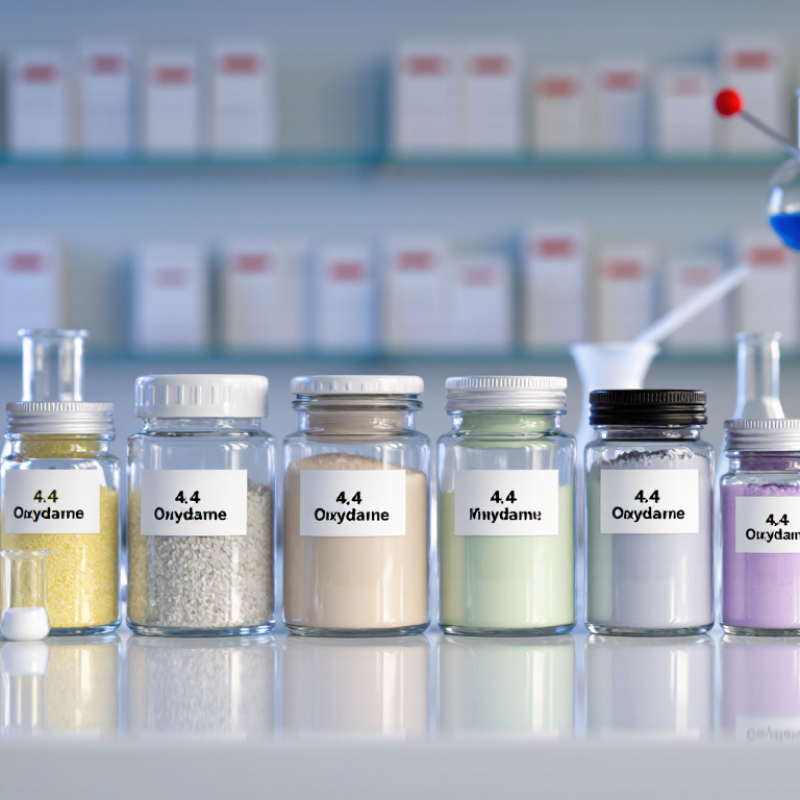
Top 10 Types of 4,4′ Oxydianiline for Global Buyers

Buying 4,4′-Oxydianiline requires more than comparing prices on a supplier website. Grade, purity, particle size, moisture, packaging, and application history can change the final result. This guide introduces ten practical types for global buyers, including standard industrial grade, high-purity grade, electronic grade, polymer grade, optical grade, low-color grade, low-moisture grade, fine-powder grade, custom-specification grade, and research grade.

The categories are useful, but they are not universally standardized. Supplier names can be confusing. One “electronic grade” may show different impurity limits from another. Buyers should request a current certificate of analysis, safety data sheet, batch number, production date, and traceability statement. Check the actual data. Do not trust the label alone.

Professor Mitsuo Hasegawa, a recognized polyimide researcher, has stated, “Polyimide performance depends on the relationship between molecular structure and processing conditions.” This principle matters when selecting 4,4′-Oxydianiline for flexible films, insulation layers, aerospace components, or high-temperature adhesives. A low-color material may suit optical work, while a thermally consistent grade may better support demanding polymer synthesis. The wrong choice can cause haze, uneven curing, or unstable viscosity. Small details matter.

This overview also reflects real purchasing experience. Specifications sometimes look complete, yet omit storage history or moisture testing. That is a weakness. Global buyers should compare measurable values, not marketing language. Supplier reliability, packaging integrity, technical support, and compliance documentation deserve equal attention. The best grade is application-dependent, and sometimes the first selection needs revision.

Top 10 Types of 4,4′ Oxydianiline for Global Buyers

Chemical Identity and Core Properties of 4,4′-Oxydianiline

Top 10 Types of 4,4′ Oxydianiline for Global Buyers

4,4′-Oxydianiline, commonly called 4,4′-ODA, is an aromatic diamine with the molecular formula C12H12N2O. Its molecular weight is approximately 200.24 g/mol. The molecule contains two aniline groups connected by an oxygen bridge. This structure gives it useful rigidity and thermal performance.

It normally appears as an off-white to pale crystalline solid. Reported melting points are commonly near 186–188°C, although purity and testing methods can affect the result. Its solubility in water is very low. It dissolves more readily in selected polar organic solvents. Handle it carefully. Dust control matters during sampling, weighing, and transfer.

For global purchasing, chemical identity should be checked through the CAS number, molecular formula, assay, and infrared spectrum. A certificate of analysis should also state moisture, color, melting range, and possible related isomers. Purity alone is not enough. I once considered it the strongest buying indicator, but processing behavior can change with particle size and storage history. Packaging should protect the solid from moisture and contamination. Buyers should review the current safety data sheet and confirm local transport, workplace, and import requirements before shipment.

Top 10 Types of 4,4′ Oxydianiline for Global Buyers - Chemical Identity and Core Properties of 4,4′-Oxydianiline

The categories below are buyer-oriented specification types rather than separate molecular substances. Commercial specifications may vary by supplier and application; buyers should confirm the current certificate of analysis, safety data sheet, and applicable regulatory requirements.

No. Buyer-Oriented Type Typical Purity Target Chemical Identity Core Physical Properties Typical Buyer Application
1 Standard 4,4′-Oxydianiline Usually around 98–99% CAS RN 101-80-4; molecular formula C12H12N2O; molecular weight 200.24 g/mol White to off-white crystalline solid; melting range commonly reported at approximately 188–192 °C General-purpose intermediate and aromatic diamine feedstock
2 High-Purity 4,4′-Oxydianiline Typically ≥99.5% Same chemical identity: 4,4′-oxydianiline, also known as 4,4′-diaminodiphenyl ether Reduced levels of unreacted intermediates and related aromatic impurities; white crystalline material when properly stored Precision polymer synthesis and applications requiring consistent stoichiometry
3 Polymer-Grade 4,4′-Oxydianiline Often specified at ≥99%; exact limit depends on polymer process A bifunctional aromatic diamine containing two primary amino groups and one ether linkage Controlled purity, moisture, color, and residue are important for repeatable polymer molecular weight and film quality Polyimides, polyamide-imides, epoxy curing systems, and other high-performance polymers
4 Low-Moisture 4,4′-Oxydianiline Purity commonly ≥99%; moisture limit is separately agreed C12H12N2O; hygroscopic exposure should be minimized during handling and storage Lower water content supports accurate diamine-to-dianhydride or other reactive-group ratios Moisture-sensitive polymerization and controlled laboratory or production processes
5 Low-Color 4,4′-Oxydianiline Usually high-purity material; color limit is application-specific Same CAS RN 101-80-4 and molecular formula C12H12N2O Selected for low visible coloration and controlled oxidation-related discoloration during processing Light-colored polyimide films, coatings, composites, and specialty resin systems
6 Fine-Powder 4,4′-Oxydianiline Typically 98–99.5%, depending on the specification A crystalline aromatic diamine supplied as a dry solid powder Smaller particle size can improve dispersion and dissolution rate; particle-size limits must be confirmed by test method Laboratory batching, solution preparation, and processes requiring rapid solid-liquid contact
7 Controlled-Particle-Size 4,4′-Oxydianiline Commonly ≥99%; particle-size distribution is separately defined 4,4′-Oxydianiline with the same molecular structure and CAS RN 101-80-4 Specified by sieve fraction, D-values, or distribution range rather than by a new chemical identity Automated feeding, dispersion control, and scale-up operations
8 Low-Residue 4,4′-Oxydianiline Often ≥99%; ash, insoluble matter, and residue limits are separately specified Organic aromatic diamine; non-volatile inorganic residue is controlled as a quality attribute Lower insoluble or inorganic residue can help reduce defects in transparent films and precision coatings High-quality polymer films, optical materials, and contamination-sensitive formulations
9 Analytical or Research-Grade 4,4′-Oxydianiline Purity and impurity profile are stated for the specific lot Reference identity: CAS RN 101-80-4; C12H12N2O; 4,4′-diaminodiphenyl ether Traceability, analytical method, lot documentation, and small-quantity packaging are emphasized Method development, reference testing, formulation screening, and academic research
10 Industrial Bulk 4,4′-Oxydianiline Commonly around 98–99% for general industrial use Same molecular substance: 4,4′-oxydianiline, molecular weight 200.24 g/mol Bulk purchasing focuses on lot consistency, packaging integrity, moisture protection, transport classification, and documentation Large-scale resin, polymer, coating, adhesive, and specialty-material production
Key purchasing note: 4,4′-Oxydianiline is a solid aromatic diamine. Confirm purity, water content, particle-size distribution, color, residue, packaging, storage conditions, transport classification, and regulatory status before purchase. Always consult the applicable safety data sheet before handling.

Classification Framework for the Ten Commercial Types

Top 10 Types of 4,4′ Oxydianiline for Global Buyers

For global buyers, the ten commercial types are best classified by specification, physical form, and supply purpose. This is a purchasing framework, not a universal industry standard. The common types include industrial standard, high-purity, polymerization grade, electronic grade, low-metal, low-moisture, pre-dried, fine-powder, coarse-powder, and small-lot repacked material. Suppliers may combine several descriptions. For example, one batch can be both high-purity and low-metal.

Industrial standard material usually supports general polymer production. High-purity and electronic grades require tighter controls on trace metals, color, and moisture. Polymerization grade should show consistent assay and melting behavior.

Fine powder can improve mixing, while coarse powder may reduce dust during handling. Pre-dried material is useful when moisture affects processing. Yet “dry” needs evidence, not only a sales label.

Buyers should review the certificate of analysis, water content, particle-size distribution, color, assay, packaging date, and retest period. Packaging should protect the white to off-white powder from humidity and contamination.

Tips: Match the type with your process, not only the lowest price. Ask for a recent batch sample and compare it with production results. Check whether the listed purity uses a clear test method. A small inconsistency can change resin flow or polymer molecular weight. This framework is practical, but not perfect; local process conditions may require a custom specification. Keep that possibility open.

Ten Types by Purity, Physical Form, and Intended Use

Top 10 Types of 4,4′ Oxydianiline for Global Buyers

Ten Types by Purity, Physical Form, and Intended Use

4,4′ Oxydianiline is commonly evaluated by purity, appearance, and processing needs. Global buyers may consider ten practical types:

High-purity grade Standard industrial grade
Research grade Powder
Fine powder Granulated material
Low-moisture grade Resin-processing grade
Composite-material grade Analytical-use grade

These categories can overlap. A powder may also meet high-purity specifications.

High-purity material suits demanding polymer and advanced composite applications. Standard industrial material supports controlled production where consistent quality matters. Fine powder disperses quickly, while granules can reduce dust during handling. Low-moisture material helps protect sensitive formulations.

Resin-processing grades should match the buyer’s curing temperature and mixing system. Composite applications require stable color, particle size, and thermal behavior. Research and analytical grades normally need stronger documentation and tighter batch control.

However, these labels are not universal. Buyers must compare actual specifications, not names alone.

Application, Quality, and Regulatory Requirements by Type

For global buyers, 4,4′ oxydianiline is not a single purchasing category. Ten practical types include standard industrial grade, high-purity grade, low-metal grade, low-chloride grade, electronic grade, aerospace grade, polymer grade, fine powder, granulated material, and custom particle-size grade. Each type supports different processing needs. Polymer-grade material suits high-performance polyimide production. Fine powder disperses quickly, while granules can reduce dust during charging.

Quality decisions should begin with the application, not the price. Buyers commonly check assay, melting range, moisture, color, particle distribution, metals, chloride, and residual solvents. A reliable certificate of analysis should identify test methods and batch results.

Packaging also matters. Moisture-barrier bags and sealed drums help protect sensitive material during long shipping routes. Small details matter here. One overlooked issue is dust control.

Regulatory review must cover the destination market and the actual end use. Suppliers should provide a current safety data sheet, hazard classification, labeling details, and traceable batch documentation. Buyers may also need to verify chemical inventory status, registration duties, import controls, and workplace exposure requirements under applicable local systems. Requirements can differ between regions and change over time. Do not treat “high purity” as proof of compliance. It is only a quality claim. A practical audit should compare the specification, SDS, transport information, and test records before approval. Some buyers skip this step, then discover that a suitable material needs additional documentation or packaging controls.

Global Buyer Criteria for Sourcing, Documentation, and Logistics

For global buyers, the “top 10 types” of 4,4′-oxydianiline should mean usable purchasing categories, not marketing labels. Common distinctions include industrial grade, high-purity grade, polymer grade, electronic-material grade, low-moisture grade, low-metal grade, powder form, granulated form, small-pack supply, and bulk-pack supply. Each category needs a current specification sheet, certificate of analysis, SDS, CAS number 101-80-4, batch number, and retest date. Purity alone is not enough. Moisture, color, ash, particle size, and trace metals can affect downstream performance.

Documentation deserves more attention than many buyers give it. The WTO World Trade Statistical Review 2024 reported a 1.2% decline in global merchandise trade volume during 2023, showing why shipment delays and inventory errors remain costly. Buyers should match the invoice, packing list, certificate of origin, SDS, and transport documents before dispatch. The UN Model Regulations and the current IATA Dangerous Goods Regulations should guide transport decisions where applicable. Classification can differ by destination. Confirm it with a qualified compliance professional.

Logistics planning should specify packaging material, pallet stability, moisture protection, temperature limits, and emergency contacts. Sea freight may reduce cost, but longer transit increases exposure to humidity and port disruption. Air freight is faster, yet acceptance rules are stricter. Incoterms should be written clearly, including insurance and customs responsibilities. One practical weakness remains: supplier documents may look complete while testing methods differ. Ask for method details and independent verification when the application is sensitive.

Top 10 Types of 4,4′ Oxydianiline for Global Buyers

Global buyer criteria for sourcing, documentation, and logistics

This planning index ranks ten practical procurement criteria for 4,4′-oxydianiline, also known as 4,4′-diaminodiphenyl ether or 4,4′-ODA (CAS 101-80-4). The criteria reflect common chemical-buyer requirements covering product identity, quality evidence, regulatory documentation, packaging, and international shipment readiness. Scores are relative priority indicators rather than market-share data.

Call Now Button