Top 10 Jelly Candy Manufacturers in China for Global Buyers

Choosing a Jelly Candy manufacturer is about more than finding a bright sample or a low quoted price. Global buyers need to compare product consistency, ingredient options, production capacity, packaging, and communication. A glossy product photo cannot show how a gummy holds its shape after weeks in transit. Small details matter.

Food scientist Howard Moskowitz, known for research on consumer preferences, is often quoted as saying, “There is no one perfect product; there are only ideal products for particular segments.” That principle fits Jelly Candy sourcing. A soft, fruit-forward piece may suit one market, while another buyer may need firmer texture, different shapes, or individually wrapped portions. Taste varies. So do expectations.

This guide to the Top 10 Jelly Candy Manufacturers in China for Global Buyers offers a starting point for comparing potential suppliers. It focuses on practical factors buyers can verify, such as product range, customization, quality controls, and export experience. Ask for current specifications and representative samples. Check whether the sample matches the product you would order at scale. These steps take time, and they still cannot remove every uncertainty. A ranking is not a guarantee; supplier capabilities change, and public information may be incomplete. Treat each entry as a lead to investigate, not a final decision. A careful conversation—and a second look at the details—can reveal more than a polished catalogue.
Top 10 Jelly Candy Manufacturers in China for Global Buyers

What Jelly Candy Manufacturers in China Produce

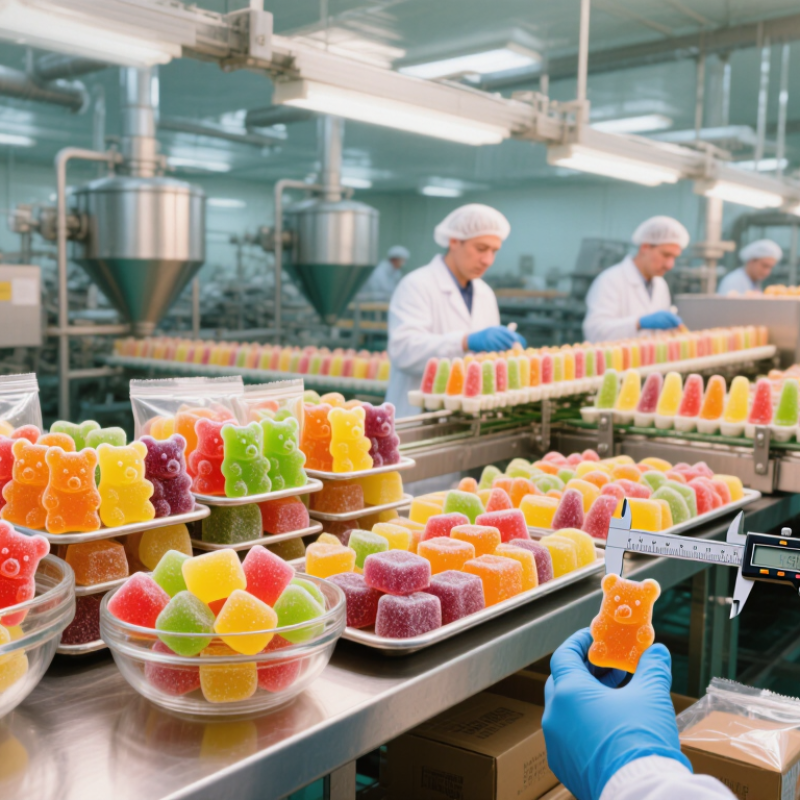
Jelly candy manufacturers in China typically produce gummies, fruit-flavored jellies, sugar-coated pieces, and molded candies in shapes such as bears, rings, or fruit. Some factories also make layered jellies or products with a soft center. Texture varies from springy and chewy to tender and easy to bite. Small differences matter.

Formulas may use gelatin, pectin, starch, or other gelling agents, depending on the requested texture and product design. Production often involves cooking a sweetened mixture, depositing it into molds, allowing it to set, and then drying or coating the pieces. Sour sugar, fruit flavors, and varied colors can be added to suit a product brief. The exact recipe and process vary by factory.

For global buyers, useful checks go beyond appearance. Ask about ingredient specifications, allergen controls, piece dimensions, moisture consistency, and packaging options. Review samples for chew, flavor, and stickiness, then confirm that production batches match the approved sample. One sample is not proof of consistency. It can still reveal problems early, though. Clear records and repeat testing provide a firmer basis for evaluating quality and shelf-life performance.
How to Evaluate Chinese Jelly Candy Suppliers

Top 10 Jelly Candy Manufacturers in China for Global Buyers
How to Evaluate Chinese Jelly Candy Suppliers

A polished catalog tells only part of the story. Ask suppliers for product specifications covering ingredients, texture, piece size, packaging, and shelf life. Compare those details with a sample, not just a product photo. Jelly candy should keep a consistent bite and shape across the batch. Small differences matter. Request recent production records and ask how the supplier checks weight, appearance, and seal quality. Clear answers are a useful sign of a well-managed process.

Check whether the factory can support your order size, target delivery window, and packaging requirements. Ask for relevant food-safety certificates, their scope, and current validity; verify them with the issuing body where possible. A video call or facility visit can help you understand production flow and storage practices. Still, one visit cannot prove every batch will be perfect. Discuss traceability, complaint handling, and what happens when a sample differs from shipped goods. Some buyers overlook this last question.

Tips: Send the same written checklist to each candidate. Keep a sealed reference sample, record its batch details, and compare it with the first shipment. Ask for a small trial order before committing to larger volumes. If an answer feels vague, ask for evidence. You may need to revise your checklist after the first round; that is normal.

Top 10 Jelly Candy Manufacturers in China for Global Buyers

Top 10 Jelly Candy Manufacturers in China for Global Buyers

Choosing among China’s leading jelly candy manufacturers takes more than comparing catalog photos. Global buyers should examine production capacity, ingredient documentation, quality-control procedures, and experience with export orders. Ask how the factory manages texture and color consistency across batches. A sample may taste excellent, while a large production run can feel different.

Tips: Request recent product specifications, packaging options, and sample batches. Confirm that ingredient and allergen information is clear, and ask how production dates and lot numbers are recorded. Verify certifications directly rather than relying on a logo in a brochure. Small details matter.

A useful shortlist balances product range with reliable communication and realistic lead times. Discuss target texture, flavor profile, piece size, and packaging before requesting a quotation. Ask about minimum order quantities and how changes are handled after approval. Keep written records of agreed specifications. Some factories may answer slowly; that is worth noticing, though it is not proof of poor quality. A neat sales presentation can hide gaps in production detail. Buyers should compare evidence, not promises, and arrange independent checks when an order warrants them.

How the Manufacturers Compare in Products and Capabilities

Comparing China’s jelly candy manufacturers means looking beyond catalog size. Some specialize in soft, fruit-filled gummies; others handle firm jellies, layered pieces, or custom shapes. Grand View Research valued the global confectionery market at USD 233.5 billion in 2023 and projected 3.6% annual growth from 2024 to 2030. This broad category includes much more than jelly candy, so it signals market context, not jelly-specific demand.

Capabilities vary in cooking, depositing, drying, and packaging. Ask whether a supplier can hold a consistent bite across batches, not just produce an attractive sample. Check available shapes, flavor options, minimum order quantities, lead times, and packaging formats. Small details matter. Request product specifications and recent batch records, then compare them against your target texture and shelf life. A polished sample can still hide process inconsistencies. I would also verify testing arrangements directly; supplier descriptions alone are not enough.

Tips: Send the same brief to each candidate, including piece weight, texture, packaging, and expected volume. Compare written answers, pilot samples, and quality documents side by side. No factory wins every brief.

What Global Buyers Should Check Before Placing an Order

Before requesting quotations, define the product precisely: gel texture, piece size, flavor, color, packaging, and shelf life. “Fruit jelly” can mean very different things between suppliers. Ask for a current specification sheet, ingredient list, allergen statement, and batch-specific certificate of analysis. Check that testing covers the risks relevant to your destination market, not just the tests a factory routinely offers.

Market figures show why careful sourcing matters. Fortune Business Insights estimated the global confectionery market at USD 242.56 billion in 2023; that broad category is not a jelly-candy forecast, but it signals a competitive market.

FAO’s November 2023 Food Outlook estimated 2023/24 global sugar production at 179.9 million tonnes and consumption at 176.1 million tonnes. For buyers, ingredient availability and price can affect quotations. Ask how long prices remain valid, and whether a change in sugar or packaging costs can alter the order.

Then verify the people and process behind the paperwork. Request recent third-party audit details, traceability records, production capacity, minimum order quantities, and realistic lead times. Test samples from the intended production line, not only polished showroom samples. Check carton strength and whether moisture protection suits your shipping route. Get the agreed recipe, tolerances, payment schedule, and remedies for defects in writing.

One detail is easy to miss: a good sample does not prove every production batch will match. Build inspection and approval steps into the purchase order.

Article Source:

Call Now Button