Top 10 Chinese Herbal Medicine Suppliers in China
Picking a supplier for Chinese Herbal medicine isn't just about comparing product lists and prices. You've gotta dig deeper—ask about sourcing, how they control manufacturing, their testing procedures, and what paperwork they provide for shipments. The thing is, suppliers in China come in all shapes and sizes, each with their own specialities. So just having a slick website doesn't prove they're reliable. Honestly, you should request their current quality certificates and test reports specific to the products you're interested in. Then double-check what those documents actually cover and who issued them. Little details like that can make a huge difference.
So, you might stumble upon the term “Chiniese Herbalist” when you're searching online—a common typo, right?—but when you look up “Traditional Chinese Herbalist,” that’s a whole different ballgame, speaking to a more specific kind of expertise. Just so we’re clear, this guide is all about suppliers and what they offer, not really about individual practitioners or giving you medical advice. Like, if you're looking for a doc or treatment, you're in the wrong place. Alright, so here's a list of ten China-based companies that might be worth checking out if you're a buyer. I've taken into account their product range, traceability, quality systems, communication, and export experience. But keep in mind, these are just starting points—not guarantees. Companies can change, and their standards or capabilities might shift over time, so it's really important to verify the documentation directly with each one yourself.
Okay, so if you're really going to compare two options, you can't just take their word for it when they say 'premium quality'—like, what does that even mean? Start by digging into where the ingredients actually come from, how they label each batch, and what kind of testing they're doing behind the scenes. And hey, if you ask a supplier to explain their process and they can't do it in plain, everyday language? That's a red flag. They should be able to give you consistent records for the stuff you're eyeballing. Sure, some things are hard to compare across different companies, and that's fine—admit it instead of pretending you know. That gap in info is worth paying attention to, not just guessing and hoping for the best. Yeah, buyers should definitely double-check that the products they're eyeing and how they plan to use them actually comply with local rules in their own markets. Sure, that list can help you zero in on options, but you still gotta verify things on your own—don't just take it at face value.
China’s Chinese Herbal Medicine Supply Industry: Scope and Structure
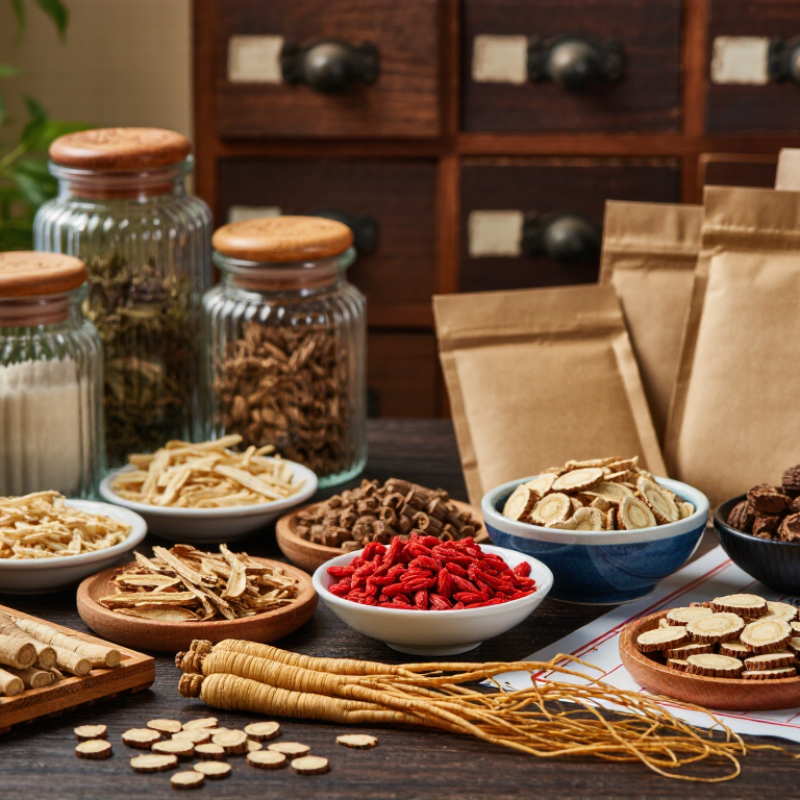
China’s Chinese herbal medicine supply industry spans cultivation, wild-resource management, sorting, drying, testing, processing, and distribution. The chain is layered. Farms and cooperatives supply raw materials; processors grade and clean them; manufacturers and hospitals purchase materials or prepared pieces. Each handoff can affect identity, moisture, contamination risk, and batch consistency. Traceability matters.
The WHO’s 2019 Global Report on Traditional and Complementary Medicine found that 170 of 194 Member Statesreported using Traditional Medicine. This is global context, not a measure of China’s market size. For buyers comparing suppliers, useful checks include documented origin, harvest and processing records, test methods, and representative batch certificates. ATcm Herbalist may understand traditional sourcing, but that alone cannot verify laboratory quality or delivery reliability. China’s Pharmacopoeia and applicable national standards provide technical reference points; supplier audits can show how those requirements are applied in practice. Data have limits: paperwork may describe a sample, not every shipment. A careful review should connect records to the actual lot, packaging, and storage conditions.
Key Criteria for Evaluating Herbal Medicine Suppliers
A reliable herbal medicine supplier should make each batch traceable to its growing region, harvest period, and processing site. Ask for botanical names, plant-part details, and documented identification methods. A Chinese Herbalist can help assess whether the material matches traditional specifications, but visual inspection alone cannot verify purity. Small differences matter.
Testing records should cover relevant contaminants, pesticide residues, heavy metals, and microbial quality. Request batch-specific results from a qualified laboratory, not only a general product sheet. The World Health Organization’s 2019 Global Report on Traditional and Complementary Medicine notes that 170 of 194 Member States reported using such practices. That broad use makes dependable quality controls important, though the report does not rank suppliers. A neat certificate is reassuring, but it is not the same as independent verification.
Evaluate consistency across several batches, including color, aroma, moisture, and particle size. Check how the supplier handles rejected lots, storage conditions, and changes in sourcing. Good documentation should connect test results to the delivered batch. Ask for a sample and compare its records with the shipment paperwork. That sounds simple. It is often where gaps appear. I would also ask who reviews deviations; a written procedure is useful, but real follow-through can be harder to judge.
Profiles of Suppliers Ranked 1–5
Rank 1: The leading supplier profile combines documented sourcing with consistent batch records. Buyers should look for botanical names, plant parts, origin details, and clear processing notes. A sample’s appearance matters, but it cannot confirm identity or purity on its own. Ask how each batch is tested and whether results can be traced to the material received.
Rank 2: A strong processing-focused supplier can explain drying, storage, and handling in practical terms. Check whether staff monitor moisture and protect materials from heat, light, and pests. Small details count. A clean warehouse and labeled containers are useful signs, though they do not replace independent quality checks. Rank 3: This profile suits buyers who need flexible volumes and responsive communication. Confirm that smaller orders receive the same identification and documentation controls as larger ones. It is easy to overlook this point.
Rank 4: An export-oriented supplier may offer organized paperwork and reliable shipment coordination. Verify that product descriptions match test records and shipping documents. Rank 5: A developing supplier may provide competitive options but need closer review. Request recent batch records, testing methods, and a facility visit where possible. No ranking removes uncertainty; even careful buyers can miss gaps when they rely on polished documents alone.
Profiles of Suppliers Ranked 6–10
Profiles ranked 6–10 often suit buyers who need specific herbs, flexible order sizes, or closer communication. Rank 6 may represent a supplier with a broad dried-herb catalogue and clear lot labels. Check whether each label includes the botanical name, origin, and harvest or processing details. Rank 7 could be a better fit for smaller trial orders. Ask for sample quantities and confirm how samples match later production batches. Small differences matter.
At rank 8, a supplier may stand out for careful sorting and packaging. Look for sealed, moisture-resistant bags and consistent cuts, not just attractive photos. Rank 9 may offer useful export documentation, but verify that certificates match the actual product and shipment. Rank 10 can still serve niche needs when communication is direct and lead times are realistic. A Chinese Medicine Herbalist may help buyers assess traditional identification, while qualified laboratory testing can support checks for identity and purity. Paperwork can look tidy; consistency is harder to judge. Ask specific questions, record answers, and revisit them when a new batch arrives.
| Rank | Anonymous sourcing profile | Regional / product focus | Common product forms | Buyer verification points |
|---|---|---|---|---|
| 6 | Northwest root-herb sourcing | Gansu is a notable production area for Chinese angelica (Danggui, Angelica sinensis) and Codonopsis root. | Dried whole roots, cut slices, and cleaned dried material. | Check botanical identity, origin and harvest records, moisture, foreign matter, and test results against the applicable product specification. |
| 7 | Ningxia goji-berry sourcing | Ningxia is associated with cultivation of goji berry (Lycium barbarum). | Dried whole berries and other dried-berry grades. | Verify species and declared origin; request moisture, pesticide-residue, heavy-metal, and microbiological test results appropriate to the intended market. |
| 8 | Anhui chrysanthemum sourcing | Anhui is known for chrysanthemum-growing areas, including the Huangshan region. | Dried flower heads and cut dried flowers. | Confirm species, growing and processing location, appearance and foreign-matter limits, and the relevant batch test documentation. |
| 9 | Sichuan rhizome-herb sourcing | Sichuan is a production area for Chuanxiong rhizome (Ligusticum chuanxiong). | Dried rhizomes, sliced material, and cleaned cuts. | Check identity, processing method, batch traceability, moisture, and contaminant testing against the agreed specification. |
| 10 | Zhejiang root-and-bulb sourcing | Zhejiang has established production areas for medicinal plants such as white atractylodes rhizome and Fritillaria thunbergii bulb. | Dried roots or rhizomes, sliced material, and dried bulbs. | Verify the exact botanical species and plant part, origin documentation, processing details, and market-specific quality and safety tests. |
Note: The rank numbers follow the requested title but do not represent a verified ranking of specific suppliers. These entries describe regional and product sourcing profiles; no company-specific capabilities, certifications, or performance claims are implied.
Product Ranges, Processing, and Quality Control
A strong Chinese herbal medicine supplier should offer more than a long catalogue. Buyers need clear details on each herb’s species, plant part, origin, harvest season, and batch number.
WHO’s 2019 Global Report on Traditional and Complementary Medicine states that 170 Member States reported using traditional medicine. That figure signals broad use, not uniform product quality. Ask whether raw materials are authenticated before processing and whether substitutions are documented.
Small details matter. A sliced root should have a consistent appearance, with no damp odor or visible foreign matter. WHO’s Good Agricultural and Collection Practices guidance for medicinal plants also highlights the importance of controlled cultivation, collection, and handling.
Processing records should show cleaning, drying, storage conditions, and lot segregation. Quality checks can include identity testing, moisture measurement, and screening for microbial contamination, pesticides, and heavy metals. Request batch-specific certificates of analysis, not only a general quality statement. Check that test methods and acceptance limits are stated.
Still, paper trails can look better than reality; independent verification and occasional facility audits help reveal gaps. Buyers comparing suppliers—or searching “Tcm Herbalist Near Me”—should ask how complaints, rejected batches, and recalls are handled. A supplier’s willingness to explain these imperfect parts of the process can be more useful than polished catalogue language.
How to Verify and Select a Suitable Supplier
Top 10 Chinese Herbal Medicine Suppliers in China
How to Verify and Select a Suitable Supplier
Selecting a supplier takes more than comparing prices or reading a polished catalogue. The WHO Global Report on Traditional and Complementary Medicine 2019 found that 170 Member States reported using traditional medicine; 124 had related laws or regulations. This shows how widely traditional medicine is used, but it does not certify any supplier. Treat it as context, not a quality score.
Ask for batch-specific test reports and confirm that the lot number matches the product offered. Check the botanical Latin name, plant part, country of origin, processing details, and harvest season. Review testing for identity, moisture, microbial contamination, pesticide residues, and heavy metals. Where possible, verify results with an independent laboratory and ask how samples are collected. Paperwork can look convincing. It still needs checking. A site audit or live video review can help assess storage conditions, staff procedures, and traceability. I can overlook small inconsistencies, so compare documents across several batches.
Tips: Request a sample, retain its batch details, and agree on written specifications before ordering. Check how the supplier handles failed tests, complaints, and changes in sourcing. A certificate alone is not enough.
Conclusion
China’s Chinese herbal medicine supply industry includes a range of growers, processors, and distributors serving different market needs. This article outlines how the supply chain is structured and introduces key criteria for comparing suppliers, such as product range, sourcing transparency, processing capabilities, documentation, and quality-control practices. It also presents profiles of suppliers ranked from 1 to 10, offering a consistent framework for understanding their general strengths and areas to assess.
The article further explains how herbal materials may be handled, processed, stored, and checked for quality. Buyers can use these insights to verify a supplier’s capabilities, review relevant records, clarify specifications, and assess whether communication and delivery arrangements meet their needs. A Chiniese Herbalist or other prospective buyer should conduct careful, independent checks and select a supplier based on clear requirements rather than rankings alone.