
7 Tips for Choosing the Right Electrical Test Set?

Selecting the right Electrical Test Set can determine whether a service job is efficient or frustrating. A dependable set supports accurate measurements, safer decisions, and clearer maintenance records. Technicians often work beside switchboards, motors, control panels, or outdoor equipment. Conditions change quickly. Dust, vibration, heat, and limited lighting can affect both instruments and users.

The seven tips in this guide focus on practical selection rather than impressive specifications. Measurement range matters, but so do accuracy, input protection, display clarity, battery life, and accessory quality. A cramped screen can slow a diagnosis. A fragile lead can create unnecessary risk. Manufacturer documentation and recognized testing standards provide useful evidence of reliability. Still, paperwork cannot replace hands-on evaluation. A device may perform well in a laboratory yet feel awkward inside a crowded cabinet.

Experience teaches another lesson. The most expensive tester is not always the best choice. A specialist may need advanced insulation or high-voltage functions, while a maintenance team may value simple operation and durable construction. Personal preferences can also mislead decisions. I have seen technicians choose familiar equipment without checking whether its range matched the application. That mistake is easy to repeat. Careful comparison helps prevent it. These tips encourage a balanced review of safety features, technical capability, working conditions, and long-term support. The goal is not to find a perfect instrument. It is to select a trustworthy Electrical Test Set for real tasks.
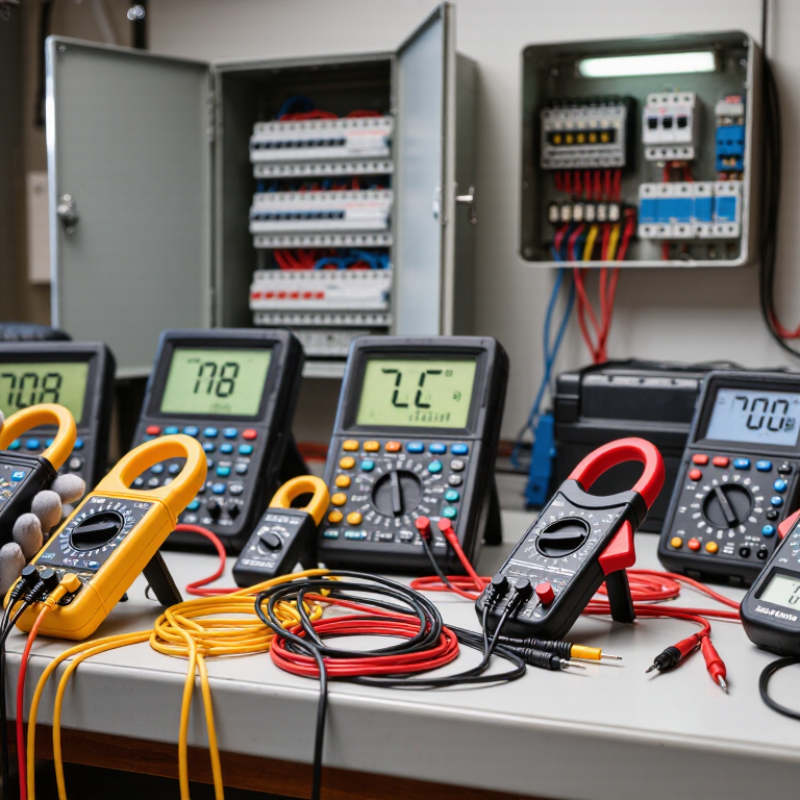
7 Tips for Choosing the Right Electrical Test Set?

Define the Electrical Test Set and Its Core Functions

7 Tips for Choosing the Right Electrical Test Set?

Define the Electrical Test Set and Its Core Functions

An electrical test set is a coordinated group of instruments for verifying electrical safety and equipment condition. It can measure voltage, current, resistance, continuity, insulation, phase sequence, and ground performance. Some systems also test protective relays and circuit-breaker timing. In practical work, the set should reveal hidden faults before energization or maintenance. It is not a magic box. The operator, procedure, and environment still affect results.

IEC 61557 covers measurement equipment for protective measures in low-voltage systems up to 1,000 volts AC and 1,500 volts DC. That scope helps users compare accuracy, test current, and operating limits. The 2023 NFPA 70B standard also emphasizes documented electrical maintenance and condition assessment. These practices matter. The U.S. Bureau of Labor Statistics recorded 145 fatal occupational electrical injuries in 2022. A suitable test set cannot remove every hazard, but it can expose weak insulation, open conductors, poor bonding, or unexpected voltage. Real work is messier. Readings can drift when leads are damaged or surfaces are wet.

Tip: Match each function to the job. A maintenance technician may need insulation and continuity tests, while commissioning work may require phase and ground verification. Check CAT rating, voltage range, accuracy, data logging, and calibration records. Keep the workflow simple. A complicated set may encourage skipped checks. Tip: Verify the method before purchase. Compare the manufacturer’s specifications with applicable standards, site procedures, and the equipment’s expected fault levels. I would also test the tester on a known reference source. Small oversights become expensive lessons.

Match the Test Set to Voltage, Current, and Measurement Requirements

7 Tips for Choosing the Right Electrical Test Set

Choosing the right electrical test set starts with the circuit, not the catalog shelf. Identify the highest expected voltage, continuous current, and possible fault current. A unit rated just above normal operation may fail during switching events. Leave a practical safety margin. Not just voltage. A 600 V system may require transient protection beyond its steady-state rating. Check the measurement category and installation environment before connecting leads. Dust, heat, and cramped cabinets can change the risk.

Current requirements deserve equal attention. A low-current sensor can provide excellent resolution, but it may saturate when a motor starts. A broad-range instrument may survive that surge, yet display leakage poorly. Match the input range, burden voltage, accuracy, and expected waveform. True-RMS capability matters with switching loads. Surges matter. Compare accuracy across the actual frequency and temperature range. Specifications can change outside laboratory conditions.

Measurement goals should guide the final choice. Insulation, resistance, phase sequence, power quality, and timing tests need different functions. Confirm lead ratings, input protection, calibration status, and data logging needs. In field work, gloves, limited lighting, and awkward access affect safe operation. I once preferred a compact set, then struggled with short leads and unclear readings. That choice was convenient, not complete. Review the procedure with a qualified engineer, and record uncertainty instead of hiding it. A test plan that seems obvious may still miss a transient.

Evaluate Safety Ratings, Protection Features, and Compliance

Choosing the right electrical test set starts with safety ratings, not attractive specifications. In field inspections, I have learned that a wide voltage range proves very little. Check the measurement category, such as CAT III or CAT IV, and match it to the installation environment. CAT IV equipment is intended for supply-side measurements, where transient energy can be severe. Read the rating on the instrument, probes, leads, and accessories. The weakest component limits the entire setup.

Protection features deserve close attention. Look for correctly rated fuses, current-limiting circuits, input overload protection, and clear warning indicators. Shrouded terminals can reduce accidental contact. Reinforced insulation adds another useful barrier. An auto-ranging function improves convenience, but it cannot replace careful range selection. Consider isolation requirements, enclosure strength, and an appropriate ingress protection rating. Do not assume a rugged case means safe internals. I once trusted a durable-looking enclosure and overlooked damaged test leads. That was an avoidable mistake.

Compliance evidence should be specific and verifiable. Check whether the test set meets relevant electrical safety standards, including applicable IEC or EN requirements. Request a declaration of conformity, calibration records, and test procedures. Calibration should be traceable to recognized national or international standards. A reliable supplier should explain limitations without vague promises. Ask how often the equipment requires inspection and what conditions invalidate its rating. Paperwork matters. So does training. Even a compliant instrument becomes hazardous when users rush, ignore warning symbols, or test beyond its rated environment.

7 Tips for Choosing the Right Electrical Test Set: Evaluate Safety Ratings, Protection Features, and Compliance

No. Selection Tip Key Evaluation Dimension Specification or Evidence to Verify Why It Matters Practical Decision Rule
1 Match the Measurement Category CAT II, CAT III, or CAT IV rating and the associated maximum voltage Check the complete marking, such as CAT III 600 V or CAT IV 600 V, on the test set and accessories. The category must match the installation point. Measurement categories indicate the expected level of transient overvoltage in different parts of an electrical installation. For distribution panels and fixed-building wiring, select a rating appropriate for CAT III or CAT IV locations rather than relying only on the nominal voltage.
2 Confirm Voltage and Transient Capability Working voltage, impulse withstand, and overload protection Verify that the test set’s voltage rating is equal to or greater than the circuit under test and that the technical documentation states transient or overload protection details. A device may be exposed to short-duration surges significantly higher than the normal system voltage. Do not use a test set when either the voltage rating or measurement category is lower than the installation requirement.
3 Inspect Input Protection Features Fuses, current limiting, overload detection, and protected terminals Look for high-interrupt-capacity fuses where applicable, independent input protection, automatic overload warnings, current limiting, and shrouded or recessed terminals. Protection reduces the risk of arc flash, fire, equipment damage, and injury caused by incorrect lead placement or unexpected faults. Prefer designs that maintain protection even after a measurement error and clearly indicate an overload condition.
4 Check Touch and Environmental Protection Enclosure design, probe insulation, and ingress protection Verify finger guards, shrouded plugs, insulated probe tips, secure lead connections, and an appropriate IP code where dust or moisture is present. IP2X/IPXXB relates to protection against access to hazardous parts. Physical barriers help prevent accidental contact with live parts and reduce risks in demanding field environments. Choose the highest practical environmental protection that is supported by documented test results, not by appearance alone.
5 Verify Standards and Compliance Applicable electrical safety and measurement standards Request a declaration of conformity and supporting test documentation for IEC 61010-1 and, where applicable, relevant parts such as IEC 61010-2-030. Check local regulatory requirements separately. Standards provide a documented basis for electrical, mechanical, thermal, and functional safety. Treat unexplained compliance logos or generic “safety tested” claims as insufficient without traceable documentation.
6 Evaluate Operating Conditions Temperature, humidity, altitude, pollution degree, and battery performance Compare the specified operating temperature and humidity range with the worksite. Check whether the ratings change above the stated altitude, commonly 2,000 m, and review pollution-degree limitations. Environmental conditions can affect insulation distances, accuracy, battery life, and the validity of safety ratings. Select a model whose documented operating limits cover the full site conditions, including seasonal extremes.
7 Plan Calibration and Verification Calibration traceability, uncertainty, self-test functions, and records Confirm availability of calibration certificates traceable to the SI system, stated measurement uncertainty, as-found/as-left results, and a documented calibration interval based on risk and use. Regular verification supports reliable results and helps demonstrate that measurements were performed with controlled equipment. Choose a test set that can be calibrated locally or through an accredited laboratory and that supports clear asset-history records.

Note: Always follow the test set manufacturer’s instructions, the installation requirements, and applicable local electrical safety regulations before performing measurements.

Compare Accuracy, Usability, Portability, and Durability

7 Tips for Choosing the Right Electrical Test Set?

Accuracy should match the decision you need to make. Check stated error limits, resolution, and performance across the full measurement range. A precise display cannot rescue a poorly calibrated instrument. Look for calibration records, traceable references, and clear verification procedures. These details support reliable results during audits and routine maintenance.

Usability matters when readings must be taken quickly. Choose controls that feel clear while wearing protective gloves. A bright display helps in a dim control room. Simple menus reduce setup mistakes. Input protection, audible warnings, and readable labels also deserve attention. I once selected a technically impressive tester with confusing controls. It slowed every inspection. That experience still influences my buying decisions.

Portability should fit the working environment. Check weight, handle design, cable storage, and battery life before ordering. A compact set is valuable on ladders or inside crowded panels. However, very small equipment may sacrifice connection stability or display space. Durability requires more than a rugged-looking shell. Examine seals, connector strength, drop resistance, and temperature ratings. Ask how the test set performs after repeated field use. Keep service access and replacement parts in mind. Sometimes the most durable choice is not the heaviest one. It is the instrument technicians can maintain correctly and carry without hesitation.

7 Tips for Choosing the Right Electrical Test Set

Use this weighted evaluation model when comparing electrical test sets. Accuracy receives the highest weighting because measurement errors can affect safety decisions, while usability and durability help reduce operating mistakes and downtime. Portability is especially important for field testing and maintenance work.

Assess Accessories, Maintenance Needs, and Total Ownership Cost

7 Tips for Choosing the Right Electrical Test Set

Tip 1:

Check the complete accessory package before comparing prices. Test leads, clips, probes, adapters, and carrying cases affect daily productivity. A missing shielded lead can delay a field measurement.

Tip 2:

Match accessories with your working environment. Look for durable insulation, secure connectors, and suitable length. Cheap replacements often become an unnoticed expense.

Tip 3:

Examine the maintenance process. Ask how often calibration, cleaning, battery replacement, and safety inspections are required.

Tip 4:

Confirm that service instructions are clear and practical. A test set that needs specialist attention for simple tasks may increase downtime. Keep spare fuses and batteries available. Small interruptions still cost money.

Tip 5:

Review calibration support and recordkeeping. Reliable certificates help technicians verify results and demonstrate disciplined procedures. I have found that neglected records create more uncertainty than expected.

Tip 6:

Calculate total ownership cost beyond the purchase price. Include accessories, training, calibration, repairs, software, storage, and transport.

Tip 7:

Consider the cost of incorrect results. Stable readings, clear controls, and suitable protection can prevent repeated testing. A lower-priced set may look attractive initially. It may not remain economical after several years. Compare realistic use, not showroom features. Ask technicians to test the controls while wearing gloves. Their feedback may reveal inconvenient buttons or fragile connectors that specifications cannot show.

Call Now Button