
Sourcing Make Up Pouches worldwide in 2026 requires more than comparing factory quotations. It demands evidence, technical judgment, and careful supplier verification. The global beauty market is projected to reach approximately $590 billion by 2028, according to McKinsey’s “The Beauty Market in 2023” report. That expansion increases demand for attractive, portable, and reliable packaging.
Flexible packaging is also expanding. Grand View Research valued the global flexible packaging market at about $268.4 billion in 2023. Its report forecasts continued growth through 2030. This momentum creates more supplier options, but not necessarily better ones. A low price may hide weak seals, unstable zippers, or inconsistent printing. I have found that small samples often look excellent. Production batches can tell a different story.
A practical sourcing plan should examine material structure, pouch dimensions, closure performance, ink compliance, and minimum order quantity. Ask factories for measurable test results, not only polished photographs. Request migration documentation, quality certificates, and batch-control procedures from qualified suppliers. The Sustainable Packaging Coalition also stresses designing packaging around material recovery and real collection systems. That reminder matters because recyclable claims can become vague across different countries.
Global sourcing adds further complexity. Freight costs, currency changes, customs requirements, and regional lead times can alter the final landed cost. A factory near the lowest unit price may not offer the lowest total cost. Build a shortlist across several regions, then compare audited samples under identical conditions. No sourcing model is perfect. Even experienced buyers can overlook a minor weakness until thousands of pouches arrive. The goal is not certainty. It is disciplined risk reduction.
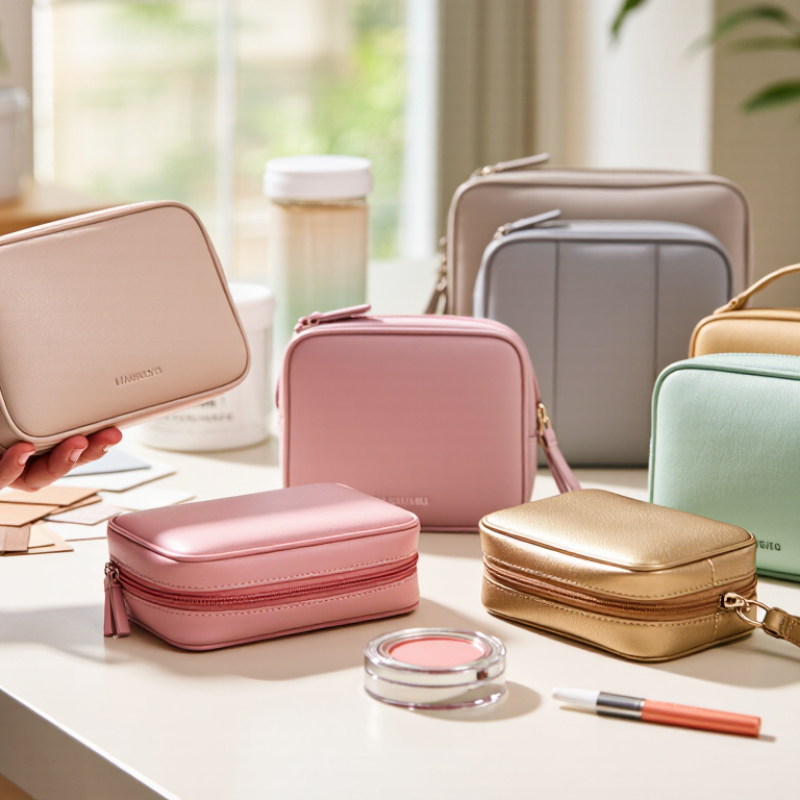
Before contacting overseas pouch suppliers, define the product in measurable terms. State the intended use, dimensions, capacity, and preferred shape. A pouch for loose powder needs different protection from one for brushes or travel bottles. Describe the fabric, lining, zipper, handle, and surface finish clearly. Include color references and artwork file requirements. Vague requests often create expensive sample revisions.
Set practical quality targets for stitching, zipper movement, print accuracy, odor, and color consistency. Request a pre-production sample before approving bulk manufacturing. Check how the pouch performs after opening and closing it repeatedly. Ask suppliers about minimum order quantities, sample fees, production lead times, packaging, and shipping terms. Confirm their inspection process and previous experience with similar products. Written specifications reduce misunderstandings across languages and time zones. Still, specifications can miss real handling problems.
Tips: Prepare a one-page sourcing brief with drawings, measurements, materials, tolerances, and photos. Compare at least three qualified suppliers using the same questions. Test samples in realistic conditions, including a handbag, bathroom shelf, and suitcase. Leave extra time for revisions. I once underestimated artwork approval time; that delay affected the entire launch schedule. Also review local packaging and product-safety requirements before placing an order. Supplier claims should be supported by samples, records, or inspection evidence.

Choosing the right material depends on product weight, moisture exposure, and brand positioning. PET and PE laminates offer strong seals and reliable everyday protection. Recycled plastic can reduce virgin resin use, but its clarity and consistency may vary. Paper-based pouches create a natural appearance, yet they often need a barrier film for oils and humidity. Foil laminates protect sensitive formulas well, although recycling can become more difficult. Small details matter.
Design should support both shelf appeal and daily use. A stand-up pouch saves space and improves visibility. A zipper helps customers reseal loose powder or accessories. Spouts suit liquid products, but they can increase cost and leakage risks. Test the seal with pressure, drops, and repeated opening. Check the zipper after at least ten cycles. A clear window looks useful, but it may weaken barrier performance. I would not approve samples from appearance alone.
Supplier selection requires more than a low quotation. Request material specifications, production photos, test records, and recent sample batches. Compare minimum order quantities, tooling fees, lead times, and correction policies. China offers broad material choices and mature pouch production. Vietnam and India can provide competitive capacity for growing orders. Turkey may support shorter regional supply routes, while European suppliers often emphasize traceability and controlled production. Regional advantages change quickly. A factory with polished samples may still struggle with color matching or delivery discipline. Verify before scaling.
In 2026, sourcing makeup pouches worldwide requires more than comparing unit prices. Verify the factory behind every quotation. Request its legal registration, production address, material specifications, and recent quality records. Ask for pre-production samples, not only attractive catalog photos. Inspect zipper alignment, seam strength, lining adhesion, odor, and print durability. Use an independent laboratory to test restricted substances and migration risks when the pouch touches cosmetics. One document is never enough. Trace every result to the exact material and production batch.
Tips: Schedule a live video inspection of the cutting, sewing, packing, and storage areas. Request time-stamped production photos. Check certificate issuers, testing scope, and expiry dates. Confirm whether the documents cover your selected material, not a similar product. Always approve a sealed reference sample before mass production.
Ethical verification needs equal attention. Ask for written policies against forced labor, unsafe workplaces, and discriminatory practices. Review worker training records, emergency exits, wage documentation, and waste-handling procedures. A polished factory tour proves little. A supplier may pass one audit and still weaken controls later. Include surprise inspections or independent social audits in your agreement. Also map material suppliers when possible, especially for recycled fabrics or metal components. I have seen attractive samples hide poor batch control. That mistake can cost more than the original savings. Keep inspection records, corrective-action deadlines, and traceability requirements in clear language.
Worldwide sourcing begins with a comparable quotation, not the lowest displayed price. Ask suppliers to price the same pouch size, material, zipper, printing method, and packaging quantity. A quote should separate unit cost, tooling, artwork preparation, inspection, and freight. Otherwise, a cheap offer may become expensive later.
Minimum order quantities deserve careful review. Some factories accept 1,000 pieces for standard designs but require 5,000 pieces for custom printing. Request both options. A smaller trial order can protect cash flow, although its unit price may be higher. Samples reveal sealing strength, odor, color accuracy, and zipper performance. Request a blank sample and a printed pre-production sample. Check both.
Small details matter.
Shipping terms can change the real landed cost. Compare EXW, FOB, CIF, and DDP quotes with the same destination and delivery assumptions. Confirm carton dimensions, gross weight, production time, transit estimate, and whether duties or local charges are included. Ask for the transport route, not only a delivery promise. Sea freight may reduce cost, while air freight can support urgent launches. Delays still happen. Build a buffer.
Keep every revision in writing. A practical supplier file should include specifications, approved samples, payment milestones, inspection standards, and replacement terms for defects. I would also challenge my own forecast: demand may be lower than expected, and leftover pouches can tie up capital. Recheck prices before placing the final order.
Sourcing makeup pouches worldwide in 2026 requires more than comparing factory quotations. I have learned that production control begins with a clear technical sheet. Specify fabric weight, lining, zipper type, dimensions, print colors, and acceptable tolerances. Send a sealed reference sample. It prevents arguments when colors look different on screen. Ask for a pilot batch before full production. Measure ten pouches from that batch. Check seams, odor, zipper movement, stitching density, and surface scratches. Small defects become expensive when packed by the thousands. I still miss details sometimes, especially inner coating consistency.
An independent inspection should happen during production, not only before shipment. Inspectors can count finished units, compare measurements, and photograph carton markings. Keep a defect limit agreed in writing. Customs preparation needs equal discipline. Confirm the correct product description, material information, commercial invoice, packing list, carton dimensions, and destination requirements. Never rely on copied documents. One incorrect quantity can delay clearance or distort landed-cost calculations. Use packaging that protects corners without adding unnecessary weight. Request a pre-shipment document review from a qualified logistics or customs professional.
Reordering should use evidence, not optimism. Record weekly sales, stock on hand, transit time, defect rates, and seasonal demand. Set a reorder point before inventory becomes uncomfortable. Keep the approved sample and inspection report together. They become practical controls for the next batch. Negotiate capacity and lead times early, but avoid ordering blindly. A cheaper unit price may hide slower production or higher inspection failures. Review supplier performance every shipment. Improve one specification at a time. Perfect systems are rare; disciplined records are more useful.