How to Source Balm Lip Tint in 2026?

In 2026, sourcing a Balm Lip Tint takes more than finding a flattering shade and an attractive price. Buyers need to understand the formula, packaging, production capacity, and supplier’s quality process before placing an order. A smooth sample can look promising under bright studio lights, yet feel waxy in cool weather or fade unevenly after a few hours. Small details matter.

This guide explains how to compare manufacturers, request useful samples, and check product claims without relying on sales language alone. Ask for a clear ingredient list, shade references, packaging specifications, and written quality standards. Discuss minimum order quantities, lead times, customization options, and how defects are handled. Where relevant, request documentation that supports product safety and applicable market requirements. Verify details directly with the supplier, and consider qualified testing before approving a commercial run.

That sounds tidy. Real sourcing rarely is. Samples may vary between batches, and a supplier’s polished presentation does not prove consistent production. Keep notes on texture, color payoff, scent, cap fit, and performance after repeated use. Compare the product in ordinary conditions, not just at a trade show. This article offers a practical starting point for evaluating potential partners and reducing avoidable surprises. It cannot replace independent checks, and some decisions will still involve trade-offs. A lower unit price may mean a larger order or less packaging flexibility. Ask specific questions, save the answers, and choose a supplier whose process you can verify—not merely one whose sample looks good.

How to Source Balm Lip Tint in 2026?

Define Balm Lip Tint Requirements and Target Markets

How to Source Balm Lip Tint in 2026?
Define Balm Lip Tint Requirements and Target Markets

Before contacting suppliers, define what the product must do. Should it feel like a cushiony balm, leave a sheer stain, or provide noticeable color in one swipe? Write down your priorities for pigment strength, wear time, scent, finish, and texture. Specify packaging too: a twist-up tube behaves differently from a small pot, especially in warm conditions. Decide which customers you want to reach, such as people seeking subtle everyday color or shoppers who prefer richer shades. Keep the first brief focused. That matters. A long list of “must-haves” can make supplier comparisons harder.

Tips: Request samples with clear formula and packaging details. Test them on different skin tones and in realistic routines, including after a drink or a meal. Test it. Record color payoff, comfort, scent, and any changes over time instead of relying on memory.

For each target market, check which shades and product claims customers expect, then confirm that the supplier can support suitable documentation and labeling for your intended sales regions. Ask about ingredient specifications, quality checks, batch consistency, and stability testing. Compare responses in writing, not just during calls. A sample may feel lovely on day one, yet become waxy or lose color later. I would not assume one formula fits every audience; sometimes the best-selling shade is not the easiest one to manufacture consistently.

Identify Manufacturers, Labs, and Ingredient Suppliers

A balm lip tint depends on more than a smooth sample. The manufacturer should show experience with anhydrous or low-water formulas, depending on the product design. Ask about mixing equipment, filling temperatures, minimum order quantities, and production records. Request a small pilot batch before agreeing to a larger run. Small details matter. A glossy brochure cannot confirm consistent color or comfortable wear.

Use an independent or in-house lab to assess stability, texture, and packaging compatibility. Ask how the tint behaves after heat exposure and repeated opening. Check whether the chosen tube or pot changes the product’s scent, color, or feel. Request clear test methods and written results, not just verbal assurances. A lab report still has limits; it cannot predict every user’s experience.

Ingredient suppliers should provide current specifications, certificates of analysis, and traceability information for each lot. Confirm that pigments are suitable for the intended lip application, and review fragrance, flavor, and allergen details where relevant. Compare samples from more than one supplier when color or texture is critical. I would not treat the lowest quote as the best value. Documentation can be uneven, so note unanswered questions and resolve them before formula approval.

Verify Safety, Claims, Certifications, and Regulatory Compliance

Before sourcing a balm lip tint, request the complete ingredient list and documentation for the exact formula and shade. A colorant may appear in one shade but not another. Ask for current safety assessments, batch records, and test results relevant to the product, such as microbial quality and restricted contaminants. Check that documents identify the tested sample, not just a similar product. Small details matter.

Review every claim on the packaging and sales sheet. “Moisturizing” should have reasonable supporting evidence, while claims about lasting wear need testing that reflects normal use. Be cautious with phrases like “hypoallergenic” or “natural”; they do not replace evidence or guarantee suitability for everyone. I still find polished brochures less useful than clear, traceable records. That distinction is easy to miss.

Check certificates directly with the issuing organization, and confirm their scope covers the factory, product, or process being offered. A quality-management certificate does not automatically certify a lip tint’s safety. Then compare the ingredient list, color additives, warnings, and label details with the rules in each intended market. Requirements differ by destination and can change. Keep dated copies of the supplier’s records, and resolve gaps before approving production. Some paperwork may look complete but leave practical questions unanswered.

How to Source Balm Lip Tint in 2026? - Verify Safety, Claims, Certifications, and Regulatory Compliance

Due-Diligence Dimension What to Verify Evidence to Request Acceptance Check Regulatory or Technical Reference
Formula and intended use Confirm whether the product is a cosmetic lip tint or also makes a drug or therapeutic claim. Review the full formula, including pigments, flavorings, fragrance, and preservatives. Complete quantitative formula; ingredient specifications; intended-use statement; current safety assessment. Formula and claims describe the same intended use. Flag claims such as treating a disease or changing body structure or function for regulatory review. U.S. product classification depends in part on intended use and claims; EU cosmetics are governed by Regulation (EC) No 1223/2009.
Color additives and pigments Check that each colorant is permitted for the product’s intended use and destination market. Some U.S. color additives require batch certification. Color-additive identity, applicable regulatory listing, supplier specification, and batch certificate where required. Every colorant is permitted for use on lips in each target market; the documentation matches the supplied pigment and lot. U.S. FDA color-additive requirements; EU Regulation (EC) No 1223/2009, including Annex IV.
Safety substantiation Ensure safety is assessed for the finished formula and foreseeable use, including incidental ingestion expected with lip products. Safety assessment or substantiation file; ingredient toxicology references; exposure assumptions; signed assessor details where applicable. Assessment covers the exact formula, use area, directions, and target population. In the U.S., the responsible person must maintain adequate safety-substantiation records. U.S. Modernization of Cosmetics Regulation Act (MoCRA); EU Regulation (EC) No 1223/2009, Article 10 and Annex I.
Microbiological quality Review microbial limits and specified-organism testing for the finished product. Confirm the test plan reflects the formula and packaging. Finished-product microbiology results; test methods; sampling and lot details; preservation-efficacy data where appropriate. Results meet the documented product specification. A laboratory result should identify the tested sample, method, and date. ISO 17516 provides microbiological limits and evaluation guidance for cosmetics; suitability depends on product characteristics and use.
Stability and packaging compatibility Check that the tint remains acceptable through its proposed shelf life and is compatible with the container, closure, and applicator. Stability protocol and results; packaging-compatibility assessment; defined storage conditions; shelf-life rationale. Data address relevant changes such as odor, color, texture, separation, leakage, and package interaction. Do not accept an unsupported shelf-life claim. Cosmetic safety and quality assessment should be supported by appropriate product-specific evidence; testing conditions should be documented.
Contaminants and restricted substances Assess relevant contaminants and substances restricted or prohibited in the destination market, including risks associated with pigments and raw materials. Risk-based contaminant test results; raw-material specifications; supplier declarations; corrective-action records for any out-of-specification result. Limits and test methods are tied to applicable market rules or a documented safety specification; avoid treating one market’s limits as universal. Check applicable U.S. and EU requirements for the ingredients, colorants, impurities, and product category in question.
Label and ingredient declaration Review product identity, net contents, ingredient list, responsible-party details, warnings, and language requirements for each market. Market-specific label artwork; ingredient nomenclature review; net-quantity check; substantiation for any label statements. Label is reviewed against destination-market rules before production. U.S. ingredient-list ordering has specific exceptions, including ingredients at 1% or less and color additives. U.S. cosmetic labeling requirements; EU Regulation (EC) No 1223/2009, Article 19.
Claims and performance tests Verify claims such as “long-lasting,” “moisturizing,” “water-resistant,” “natural,” or “hypoallergenic” against evidence appropriate to the wording and market. Claim-by-claim substantiation file; test protocol and results; consumer-study details if used; precise definition of each claim. Evidence supports the exact wording and does not mislead. Do not assume “natural,” “hypoallergenic,” or “dermatologically tested” has a single universal certification or definition. EU Commission Regulation (EU) No 655/2013 sets common criteria for cosmetic claims in the EU; U.S. claims must not be false or misleading.
Market access: United States Confirm who is the responsible person and whether facility registration and product listing obligations apply to the product and facility. Written responsibility allocation; applicable registration and listing records; renewal and update tracking; exemption rationale if relied upon. Confirm current MoCRA requirements and any applicable exemptions for the specific business and product. Do not assume an exemption without checking its conditions. MoCRA includes cosmetic facility-registration and product-listing requirements, with certain exemptions and exceptions.
Market access: European Union Before placing a cosmetic on the EU market, confirm an EU Responsible Person, a completed Product Information File, a Cosmetic Product Safety Report, and required notification. Responsible Person details; CPSR; PIF index and access arrangements; Cosmetic Products Notification Portal submission confirmation. Records relate to the marketed formula and label and are available to the relevant authorities as required. Notification does not constitute product approval. EU Regulation (EC) No 1223/2009, including Articles 4, 10, 11, and 13.
Manufacturing controls Assess batch consistency, hygiene controls, change control, deviation handling, traceability, and complaint and recall procedures. Quality-system documents; batch records; audit evidence; change-control log; traceability exercise; complaint and recall procedure. A documented, functioning quality system is in place. ISO 22716 is a cosmetics GMP guideline; do not treat a certificate alone as proof that every batch complies. ISO 22716:2007, Cosmetics — Good Manufacturing Practices (GMP); EU cosmetics GMP requirements under Regulation (EC) No 1223/2009, Article 8.
Certifications and environmental claims Check whether claimed certifications or attributes are relevant to the finished product, ingredients, facility, or packaging—and identify exactly which is covered. Current certificate; issuing body; scope; covered site or product; validity dates; audit status; supporting chain-of-custody records where relevant. Scope and status are independently verifiable. Treat certification as optional unless a specific market rule or commercial requirement makes it necessary; verify claims separately. Certification scope and claim rules vary. ISO 16128 provides guidance on natural and organic cosmetic ingredient definitions; it is not, by itself, a product certification.
Traceability and post-market readiness Ensure finished goods can be linked to production lots and ingredient lots, and that adverse-event escalation and recall responsibilities are clear. Lot-code format; supplier and batch records; distribution traceability; adverse-event and escalation procedure; mock-recall results. The supply chain can identify affected lots and distribution records promptly. For U.S. serious adverse events, the responsible person has a 15-business-day reporting requirement under MoCRA. MoCRA adverse-event requirements; EU Regulation (EC) No 1223/2009 includes serious undesirable effect and reporting provisions.

Review note: Requirements can differ by destination market and may change. Confirm current rules and the final product’s classification before placing an order or marketing the product.

Assess Samples, Formulas, Packaging, and Supplier Quality

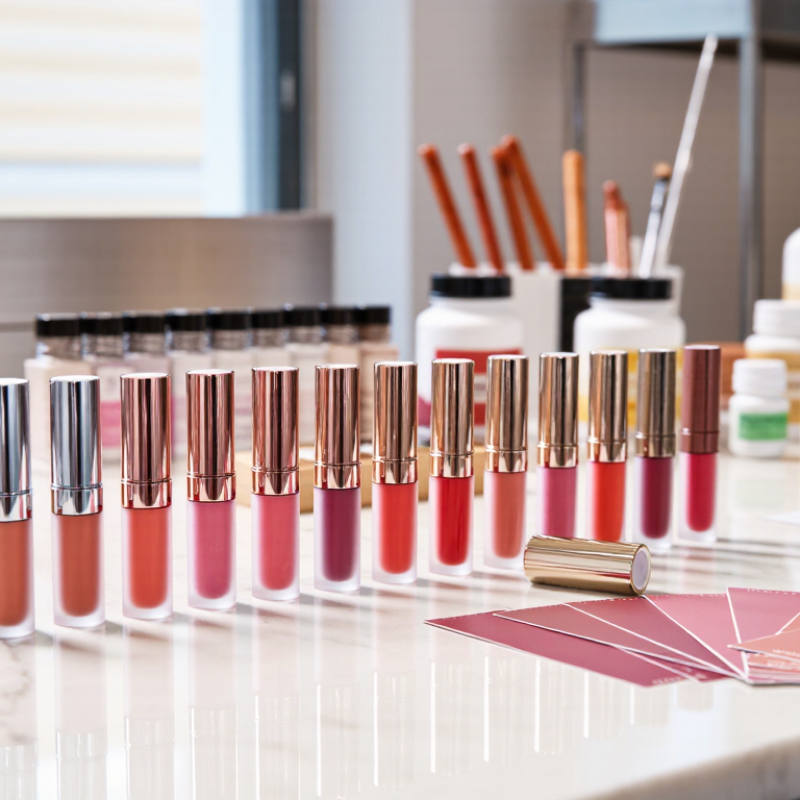
Sourcing a balm lip tint in 2026 starts with a representative sample, not a glossy product sheet. Ask suppliers for pilot units made with the intended formula and packaging. Wear each shade for several hours, then check color shift, comfort, scent, and migration around the lip edges. Compare results in daylight and indoor lighting. Small differences matter.

A balm tint should glide without feeling waxy or turning patchy. Check pigment distribution, payoff after one swipe, and whether a second layer stays even. Ask for ingredient specifications, batch records, and relevant safety and quality documents. Do not rely on a sample alone. It may be unusually good. A sample also cannot show how every production batch will perform, so ask how formula consistency is monitored.

Packaging needs hands-on checks. Twist the tube repeatedly; inspect the wiper fit, cap closure, leakage, and residue on the rim. Confirm the fill weight and component materials match the approved sample. Ask how incoming materials, production changes, and rejected batches are recorded. Clear answers help. Dated records are better. A small production run before a larger order takes time, but it may reveal flaws a polished sample hides.

Compare Costs, Minimum Orders, Lead Times, and Contract Terms

When sourcing balm lip tint, do not compare suppliers by unit price alone. Request a written breakdown for the formula, filling, packaging, samples, freight, and testing. A low quote may exclude color matching or custom components. Ask for prices at several quantities, then calculate the landed cost per saleable unit. Include a realistic allowance for damaged or rejected pieces. They happen.

Check whether the minimum order quantity applies per shade, component, or full order. Get the basis in writing. Lead times also need clear start points: sample approval, artwork sign-off, or deposit payment. Ask for separate estimates for sampling, production, and shipping. Confirm how delays are handled if packaging arrives late. Build in a buffer; launch schedules rarely run perfectly.

A contract should specify the approved formula and packaging, inspection standards, payment milestones, and remedies for defects. It should also cover cancellations, design ownership, and changes to materials or timelines. One easy-to-miss detail is whether a revised sample resets the production schedule. I would check that twice. A tidy spreadsheet feels reassuring, but signed terms are more dependable.

Call Now Button