
Top Types of Juice Bags for Wholesale Buyers

Wholesale juice packaging is a practical choice, not just a branding decision. A Juice Bag must protect flavor, fit filling equipment, and survive stacked cartons, delivery routes, and busy hands. Grand View Research estimated the global flexible packaging market at USD 256.49 billion in 2023 and projected continued growth through 2030. That broad market signal matters: flexible formats are established, but it does not prove that one pouch suits every juice or buyer.

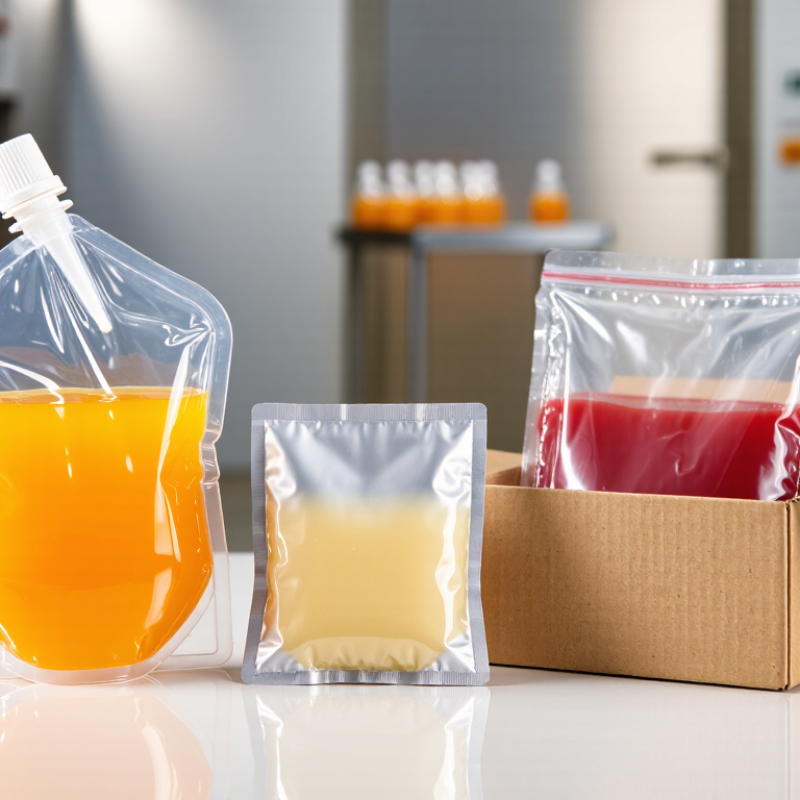
Common options include spouted stand-up pouches, flat sachets, and larger bag-in-box liners. Spouted pouches can simplify pouring and resealing; sachets keep portions compact; bag-in-box formats can suit food-service operations that dispense larger volumes. Check film structure, seal strength, barrier performance, fill temperature, and compatibility with your line before comparing unit prices. A small test run can reveal leaks that a polished sample hides. Not every pouch wins. Packaging researcher Susan Selke’s work suggests a useful buyer’s principle, paraphrased here: “Judge protection and material efficiency together.” Treat that as a decision lens, not a verbatim quotation. Compare supplier specifications with real transit and shelf-life trials, and ask for evidence behind performance claims. A caveat: buyers can overfocus on appearance. The best format is the one your product, equipment, and customers can reliably use.
Top Types of Juice Bags for Wholesale Buyers

Define Wholesale Needs by Juice Bag Capacity: 100–250 mL, 500 mL, and 1 L

Top Types of Juice Bags for Wholesale Buyers

100–250 mL juice bags are best planned around single servings, lunch kits, sampling, and travel. Their compact size can simplify portion control, but small packs leave little room for bulky closures. Check that the spout is easy to use and the filled bag stands or stacks reliably in its case. Small details matter.

A 500 mL format suits shoppers who want more than one serving without carrying a full litre. It can also work for small households and chilled grab-and-go sales. Confirm the pouch’s dimensions against your shelf depth and shipping cartons; a capacity number alone does not predict how efficiently bags pack. Test filled samples, not just drawings.

Choose 1 L bags for family use or food-service preparation, where fewer packs may reduce handling. Yet larger bags need dependable seals and clear storage instructions after opening. A common planning mistake is choosing capacity before estimating actual serving patterns.

OECD’s 2022 Global Plastics Outlook reports that packaging generated 40% of global plastic waste in 2019. That figure covers packaging broadly, not juice bags alone, but it makes right-sizing worth reviewing alongside barrier performance and disposal options. Check local collection guidance before making recyclability claims.
Compare Pillow Pouches for Compact, Single-Serve Juice Packaging

Pillow pouches suit juice buyers who need compact, single-serve packs for lunchboxes, vending, or sampling. Their flat shape stacks neatly, and a tear notch can make opening simple. The flexible walls also use less storage space than rigid bottles before filling. Small details matter: check seal strength, filling-line compatibility, and whether the pouch stands securely in a chilled display. It may wobble. That can affect shelf presentation.

The Flexible Packaging Association’s 2024 State of the U.S. Flexible Packaging Industry report estimated 2023 sales at $42.9 billion. That figure covers flexible packaging broadly, not pillow pouches alone, so it should not be read as a pouch-market estimate. Still, it shows the scale of the format’s wider packaging category. For wholesale buyers, compare quoted cost per filled unit, not film price alone. Include filling speed, transport damage, and expected product shelf life in the review.

Pillow pouches can be a practical choice when portability and low pack volume matter more than rigid, premium presentation. Ask suppliers for filled samples, then test them in actual cartons and coolers. Check leaks after handling. One weakness: thin packs can crease, making printed details harder to read. That trade-off deserves a real-world trial before a large order.

Assess Stand-Up and Spouted Pouches for 100 mL–1 L Juice Formats

Wholesale juice buyers should match pouch style to serving size, filling method, and how customers drink the product. Stand-up pouches suit counter displays and refrigerated shelves, where a flat base keeps compact packs upright. They can work well for 200–500 mL portions, while larger 1 L packs need a stable gusset and sturdy seals. Spouted pouches make sipping and resealing easier, especially for juice taken outdoors. Fit matters.

At 100 mL, a narrow spout may slow filling or frustrate users; test cap handling with wet hands. At 1 L, check grip, pouring control, and whether the pouch stays stable after opening. Ask suppliers for material structure and barrier data suited to the juice’s acidity, oxygen sensitivity, and planned storage conditions. Confirm compatibility with the actual filling process, including heat exposure where applicable, rather than relying on a generic pouch claim. Then run shelf-life and seal checks on filled samples.

Compare spout diameter, cap retention, laminate thickness, and seal strength across the intended size range. Transport trials matter too: cartons can shift, and corner pressure may cause leaks that a display test misses. A clean sample is not proof. Small batches can expose awkward pouring or weak seals before a wholesale order locks in the format.

Review Aseptic Juice Bags: Typical UHT Processing at 135–150°C for 2–5 Seconds

For wholesale buyers, an aseptic juice bag is more than a flexible container. Its performance depends on the full aseptic system: product treatment, sterile transfer, and protected filling. Typical UHT processing heats juice to about 135–150°C for 2–5 seconds, then cools it rapidly before filling. Exact conditions vary with acidity, pulp content, recipe, and equipment. Seconds matter.

Brief heating can help limit flavor changes compared with longer heating, but it does not guarantee a particular taste or shelf life. The bag needs suitable oxygen and light barriers, reliable seals, and compatibility with the filling line. Ask for process validation, seal-integrity results, and storage data for the actual juice and pack format. Check transport risks, too: sharp carton edges or rough pallet handling can cause leaks. Small details count. Confirm that the stated temperature and holding time reflect a validated process, not merely a general target. Aseptic packaging requires sterile conditions throughout; the bag cannot compensate for weak process control. Specifications may look excellent on paper. Test samples under realistic filling and distribution conditions before committing to large volumes.

Top Types of Juice Bags for Wholesale Buyers — Review Aseptic Juice Bags: Typical UHT Processing at 135–150°C for 2–5 Seconds

A comparison of common juice-bag formats and processing routes. Packaging format and sterilization method are separate choices: for example, a spouted pouch may be made for aseptic, hot-fill, or other validated filling systems.

Bag Type Typical Format and Capacity Common Package Materials Typical Processing and Filling Storage and Shelf-Life Considerations Wholesale Use and Key Checks
Aseptic juice pouch Flexible consumer pouch, commonly around 100–500 mL; sizes vary by product and filling line. Multilayer flexible laminate, often combining a sealant layer with barrier layers such as foil or metallized film. Exact structure depends on the required oxygen and light barrier. Juice is commercially sterilized separately, commonly by UHT treatment. A typical UHT range is 135–150°C for about 2–5 seconds; the product is then cooled and filled into pre-sterilized packaging in an aseptic system. Can be shelf-stable unopened without refrigeration when the product, package, and aseptic process have been validated. Actual shelf life depends on formulation, barrier performance, seal integrity, and storage conditions. Suitable for ambient distribution where aseptic filling is available. Confirm line compatibility, package sterilization method, oxygen barrier, seal performance, and validated shelf-life data.
Aseptic bag-in-box Flexible inner bag inside a corrugated outer box; commonly supplied in bulk capacities such as 5–20 L, with larger industrial formats also available. Barrier laminate inner bag, often with a fitment or dispensing valve, plus an outer corrugated carton for protection and handling. Used for juice or concentrate processed and filled through a validated aseptic system. UHT conditions are product-specific; the 135–150°C, 2–5-second range is a typical reference for some juice applications, not a universal schedule. Unopened ambient storage may be possible when the process and package are validated. After opening, refrigeration and a defined use period are generally required; follow product-specific instructions. Useful for food-service, ingredient, and bulk supply. Check bag capacity, fitment compatibility, dispensing method, carton stacking strength, and post-opening handling requirements.
Retort pouch Flat or stand-up flexible pouch; often used for single-serve or family-size portions, with capacities varying by product and package design. Heat-resistant multilayer laminate designed to withstand retort processing; structures commonly include polyester, barrier layers, and a heat-sealable inner layer. Product is sealed in the pouch before thermal sterilization in a retort. Time and temperature are established for the specific product, pouch, and process; retort processing is not the same as aseptic UHT filling. May be shelf-stable unopened when a scheduled process and package have been validated. Heat exposure can affect juice flavor and color, depending on the formulation and process. Consider when processing in the final sealed package is required. Confirm retort suitability, seal strength, pouch dimensions, and the processor’s validated thermal schedule.
Hot-fill pouch Flexible pouch, often in small or medium consumer sizes; may be flat, gusseted, or fitted with a closure. Heat-resistant laminate with a sealant layer selected for the filling temperature and product acidity. Hot product is filled into the package and sealed under a validated hot-fill process. The required filling temperature, hold time, and cooling conditions depend on the product and package. Storage conditions and shelf life depend on the validated process and package barrier. Some products require refrigeration; ambient stability should not be assumed without validation. Check the pouch’s rated filling temperature, closure and seal performance, cooling requirements, and compatibility with the filling equipment.
Spouted pouch Flexible pouch with a fitment and cap; common consumer sizes include roughly 90–500 mL, with substantial variation. Multilayer film pouch with a molded fitment and cap. Film barrier and fitment materials are selected for the intended product and process. A package format rather than a processing method. Depending on its design, it may be used with an appropriate aseptic, hot-fill, or other validated filling process. Shelf stability depends on the filling process, barrier, closure integrity, and product formulation. A cap alone does not make a product shelf-stable. Convenient for resealable products and portion control. Verify fitment position, cap torque or seal requirements, dispensing performance, and filling-line compatibility.
Stand-up or pillow pouch Stand-up pouches use a bottom gusset; pillow pouches are typically a simpler sealed flexible format. Available in a wide range of consumer and bulk sizes. Flexible film or laminate chosen for the product’s required moisture, oxygen, and light barrier, as well as its sealing and filling conditions. These describe pouch shapes, not preservation processes. They may be paired with different filling methods only when the film, seals, product, and production line are designed and validated for that method. Storage requirements vary by product and process. The pouch shape by itself does not determine whether the juice is shelf-stable. Compare package stability, usable fill volume, seal area, film barrier, and case-packing efficiency. Request samples for line trials before committing to volume.

Important: UHT time and temperature are illustrative industry ranges, not a processing specification. A qualified process authority must determine and validate the appropriate schedule for the juice formulation, equipment, package, and target market. Shelf-life claims should be supported by product-specific validation and applicable regulatory requirements.

Check Food-Contact Compliance Against FDA 21 CFR Part 177 and Barrier Specs

For wholesale juice bags, food-contact compliance starts with the exact material touching the drink. FDA 21 CFR Part 177 covers certain polymer substances, but it is not a blanket approval for every pouch or laminate. Ask suppliers to identify the applicable section and confirm that the material suits your juice and filling conditions. That detail matters. Check supporting declarations and test records for the finished structure, including adhesives or other layers where relevant.

Barrier figures deserve the same scrutiny. Compare oxygen transmission rate and water vapor transmission rate, and ask for test conditions such as temperature and humidity. Light protection may also matter for juice quality. A pouch that performs well on a cool warehouse shelf may behave differently during hot filling or long transport. One caution: paperwork is not performance.

Request samples and test them on your filling line. Inspect seals after filling, handling, and storage; small leaks can be easy to miss. Match the bag’s barrier targets to the juice’s acidity, expected shelf life, and distribution climate. A neat spec sheet can still hide a weak seal. I would not treat one supplier’s “high barrier” label as a measurable guarantee. Compare documented values and confirm that the test method matches your intended use.

Article Source:

Call Now Button