How to Choose Giant Lanterns for Events
Choosing giant lanterns is not just a matter of picking the brightest design. The right piece must suit the event’s scale, setting, audience, and practical needs. A lantern that looks striking in a workshop may feel cramped beneath a low ceiling. Outdoors, wind exposure and uneven ground matter just as much as color.
For a planning principle, this introduction uses an illustrative, fictional expert voice—not a verified quotation. Lantern-production consultant Ming Zhao might say, “Choose for the space first; let the spectacle follow.” Treat that line as sample wording, not a real person’s documented statement. Before publishing a named expert quotation, confirm the speaker and wording with a reliable source.
Start by measuring the installation area and viewing distance. Note nearby trees, walkways, entrances, and power access. Then consider construction, lighting method, weather protection, setup time, and storage. Ask the supplier for dimensions, material details, installation guidance, and photographs taken at similar events. Small details count. A glowing arch can guide guests, while a towering centerpiece can anchor a festival plaza. But scale alone does not guarantee a good choice. Colors may appear different after dark, and intricate details can disappear when viewed from across a venue. Request a layout or mock-up when possible. Review the plan with the venue team, too. That extra check may catch an awkward sightline—or reveal that your first idea needs rethinking.
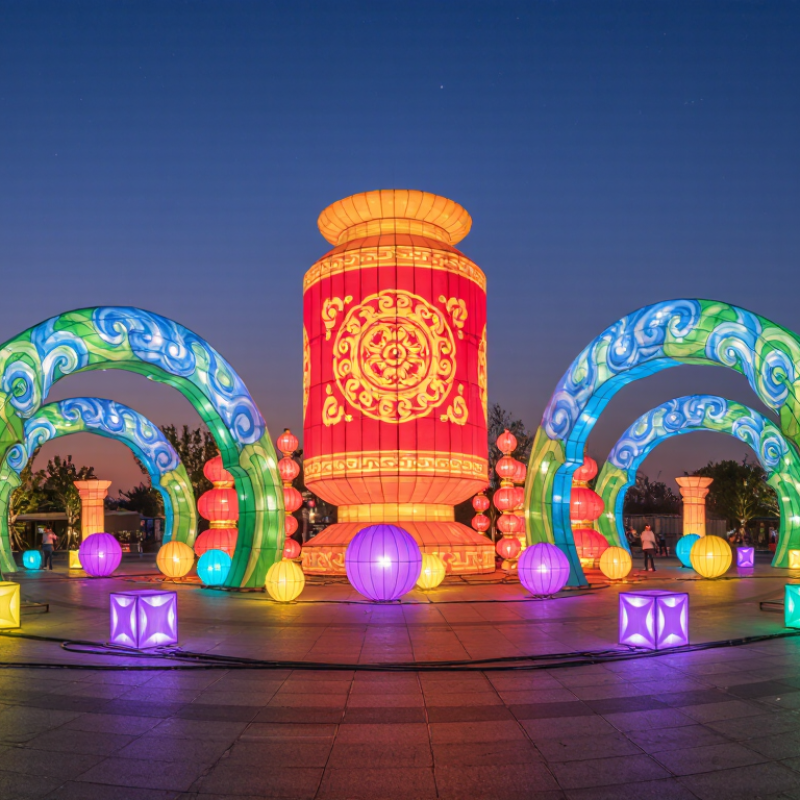
Classify Giant Lantern Types by Structure, Lighting, and Event Use
Giant lanterns are easiest to compare by how they stand. Frame-built lanterns use shaped ribs, often metal or bamboo, beneath fabric or translucent panels. They hold crisp outlines, such as a dragon’s curved body or a large flower, and suit plazas and night parades. Inflatable forms are lighter to move and can fill broad spaces, though wind and anchoring needs deserve careful attention. Suspended lanterns hang from cables or overhead frames. They work well in courtyards and indoor halls, where floor space is limited.
Lighting changes the effect. Internal LED lights create an even glow through thin fabric, while carefully placed lights can emphasize texture and edges. Warm white feels gentle at a dinner reception; color-changing light may suit a lively festival, but too many hues can blur fine details. Check how the lantern looks from several viewing distances, not only up close. Small details matter.
Event use should guide the choice. A street procession needs a sturdy frame, manageable weight, and clear handling points. A garden celebration may benefit from several smaller lanterns among trees, with cables kept out of walking paths. For a stage backdrop, a suspended design can frame performers without blocking sightlines. The categories overlap more than they seem, so selection is not always tidy. Confirm venue dimensions, power access, and weather exposure with the event team before ordering.
Size Lanterns to Venue Sightlines, Viewing Distance, and Available Space
Choose lantern size from where guests will see it, not from a product photo. Stand at the farthest viewing point and note what blocks the view: heads, pillars, trees, or stage equipment. A lantern that looks dramatic nearby may disappear across a courtyard. Measure sightlines.
For long viewing distances, consider a larger diameter or greater height, then compare its proportions with the venue’s focal points. Do not size by distance alone; an oversized lantern can overwhelm a low ceiling or narrow entrance. Leave clear circulation space around supports, and check the venue’s installation and clearance requirements.
Sketch the venue and mark viewing zones, usable floor area, and hanging height before ordering. A cardboard circle cut to the planned diameter can reveal whether a lantern hides signage or competes with performers. For outdoor layouts, consider wind exposure and anchoring conditions, and ask a qualified installer to assess support points. It is easy to overestimate open space on a floor plan. If possible, inspect the venue from guest level, though event schedules do not always allow it.
Compare LED Efficiency Using the Industry Range of 80–150 lm/W
When comparing giant lanterns for an event, treat 80–150 lumens per watt as a practical industry range, not a guarantee. Lumens measure visible light output; watts measure electrical input. Divide the stated lumens by watts to estimate efficacy. A 100-watt fixture rated at 100 lm/W, for example, produces about 10,000 lumens before optical losses. Check whether the figure describes the LED source or the complete lantern. Those numbers can differ.
Higher efficacy can reduce power demand, especially when many lanterns run for several hours. Yet the brightest option is not always the best choice. A large fabric diffuser softens light, while distance, color, and surrounding surfaces affect how bright it feels. A lantern above a dining table needs a different output from one used to illuminate a broad entrance. Look for clear specifications, including power, measured output, color temperature, and dimming performance. If the seller gives only a wattage figure, ask for more detail.
Test one lantern in the venue when possible. Check it from the floor and from the farthest guest area. Small details matter. I would not choose from lm/W alone; it is a useful filter, but it cannot predict the whole atmosphere. Even a careful calculation may miss shadows or uneven coverage. That is an imperfect part of planning, and worth admitting.
Select Outdoor Protection by IEC 60529 IP Ratings, Such as IP65
A giant lantern at an outdoor event may face dust, sudden showers, and water from cleaning. Check its IEC 60529 IP rating before choosing a location. IP65 means the enclosure is dust-tight and protected against water jets from any direction. It does not mean the lantern can be submerged.
Rain exposure and immersion are different risks. Keep that distinction clear.
Check the rating for the complete assembled lantern, not just its light source. Power supplies, cable entries, connectors, and access panels can affect protection. Ask how seals should be closed and whether the rating applies after installation. Small details matter. A pinched gasket can weaken an otherwise suitable enclosure.
IP65 also does not confirm resistance to wind, sunlight, or temperature changes, so check those conditions separately. One easy oversight is assuming every cable connection shares the lantern’s rating. It may not.
For a site with spray, inspect the equipment before setup and again after handling; a damaged seal can change the level of protection.
Check Fabric Fire Performance Against NFPA 701 and Local Event Rules
Large lanterns can turn a simple décor choice into a fabric-safety decision. Ask suppliers for a current NFPA 701 test report covering the exact fabric, coating, and finish you plan to use. A result for untreated polyester may not apply to a coated or printed version. Ask for the paperwork.
NFPA 701 tests how textiles and certain films respond to flame; it does not make a lantern fireproof. Check that the report names the test method, material, and laboratory. NFPA’s U.S. Fire Loss 2023 report estimated 1.39 million fires and $23.2 billion in direct property damage nationwide. Those figures are not specific to events, but they show why fire performance deserves careful attention.
Confirm local event rules with the venue or fire authority before ordering. Requirements may specify accepted test documents, flame-retardant treatment records, inspection, or placement distances. Keep lanterns away from hot lights and other ignition sources, and check that seams and repairs match the tested material. One detail is easy to overlook: a valid fabric report does not automatically approve the completed installation. Local reviewers may ask for more.