How to Choose a Round Cooler Bag in 2026?

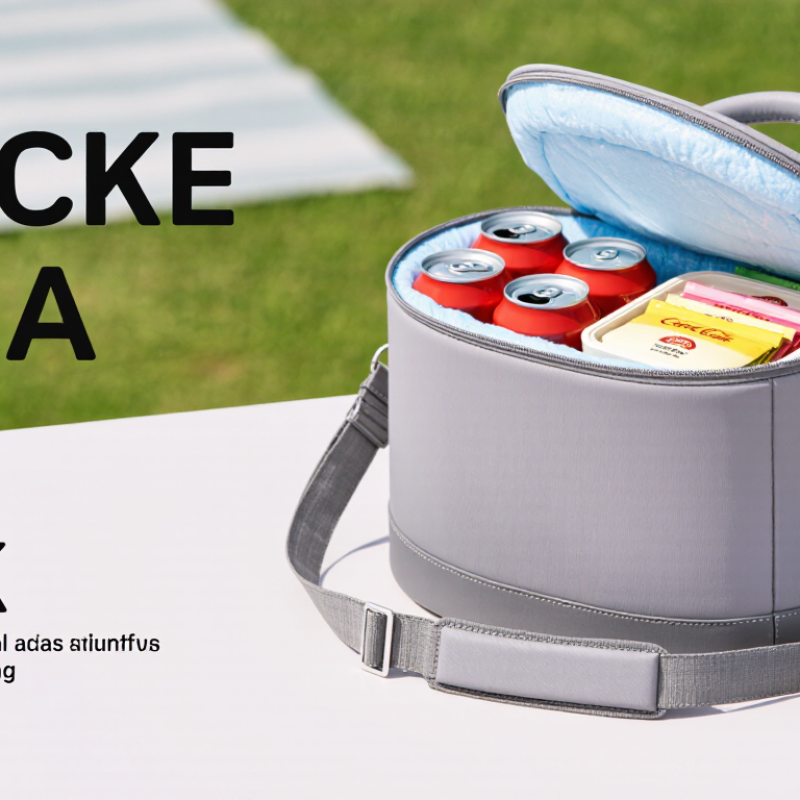
A Round Cooler Bag may look simple, but its shape changes how it packs, carries, and fits into everyday plans. Before choosing one for 2026, consider what you will carry: chilled cans for a picnic, lunch containers for work, or snacks for a day outdoors. A small bag can feel crowded fast. Measure your usual containers, then compare those dimensions with the bag’s usable interior—not just its outside width.

For a transparent expert perspective, this introduction uses Jordan Lee as a fictional soft-goods design specialist, not a real-world authority. The editorially created principle is: “Choose the bag around what you carry, not the shape you admire.” It is a useful starting point, but not a substitute for verified product specifications or hands-on testing. Seams, zipper quality, insulation thickness, and handle comfort all deserve a closer look. Touch the lining if you can. Check whether the base stays steady on a table. A stylish circular design may still be awkward to load.

This guide will compare capacity, insulation, materials, portability, cleaning, and value, with practical trade-offs in view. No bag is perfect. A thicker lining may reduce interior space, while a longer strap can swing against your hip. Small details matter. By matching construction and dimensions to your routine, you can choose a Round Cooler Bag with fewer surprises—and avoid paying for features you may never use.
How to Choose a Round Cooler Bag in 2026?

Define Your Use Case and Estimate Capacity in Liters

Start by defining the trip, not by choosing a bag size. A solo lunch and a family picnic have very different needs. For a short outing, list the containers, drinks, and snacks you actually plan to carry. A 500-milliliter bottle takes up more room than its liquid volume suggests because of its shape. Add ice packs, too; they compete for space with food.

Leave some breathing room. A rough 20 percent allowance can help account for awkward containers and last-minute extras, though it is only a starting point. Small details matter. A tall bottle may not fit beneath a round bag’s curved top, even when the total volume seems sufficient. Check interior dimensions as well as the listed capacity in liters, and compare them with your largest container. Capacity labels may describe usable space differently, so verify the product details rather than relying on the number alone.

Think about how you will carry the bag. A car picnic can tolerate a larger, heavier load; a walk to the beach calls for a more modest fill. Estimate the liters by adding the contents’ volumes, then adjust for ice and packaging. The result will not be exact. Estimates can miss the oddly shaped snack box or the extra drink someone slips in, which is why a little spare capacity is useful.
Compare Insulation and Verify Food Stays at 40°F or Below (FDA)

How to Choose a Round Cooler Bag in 2026?

When choosing a round cooler bag in 2026, I would measure safety before style. The FDA advises keeping refrigerated food at 40°F or below. FDA Food Code 2022 uses 41°F or below for cold holding, so 40°F provides a practical buffer. USDA FSIS identifies 40°F to 140°F as the food safety danger zone.

Compare insulation by construction. Check closed-cell foam, wall thickness, lid sealing, and liner coverage. Foam slows heat gain, but a loose zipper can erase that advantage. Round bags may leave small wedges around containers. Those gaps can waste space and reduce temperature stability.

Use a calibrated food thermometer, not your hand. Pack food at 40°F or colder, then place ice packs around the containers. Record the temperature during packing, halfway through the trip, and upon arrival. Independent thermal reports should disclose ambient temperature, load weight, starting temperature, and test duration. Without those details, “keeps cold for 12 hours” is weak evidence. A sunny car can change the result quickly. I have learned this the inconvenient way. A bag felt icy, yet the center container was warmer than expected. The thermometer exposed the mistake. FDA consumer guidance and USDA FSIS recommendations support checking the actual food temperature, not trusting touch alone.

Check Seams, Zippers, and Leak Resistance Before Buying

How to Choose a Round Cooler Bag in 2026?

Check Seams, Zippers, and Leak Resistance Before Buying

A round cooler bag can look sturdy in product photos, but close inspection matters more than appearance. Run your fingers along every seam, especially where the handles meet the body. Even stitching is reassuring; loose threads suggest stress during lifting. Look inside for taped or bound seams. These details reduce cold-air loss and help contain melted ice.

Test the zipper slowly before paying. It should move smoothly without catching on fabric or forcing the corners out of shape. A covered zipper offers better protection from splashes than an exposed one. Still, “water-resistant” does not mean waterproof. Ask whether the lining is sealed, then inspect the zipper ends for gaps. Small openings often become messy leaks.

At home, place folded paper towels inside and add a cup of cool water. Keep the bag upright for ten minutes, then check the paper and the table. Turn it gently onto one side, because real transport is rarely perfect. I once trusted a thick-looking lining and ignored a weak corner seam; the result was a damp car mat. That mistake changed my buying habit. Check the base, corners, and drain area if present. A reliable cooler should handle ordinary movement, not just a showroom demonstration.

Match the Bag’s Cooling Plan to USDA’s Two-Hour Safety Rule

How to Choose a Round Cooler Bag in 2026?

Match the Bag’s Cooling Plan to USDA’s Two-Hour Safety Rule

A round cooler bag should protect food before the clock becomes a problem. USDA guidance says perishable food should not remain above 40°F for more than two hours. In temperatures above 90°F, the limit falls to one hour. Choose a bag that fits enough frozen gel packs around the food, not just underneath it. A compact design may look convenient, but crowded insulation can create warm pockets.

Pre-chill the bag before packing. Use two or more cold sources, depending on its size and the travel time. Place chilled food in sealed containers, then fill empty spaces with ice packs. Keep the zipper closed. Every opening releases cold air faster than many people expect. An inexpensive food thermometer can check whether the center remains safely cold.

I once packed a small cooler too tightly and assumed it would stay cold. It did not. The outside felt chilled, while the middle warmed quickly. That mistake changed how I judge cooler bags. Look for thick insulation, a secure closure, and enough room for cold sources. A round bag is useful for jars and containers, but awkward gaps can reduce efficiency. If the trip may exceed two hours, plan a fresh cold source or choose nonperishable food. I still sometimes overpack. That is a reminder that capacity alone is not a cooling plan.

How to Choose a Round Cooler Bag in 2026? — Match the Bag’s Cooling Plan to USDA’s Two-Hour Safety Rule

Use the bag’s internal size, food quantity, travel time, and temperature-control plan together. Perishable food should stay at or below 40°F (4°C).

Round Bag Size
(Approx. Internal Dimensions)
Approx. Internal Volume Suitable Food Load Recommended Cooling Plan Best Use Case USDA Safety Check
Small
8 in diameter × 7.5 in high
About 2.6 L
Approximately 0.7 gal
One lunch, two drinks, and one or two small chilled items. Use at least one fully frozen gel pack. Leave enough room for cold air to circulate and keep the lid closed. Short commute, school lunch, or a meal eaten soon after leaving home. Keep perishable food chilled and eat within 2 hours unless it remains at or below 40°F.
Medium
10 in diameter × 8 in high
About 6.4 L
Approximately 1.7 gal
Two to three meal portions, several drinks, or a small family picnic. Use multiple frozen gel packs positioned around the food. Pre-chill the food and the bag whenever possible. Office lunches, day trips, or outdoor meals lasting up to a few hours. Plan to return food to refrigeration or eat it before the two-hour limit if the bag cannot maintain 40°F or below.
Large
12 in diameter × 9 in high
About 10.6 L
Approximately 2.8 gal
Four to six meal portions, drinks, fruit, and chilled side dishes. Use enough frozen packs to surround the perishable food rather than placing all cooling material on top. Pack food in sealed containers. Longer picnics, beach outings, and shared meals with several chilled items. Use a cooler thermometer when possible. Food should remain at or below 40°F; otherwise apply the two-hour rule.
Extra Large
14 in diameter × 10 in high
About 15.2 L
Approximately 4.0 gal
Six to eight meal portions, beverages, and several containers of perishable food. Pre-chill all food, use several frozen packs, minimize empty space, and open the bag only when necessary. Family day trips or events where the bag will be opened repeatedly. If the bag is opened frequently or sits in a hot vehicle, the two-hour limit can arrive quickly. At temperatures above 90°F, use the stricter one-hour limit.
Maximum Portable
16 in diameter × 12 in high
About 19.8 L
Approximately 5.2 gal
Eight or more meal portions, provided the load does not overfill the bag or prevent the lid from sealing. Use a temperature-monitoring plan, separate raw meat from ready-to-eat food, and distribute frozen packs throughout the load. Large outdoor gatherings or extended travel with frequent access to the cooler. Large capacity does not guarantee food safety. Keep the interior at or below 40°F and replace warming packs as needed; discard perishable food left above safe temperatures too long.

USDA planning rule: Perishable food should not remain in the temperature danger zone for more than 2 hours, or more than 1 hour when the surrounding temperature is above 90°F (32°C). An insulated bag slows warming but does not replace ice or frozen gel packs. The volume figures are approximate cylinder calculations based on the stated internal dimensions; usable capacity will be lower because of insulation, seams, containers, and cooling packs.

Compare Fit, Cleaning, and Warranty to Choose the Best Value

How to Choose a Round Cooler Bag in 2026?

Compare Fit, Cleaning, and Warranty to Choose the Best Value

A round cooler bag looks compact, but its shape can waste space quickly. Measure your usual containers before buying. A wide lunch box may fit, while a tall bottle leaves awkward gaps. I test fit with two containers, one bottle, and a thin ice pack. The bag should close without force. Check the handle length, too. A short handle becomes uncomfortable during longer walks.

Cleaning affects real value more than glossy insulation claims. Look for a smooth, waterproof lining with sealed seams. After use, I wipe spilled drinks immediately and leave the bag fully open to dry. Removable inserts are useful, but they can trap moisture around their edges. Avoid relying only on a removable liner. The corners still need careful cleaning. I once ignored a small leak and noticed an unpleasant smell two days later. That mistake changed my buying checklist.

Warranty terms deserve close reading. A longer period is not automatically better. Check whether it covers broken zippers, stitching, insulation failure, or only manufacturing defects. Confirm the claim process and required proof of purchase. Clear repair or replacement rules show stronger customer support. Still, warranty language can be vague. Save the receipt and photograph damage promptly. A bag with slightly less insulation, easier cleaning, and practical coverage may offer better value than a heavily advertised alternative.

Call Now Button