
How to Choose the Right Roll Filter Media?

Choosing Roll Filter Media is not a simple matter of selecting the finest-looking fiber or the highest efficiency rating. The right choice depends on particle size, airflow, dust loading, moisture, and how often the filter can be changed. A media roll that performs well in a clean test may behave differently beside a busy production line, where dust builds unevenly across the filter face.

The U.S. Environmental Protection Agency’s “The Inside Story” report notes that concentrations of some indoor air pollutants can be two to five times higher than typical outdoor levels. That finding makes filtration choices consequential, but it does not point to one universal media. ASHRAE Standard 52.2 offers a recognized method for evaluating particle-removal performance; its results should be considered alongside pressure drop and operating conditions. Numbers matter. So does the application.

A practical selection process starts with the actual contaminant, required airflow, available filter area, and replacement schedule. Then compare media structure, efficiency claims, and pressure-drop data from the supplier. A small overlooked detail—such as high humidity or irregular dust loading—can shorten service life. One limitation: no verifiable named expert quotation was provided, so this introduction avoids assigning a fabricated quote to a specialist. The guide will focus on evidence that readers can check.
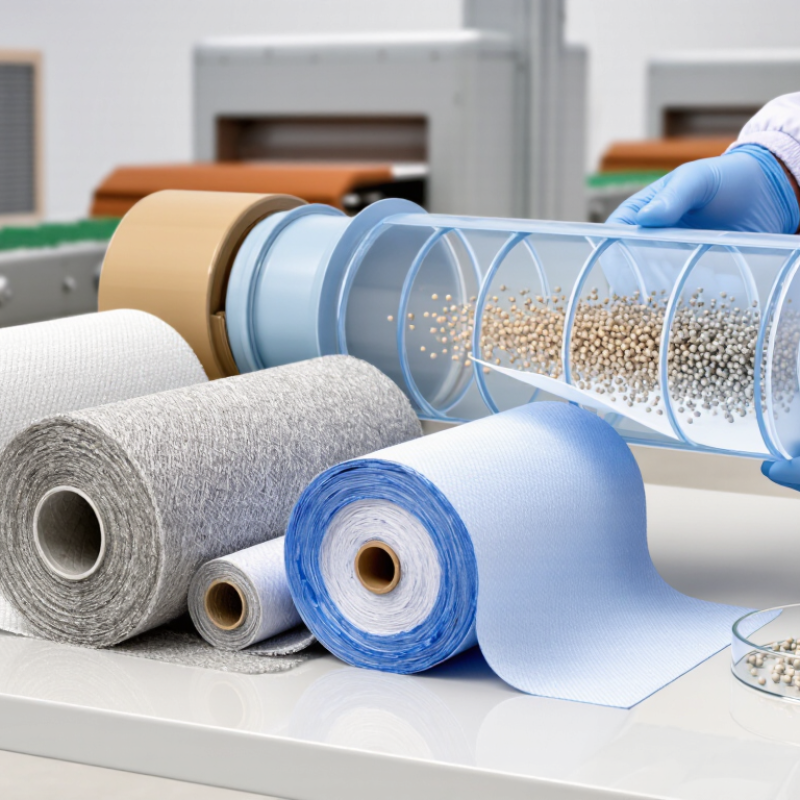
How to Choose the Right Roll Filter Media?

Understand How Roll Filter Media Works

Roll filter media works by letting air pass through a fibrous sheet while particles are caught within or on its fibers. Larger dust may be trapped by direct contact; finer particles can be captured through interception and diffusion. As dust builds up, airflow resistance usually rises. You may notice this as a higher pressure drop or reduced airflow. Small details matter.

ASHRAE Standard 52.2-2017 measures particle removal across three size ranges: 0.3–1.0, 1.0–3.0, and 3.0–10 micrometers. ISO 16890 classifies air filters by ePM1, ePM2.5, and ePM10 performance. These standards help compare tested filters, but a rating alone does not describe every roll’s lifespan. Media depth, fiber structure, air velocity, humidity, and dust type all affect performance. A roll that looks clean may still resist airflow.

In practice, compare the media’s tested efficiency with its initial pressure drop and the system’s available fan capacity. Check how the roll advances, too: uneven winding can leave gaps or waste clean material. One limitation is easy to overlook. Laboratory dust differs from real building dust, which can contain mixed particles and fibers. Treat test results as useful evidence, not a perfect prediction of service life.

Identify the Contaminants and Required Filtration Level

How to Choose the Right Roll Filter Media?

Identify the Contaminants and Required Filtration Level

Start with the dirt. Is the air carrying coarse dust, fine particles, fibers, oil droplets, or a mixture? A woodworking area may produce visible chips and fine sanding dust, while a textile line can shed long, light fibers. These contaminants behave differently, so one media type may not suit every stage. Check equipment records and inspect used filters; the dust pattern can reveal where loading is heaviest. If possible, measure particle sizes rather than guessing from appearance. Fine dust can look harmless.

Then define the required filtration level from the process and the downstream equipment’s limits. A filter that captures more particles may also create greater airflow resistance, especially as dust collects. That can reduce ventilation or increase fan workload. Compare the media’s stated efficiency and pressure-drop data at the actual operating airflow, not just a general rating. It is tempting to select the finest media, but that can be a mistake when airflow is critical. Consider moisture and temperature, too, since they may affect performance. Measurements are not always neat; test a sample under real conditions when uncertainty remains, and track pressure drop and replacement intervals.

How to Choose the Right Roll Filter Media

Identify the contaminants and the particle sizes your filtration process needs to capture.

Particle sizes are approximate and can overlap. Use the chart to identify likely targets, then choose media with a tested efficiency rating at the particle size and filtration level your application requires. Also consider airflow resistance, dust-holding capacity, and operating conditions.

Compare Media Materials, Efficiency, and Airflow Resistance

How to Choose the Right Roll Filter Media?

Choosing roll filter media starts with the particles you need to capture and the airflow your system can maintain. Fiberglass media is commonly used for coarse dust and basic prefiltration. It can offer low initial resistance, but it may not capture finer particles as effectively. Polyester and blended synthetic media often provide more consistent structure and greater dust-holding capacity. Check the product data, not just the material name.

Efficiency and airflow resistance must be considered together. A denser or deeper web may capture more particles, yet it can also create a higher pressure drop. That matters in a workshop where a loaded filter may reduce air movement across the work area. Compare efficiency figures only when they use the same test method and airflow conditions. Otherwise, the numbers can mislead. Small differences matter.

Before selecting a roll, check the system’s face velocity, available fan capacity, and replacement schedule. A simple pressure gauge can show when resistance is rising during use. Also inspect the frame fit: air bypassing the edges reduces real-world filtration, regardless of the media rating. Humidity and sticky dust can change how quickly a filter loads. There is no perfect pick. A practical choice balances particle capture, pressure drop, service life, and the conditions on site.

Match Media Dimensions to the Filter System

Matching roll filter media to the system starts with the frame, not the roll’s advertised width. Measure the usable opening, track spacing, and maximum roll diameter. Check the media thickness against the retaining clips and sealing edges. A few millimeters can matter. If the roll is too narrow, air may bypass it; if it is too thick, the feed can bind or wrinkle.

Record the roll width, length, thickness, and unwind direction before ordering. Then compare them with the equipment manual and the dimensions of the installed roll. ASHRAE Standard 52.2 evaluates particle removal in three size ranges: 0.3–1.0, 1.0–3.0, and 3.0–10 micrometers. Those results are useful only when the media is tested and operated under relevant airflow conditions. ISO 16890 also groups performance by particle size, including ePM1, ePM2.5, and ePM10 classifications.

A dimension check should include the holder, not just the media. Look for worn guides, uneven tension, and gaps near the frame corners. These details are easy to miss. A measurement taken from an old roll may also be misleading if it has stretched or compressed. Verify the fit with a short trial run, then inspect for edge gaps, folds, and uneven tracking. Even careful measurements can miss a warped frame.

How to Choose the Right Roll Filter Media? - Match Media Dimensions to the Filter System

Filter system or application Example media width Typical media thickness Example roll length Dimensions to verify before ordering
Compact HVAC roll-filter rack 500–600 mm (about 20–24 in) 10–25 mm (about ⅜–1 in) 10–20 m (about 33–66 ft) Clear opening width, retaining-track clearance, and roll-holder capacity.
Commercial HVAC roll-filter unit 900–1,200 mm (about 36–48 in) 15–50 mm (about ⅝–2 in) 15–30 m (about 49–98 ft) Usable media width, feed direction, filter-track depth, and maximum roll diameter.
Large air-handling-unit roll filter 1,200–1,500 mm (about 48–59 in) 20–50 mm (about ¾–2 in) 15–30 m (about 49–98 ft) Measure the full opening and check that the roll fits the holder and access space.
Spray-booth intake filtration 600–1,500 mm (about 24–59 in) 20–100 mm (about ¾–4 in) 10–20 m (about 33–66 ft) Match the intake-frame width and depth; confirm the media is suitable for the airflow and application.
Paint-booth exhaust or overspray collection 600–1,500 mm (about 24–59 in) 25–100 mm (about 1–4 in) 10–20 m (about 33–66 ft) Check the frame width, media orientation, depth allowance, and compatibility with the collected material.
Custom or narrow filter housing Cut to the measured opening; allow for the holder design Use the thickness specified for the housing Select based on storage and change-out frequency Measure the clear opening, edge overlap, core diameter, and maximum outside roll diameter.

The ranges above are practical examples, not universal specifications. Filter-roll dimensions vary by system and media type. Measure the installed opening and check the equipment documentation before selecting a roll.

Assess Service Life, Maintenance, and Operating Costs

Choosing roll filter media by purchase price alone can hide its real cost. Track how many rolls each unit uses, labor hours per change, disposal costs, and fan energy.

The U.S. Energy Information Administration’s 2018 Commercial Buildings Energy Consumption Survey reports that space heating used about 32% of commercial-site energy, while cooling used about 10%. These figures are not filter-energy estimates, but they show why airflow resistance deserves attention. A filter that loads quickly may raise pressure drop and fan demand.

Compare media using pressure-drop data at your actual airflow, not just a clean-filter rating. ASHRAE Standard 52.2 tests particle-removal efficiency and resistance under defined conditions; use its results alongside site measurements. Record pressure drop across the filter and replace media at the equipment’s specified limit.

Then compare annual roll use, labor, and energy costs. Service life varies with dust levels and operating hours, so a supplier estimate is only a starting point.

A tidy spreadsheet helps, but real dust rarely behaves tidily. Include a few months of operating records before committing to a media change.

Call Now Button