
How to Choose Animal Specimens for Research
Choosing an Aniaml Specimen for research starts with the question the study must answer. Species, strain, age, sex, health status, and tissue condition can all shape results. A liver section fixed too long may look crisp yet fail a molecular assay. A missing collection time can also complicate comparisons. These details belong in the selection plan, not only in the final lab notes.
The scale of animal research makes careful selection consequential. The U.S. Department of Agriculture’s FY2022 Annual Report recorded 792,168 animals used at covered research facilities. That federal count excludes mice, rats, and birds bred for research, so it is not a full tally of laboratory animals. It still underscores why reliable sourcing and records matter. Research teams should verify specimen identity, collection history, storage conditions, and whether the material fits the planned method. A clean label is not proof of sound provenance.
Animal-welfare pioneers William Russell and Rex Burch wrote, “The humanest possible treatment of experimental animals, far from being an obstacle, is actually a prerequisite for successful animal experiments” (The Principles of Humane Experimental Technique, 1959). Their principle remains relevant when selecting specimens: sound science depends on responsible, well-documented material. This guide examines practical criteria, including scientific fit, quality, traceability, and ethical oversight. No checklist can remove every uncertainty. That is worth remembering.
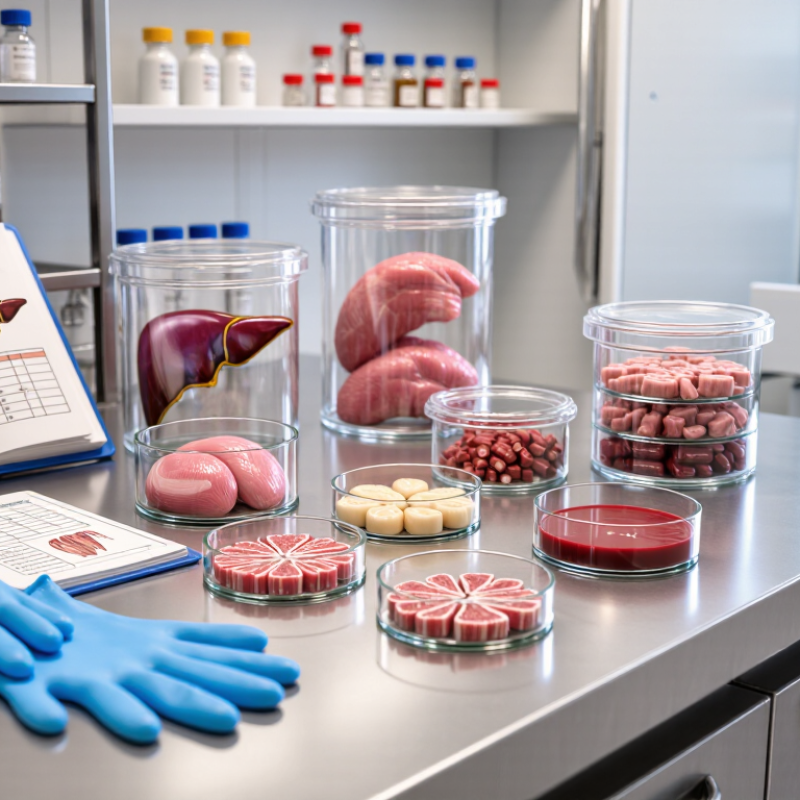
Define the Research Question and Required Specimen Traits
A useful specimen decision starts with a precise research question. “Study inflammation” is too broad; specify the tissue, biological process, and outcome you plan to measure. Then list required traits: species, strain, sex, age, body mass, health status, and disease-model characteristics. If testing a hormone response, for example, note the collection time and whether the specimen must be fresh, frozen, or fixed. Small details matter. A checklist helps, but it cannot replace discussion with a veterinarian or study specialist.
Choose specimens that match the question, not simply those easiest to obtain. ARRIVE 2.0, published in PLOS Biology, identifies details such as species, strain, sex, age, and sample size as essential reporting information. These details also help researchers judge whether findings can be interpreted or reproduced. A 2015 analysis by Freedman, Cockburn, and Simcoe estimated that irreproducible preclinical research cost the United States about $28 billion annually. That estimate is a warning, not a guarantee that tighter specimen selection alone solves the problem. A neat checklist can still miss a messy biological difference. Record why each trait matters, how specimens will be handled, and which differences could distort the result. When a trait is uncertain, flag it before collection rather than quietly treating all specimens as equivalent.
| Research question or objective | Suitable specimen type | Required specimen traits | Key collection and handling considerations | Important limitations |
|---|---|---|---|---|
| Measure gene expression or quantify RNA in a specific tissue | Fresh-frozen target tissue; appropriately preserved tissue for the planned assay | Correct species and tissue; documented collection time; minimal RNA degradation; relevant disease or control status | Minimize the interval between collection and stabilization or freezing. Keep storage and freeze-thaw history documented. Use an RNA-compatible preservation method. | RNA quality can change with handling. Formalin-fixed, paraffin-embedded tissue may be suitable for some methods, but fixation can fragment or chemically modify nucleic acids. |
| Examine tissue architecture, lesions, or protein and cell localization | Formalin-fixed, paraffin-embedded (FFPE) tissue or appropriately fixed fresh tissue | Correct organ and anatomical region; intact morphology; known fixation and processing history; representative affected and comparison tissues | Record fixative, fixation duration when known, and tissue orientation. Select a fixation and processing approach compatible with the intended staining or imaging method. | Fixation and processing can affect antigen detection and nucleic-acid recovery. FFPE material is not interchangeable with fresh-frozen tissue for every assay. |
| Assess circulating cells, blood chemistry, or systemic biomarkers | Whole blood collected with an assay-appropriate anticoagulant, or separated plasma or serum | Correct species; defined collection conditions; suitable anticoagulant or clotting protocol; adequate volume and sample quality | Choose plasma for anticoagulated samples and serum for samples allowed to clot. Separate and store components according to the analyte and validated assay requirements. | Serum and plasma are not interchangeable for all measurements. Hemolysis, lipemia, anticoagulants, and processing delays may affect results. |
| Study gut microbial communities or intestinal parasite material | Fresh feces or fecal material preserved with a method compatible with the planned analysis | Known host species; clear animal-level identity; collection time; minimal environmental contamination; relevant diet, treatment, and health metadata | Collect with clean tools and containers. Use consistent procedures across study groups, and store or preserve samples promptly according to the sequencing or diagnostic workflow. | Diet, housing, medication, and collection conditions can influence results. Fecal samples represent material shed into the environment and may not fully reflect organisms attached to the gut lining. |
| Measure kidney function, urinary biomarkers, or urinary pathogens | Urine collected using a method appropriate to the species and study design | Known collection method and time; species identity; suitable volume; recorded storage conditions; contamination status where relevant | Use a consistent collection approach across groups. Record whether samples were collected spontaneously or by another approved method, and process or preserve them according to the target analyte. | Concentration varies with hydration and collection timing. Collection methods can affect stress, contamination, and sample composition. |
| Compare disease, treatment, age, or developmental effects | Matched specimens from study and comparison animals, using the same specimen type and collection protocol | Consistent species, strain or breed where relevant, age range, sex, health status, tissue location, and processing history | Define inclusion and exclusion criteria before selection. Record relevant animal and study metadata, and balance groups for factors that may influence the outcome. | Unbalanced groups or undocumented differences can confound interpretation. The required number of animals depends on the study design and should be determined with appropriate statistical and ethical review. |
| Study pathogens, host response, or infectious disease | Target tissue, blood, swab, feces, or another specimen specified by the diagnostic or research question | Anatomical site appropriate to the pathogen; collection at a relevant disease stage; known host species; suitable material for detection or culture method | Use containment, transport, and preservation procedures appropriate to the potential hazard and assay. Confirm requirements with institutional biosafety and animal-care oversight. | A negative result may reflect timing, sampling site, or assay sensitivity rather than absence of infection. Some preservation methods prevent culture or other downstream tests. |
| Select specimens for a new or multi-assay project | Specimen type chosen after confirming assay needs, available material, and intended downstream analyses | Verified species and provenance; documented tissue or fluid; adequate quantity and quality; traceable collection, storage, and transfer history | Check whether one specimen can support all planned assays. Confirm consent or authorization, permits, ethical approvals, and applicable rules for animal-derived material. | No single specimen or preservation method is optimal for every assay. Confirm compatibility with the receiving laboratory's validated methods before collection or acquisition. |