How to Choose the Best Learning Toys in 2026?
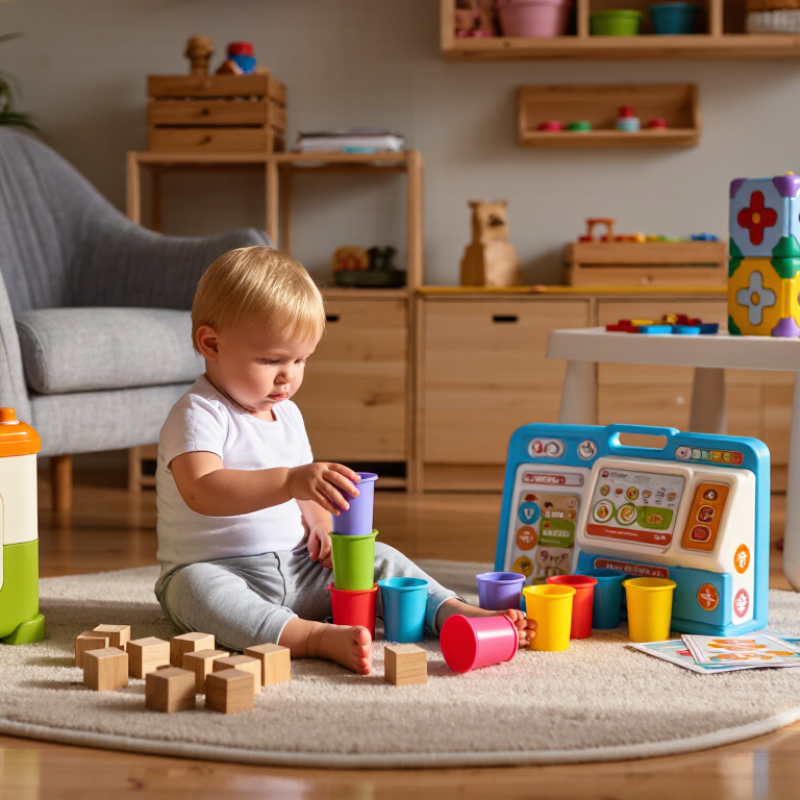
Choosing the best Learning Toys in 2026 means looking beyond bright packaging and bold promises. A toy should suit a child’s age, interests, abilities, and everyday play space. A toddler may enjoy stacking cups on a kitchen mat, while an older child might prefer a building set with several possible designs. The right choice invites curiosity without making play feel like a lesson.
Look for clear age guidance, sturdy construction, and instructions that are easy to understand. Check small parts and care information, especially when younger children may share the play area. Materials and finishes matter, too; product details should be specific rather than vague. For toys that involve sound, light, or screens, consider volume controls, battery access, and whether the activity still works without constant adult direction.
Learning can happen through sorting, storytelling, movement, and trial and error. Open-ended toys often allow children to use one object in several ways, though they are not automatically the best fit for every child. Some children love a box of blocks; others may leave it untouched. That happens. Watch what holds a child’s attention, and notice whether the toy encourages problem-solving, language, creativity, or shared play. Reviews can offer useful clues, but they cannot predict how a particular child will respond. A thoughtful choice balances safety, durability, developmental fit, and genuine interest—not the number of features on the box.
Set Learning Goals: CDC Milestones Track Skills 75% of Children Reach
Choosing learning toys in 2026 starts with a clear goal, not a crowded toy box. CDC developmental milestones describe skills that at least 75% of children can do by a certain age. They offer a useful guide, not a test or a promise that every child will develop on schedule. Check the milestones for your child’s age, then choose toys that invite practice.
A toddler working on language might enjoy picture cards, pretend food, or books with familiar objects.
A preschooler practicing hand control may benefit from chunky blocks or child-safe tongs.
Tips:
Pick one skill to encourage, such as taking turns or sorting shapes. Look for toys your child can use in several ways, and join in with simple prompts: “What happens next?” Keep pieces age-appropriate and supervise play. Stop if frustration rises; learning should feel inviting, not like an exam.
Watch how your child plays over several days. A toy that gets ignored may be too difficult, too easy, or simply uninteresting. I’ve found that adults can overestimate how much a toy teaches by itself; a few minutes of shared play often matters more.
Milestones are broad checkpoints, and children vary. If a skill seems delayed or you have concerns, discuss them with your child’s healthcare professional rather than relying on a toy or checklist alone.
Match Play to Brain Growth: UNICEF Says 90% Develops by Age Five
UNICEF highlights that about 90% of brain development happens before age five. This does not mean a child needs advanced lessons or a shelf full of toys. Young brains grow through warm interaction, movement, repetition, and safe chances to explore. A wooden spoon tapped on a bowl can invite rhythm, sound, and cause-and-effect learning. So can stacking cups, chunky blocks, or a picture book shared on the floor.
Choose toys that fit what a child can do now, with a little room to stretch. A toddler may enjoy fitting large shapes into a sorter, even if every piece lands in the wrong hole at first. That is useful practice. For preschoolers, simple puzzles, washable crayons, and pretend-play objects can encourage language and flexible thinking. Watch how the child uses a toy, rather than relying only on the age printed on its package. Small parts are not suitable for children who still put objects in their mouths.
Play works best with an attentive adult nearby, not constant instruction. Ask, “What happens if we turn it?” Then wait. It can feel slow. Letting a child struggle briefly, and offering help when frustration rises, supports confidence and problem-solving. No toy guarantees a developmental outcome, and not every popular activity will suit every child. A few safe, open-ended toys—and time to play together—are often enough.
Check Age Suitability: CPSC Small-Parts Rules Cover Toys for Under-3s
Choosing learning toys in 2026 means checking more than colors, sounds, or promised skills. For children under three, inspect every piece that could detach: beads, button-like parts, wheels, and battery covers. The U.S. Consumer Product Safety Commission (CPSC) restricts small parts in toys intended for this age group. Its small-parts test uses a cylinder designed to represent a young child’s throat. If a part fits, it may present a choking hazard. A label is not decoration. Read the full age guidance and warnings before opening the box.
The CPSC estimated 231,700 emergency-department-treated, toy-related injuries among children 14 and under in 2023. That figure covers many ages and injury types, not only choking, but it shows why routine checks matter. After play, look under the table and sofa for loose pieces. Inspect seams and fasteners, too. A toy can wear down, and an age label cannot predict every child’s behavior. I still find those labels imperfect; children explore at different speeds.
Tips: Match the toy to the youngest child who can reach it, not just its main user. Keep small-part toys in a closed container, and stop using them if pieces crack or come loose. Check CPSC recalls and safety guidance before buying. For a child under three, choose chunky, one-piece items without detachable accessories. A quick floor check helps. It is easy to forget.
Assess Digital Features: AAP Recommends No More Than 1 Screen Hour Daily for Ages 2–5
How to Choose the Best Learning Toys in 2026?
Assess Digital Features: AAP Recommends No More Than 1 Screen Hour Daily for Ages 2–5
A glowing screen can hold a preschooler’s attention, but engagement alone does not prove learning. The American Academy of Pediatrics recommends limiting screen use to one hour daily for children ages 2–5, with high-quality content and adult support. Treat this as a daily ceiling, not a target. The Common Sense Census: Media Use by Kids Zero to Eight, published in 2020, reported that children in this age group averaged about 2.5 hours of screen media daily in 2019. That figure covers all screen media, not just educational toys, but it shows how quickly screen minutes can add up.
Check whether a digital toy invites conversation, movement, or hands-on problem-solving, rather than simply rewarding taps. A counting game is more useful when a caregiver can connect its numbers to three blocks on the table. Look for adjustable volume, clear stopping points, and settings that avoid autoplay or distracting notifications. Then watch your child use it. Do they explain what they learned, or just ask for the next screen? Real life is messier than a product description. Some children benefit from brief digital activities; others lose interest fast. Balance them with puzzles, picture books, and open-ended play, and count the toy’s screen time toward the daily total.
Verify Toy Safety: ASTM F963 Is the U.S. Mandatory Toy Standard
How to Choose the Best Learning Toys in 2026?
A learning toy should invite hands-on discovery, but safety comes before the lesson. In the United States, ASTM F963 is the mandatory toy safety standard for many children’s toys. Federal rules require applicable toys to meet its requirements. These cover hazards such as small parts, sharp edges, and certain mechanical or chemical risks. The standard can be updated, so check current guidance rather than relying on an old checklist.
Look for the required compliance information on packaging or product documentation, and consider whether the toy suits the child’s age and abilities. A tiny counting bead may teach sorting, for example, but it could be unsuitable around a younger sibling. Check for loose pieces, cracked plastic, and battery compartments that do not close securely. Keep instructions and packaging details in case you need to verify the product’s testing or certification.
Labels help. They are not the whole picture. ASTM compliance does not mean every toy fits every child, or that wear and damage cannot create new risks. I have seen how quickly a puzzle’s small pieces can scatter under a table; supervision still matters. And honestly, safety checks can feel tedious. Take a moment anyway, especially when choosing toys with magnets, cords, or detachable parts.