How to Choose Cross-Lapped Spunlace Nonwoven Suppliers
Choosing a Cross-Lapped Spunlace Nonwoven supplier can shape product quality, production stability, and delivery timelines. The right choice depends on more than a sample that feels soft. Buyers should examine fiber options, web structure, basis weight, tensile strength, absorbency, and batch consistency. Ask how the supplier controls these properties, and request test data that matches your intended application. A clear answer is useful. Vague promises are not.
Start with the material’s actual job. A wipe, medical dressing, or filtration layer may need different performance, converting behavior, and packaging. Share your target specifications, expected order volume, and required delivery schedule before comparing quotes. Then review sample results alongside production records and quality procedures. Check whether the supplier can explain its inspection steps and respond when a batch falls outside agreed limits. A polished sample is only one data point. It may not reflect routine production.
Communication matters, too. Ask who handles technical questions, how changes are approved, and what information appears on product documentation. Compare lead times and minimum order quantities with your own planning needs. If possible, evaluate a trial order before committing to larger volumes. Even a thorough supplier review has limits; factory capacity and performance can change over time. Keep records, revisit key measures, and verify important claims rather than relying on a sales presentation. This guide outlines practical questions for assessing suppliers, while recognizing that no single checklist fits every buyer or application.
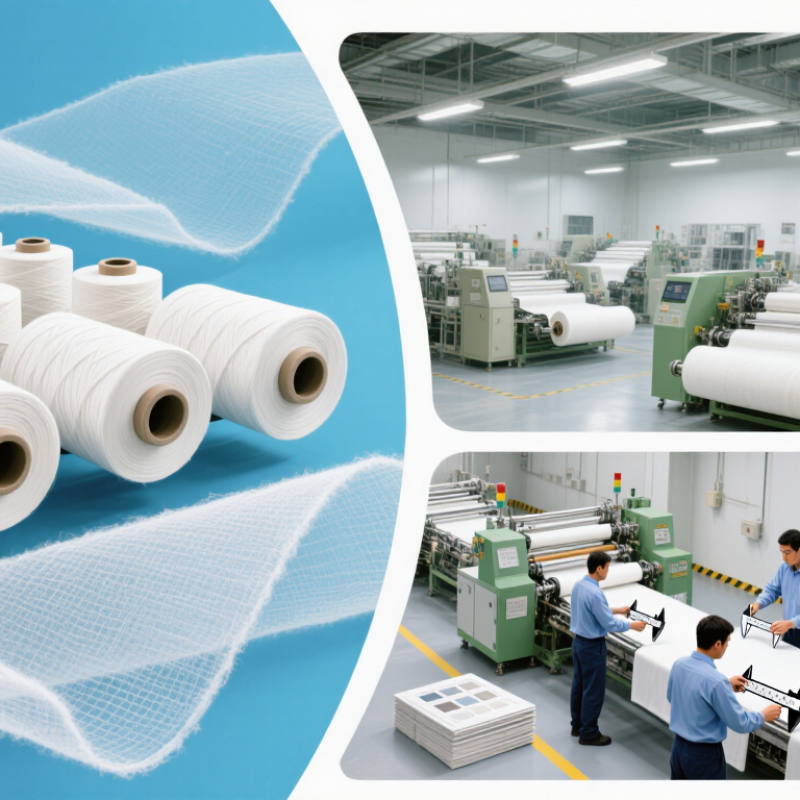
Define Cross-Lapped Spunlace Nonwoven and Its Key Properties
Cross-lapped spunlace nonwoven is made by arranging thin fiber webs in alternating directions, then entangling the fibers with fine, high-pressure water jets. The resulting sheet is bonded without conventional weaving or knitting. It may use viscose, polyester, or blended fibers, depending on the intended use. The crosswise layers help distribute strength across the fabric rather than concentrating it in one direction. That matters when a wipe or medical dressing is pulled from an edge.
Its key properties include softness, flexibility, absorbency, and resistance to tearing. These are not fixed values. Fiber choice, web weight, jet pressure, and finishing can change the feel and performance noticeably. A heavier sheet may feel more substantial, but it is not automatically more absorbent. Check the specification sheet and, where possible, handle a sample. Feel the surface. Look for loose fibers, uneven thickness, and weak edges.
There are trade-offs. Cross-lapping can improve strength balance, yet the fabric may still stretch differently along and across the web. I would not judge quality by appearance alone; a smooth sample can behave poorly when wet. Ask suppliers for test methods and results that match your application, such as wet tensile strength or absorbency. Small details matter. A clear, repeatable specification is more useful than a broad claim of “premium” material.
Identify Your Product Requirements and Target Applications
Before comparing cross-lapped spunlace nonwoven suppliers, define what the material must do in your product. A cleaning wipe may need quick liquid pickup, low lint, and enough strength to stay intact when wet. A personal-care component may require a softer feel and consistent thickness. Be specific. “Strong and soft” is not a usable specification.
Record the fiber blend, target basis weight, roll width, and any color or finish requirements. For converting, check how the web behaves during cutting, folding, or bonding. Ask for tensile data in both machine and cross directions, since cross-lapping affects strength balance. If the material contacts oils, lotions, or cleaning solutions, test compatibility rather than assuming the web will hold up. Small details matter.
Match the supplier’s capabilities to your application and production conditions. A sample that feels right by hand may still stretch, shed fibers, or feed poorly on your line. Test it on the actual equipment, using realistic speeds and humidity where possible. Request consistent sample dimensions and documented test methods so results can be compared fairly. This step can feel tedious. It is easy to skip, and that is often where avoidable problems begin. Share your acceptance limits early, then confirm that the supplier can maintain them across repeat orders.
Compare Samples, Pricing, Lead Times, and Service
When evaluating cross-lapped spunlace suppliers, test samples under your actual converting conditions. Check basis weight, thickness, tensile strength, linting, and web uniformity across the roll. A soft hand feel can hide weak cross-direction strength. Ask for samples from more than one production lot; one good roll proves little. Smithers’ report, The Future of Global Nonwovens to 2028, forecasts continued market growth, making repeatable quality and capacity planning especially important. Request test methods and results, not just a specification sheet.
Compare pricing on the same basis: fiber blend, width, basis weight, roll length, packaging, and delivery terms. A lower quoted price may exclude slitting, special packing, or freight. Ask suppliers to separate these costs. Record quoted lead times for samples, first production, and repeat orders; then confirm what happens when demand changes. A spreadsheet helps. It is not a guarantee. Pricing and schedules can still shift, so keep a practical buffer.
Service matters after the purchase order. Ask who handles technical questions, how quickly claims are acknowledged, and whether corrective actions are documented. EDANA’s nonwovens statistics reporting tracks production and market developments across the sector, a reminder that supply conditions vary by region and product category. Check supplier references for comparable applications, while recognizing that references may not reveal every problem. A short trial order can expose gaps in communication before larger volumes are committed.
Verify Supplier Reliability Before Making a Selection
How to Choose Cross-Lapped Spunlace Nonwoven Suppliers
Verify Supplier Reliability Before Making a Selection
A reliable supplier should explain how its cross-lapped spunlace fabric is made and controlled. Ask for details on fiber composition, basis weight, web direction, and bonding consistency. Request samples from more than one production lot, then compare thickness, surface feel, and tensile performance. Small differences matter when rolls feed a high-speed converting line. A clear specification sheet and traceable batch records help you investigate problems later. Do not rely on a polished sample alone; it may not reflect routine production.
Tips: Ask for recent quality records, production capacity, and realistic lead times. Check whether the supplier reports defects and explains corrective actions. A factory visit or live production review can reveal handling practices, storage conditions, and equipment upkeep. If a supplier avoids specific answers, pause and verify the claims. That said, paperwork cannot show everything, and even careful checks may miss occasional variation.
Discuss communication before placing a large order. Send a practical scenario, such as a delayed shipment or a roll with uneven edges, and note how quickly the supplier responds. Confirm who handles technical questions and whether changes to fiber blends or process settings require approval. Keep agreed tolerances in writing. Trust builds through consistent evidence, not promises alone.
How to Choose Cross-Lapped Spunlace Nonwoven Suppliers
Verify supplier reliability before making a selection.
Illustrative evaluation scores on a 1–5 scale. Assess each supplier using documented evidence, such as quality records, production capability, traceability, delivery performance, and relevant certifications. Confirm all claims directly before selecting a supplier.