How to Choose Cotton Muslin Fabric in 2026?

Choosing Cotton Muslin Fabric in 2026 starts with a practical question: what must the cloth do? Baby wraps, apparel, quilting, backdrops, and packaging place different demands on this plain-weave fabric. Softness alone is not enough. Weight, weave density, finishing, and care instructions can change how a piece feels, drapes, and holds up after washing.

Two bolts labeled “muslin” may look similar on a shelf but behave differently under a needle. A lightweight, open weave may suit a breathable wrap, while a denser option can work better for curtains or reusable bags. Check the fabric’s fiber content and weight, and ask how much shrinkage to expect. If a supplier provides test reports or clear product specifications, compare them with your intended use rather than relying on broad claims. A small sample helps. Wash it, feel it, and inspect the edges.

This guide will explain how to assess weave, weight, softness, color, finish, and supplier information before buying. It will also consider price, care, and the qualities that matter for specific projects. Labels and online photos can be incomplete, so a checklist cannot guarantee that every roll will behave exactly alike. That is worth remembering. The best choice is the fabric that meets your needs in real use, not simply the one with the most appealing description.
How to Choose Cotton Muslin Fabric in 2026?

What Cotton Muslin Fabric Is and How It Is Made

How to Choose Cotton Muslin Fabric in 2026?
What Cotton Muslin Fabric Is and How It Is Made

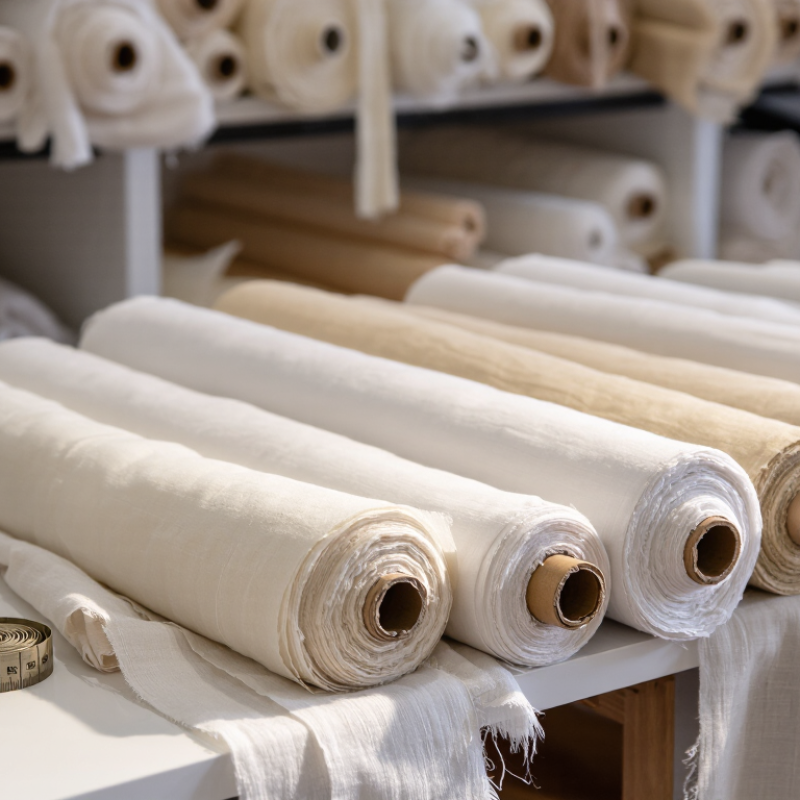
Cotton muslin is a cotton fabric made with a simple plain weave: threads cross over and under each other in a regular pattern. This construction can produce soft, airy cloth, but muslin is not always very sheer or delicate. Its weight, density, and finish vary. The name alone tells you little about how a particular fabric will feel. Some muslin has a slightly uneven surface, which is normal and can add character.

Making the fabric starts with cleaned cotton fibers. These are carded or combed, then spun into yarn. The yarns are woven on a loom, usually in the plain-weave structure. After weaving, the cloth may be washed, bleached, dyed, or softened. These treatments affect its color and hand feel. For example, unbleached muslin may retain a warm, natural shade, while a finished version can feel smoother. One detail worth remembering: “soft” does not always mean durable, and a loose weave may snag more easily.

Tips: Check the fabric against a window to judge its openness. Rub a small corner between your fingers, and ask whether it is prewashed. If possible, wash a sample first; shrinkage and texture can surprise you.
How to Match Muslin Weight and Weave to Your Project

When choosing cotton muslin, match its weight to how the finished piece should behave. Lightweight muslin drapes easily and suits airy curtains, garment mock-ups, and soft linings. Medium-weight cloth feels steadier in the hand and works well for reusable bags or simple home projects. Heavier muslin gives more body, but can feel stiff in gathered garments. Check the fabric’s weight in grams per square meter when available; compare samples, since weight alone does not predict softness or drape.

Weave matters just as much. A close, even plain weave gives a smoother surface and better coverage, while a more open weave lets air pass through and may show shapes behind it. Hold a swatch near a window. Can you see your fingers clearly? That quick test helps assess opacity. For sewing, inspect the threads too: loose, uneven areas may distort under a seam. Feel the difference.

Before cutting, wash and dry a small sample the way you plan to care for the finished item. Cotton can shrink, and the amount varies. Then stitch a short seam and test how the cloth gathers or presses. I still find swatches can surprise me; a fabric that looks crisp on a roll may soften after washing. That’s not always a problem, but it can change the fit or the clean lines you wanted.

How to Assess Cotton Quality, Finish, and Shrinkage

How to Choose Cotton Muslin Fabric in 2026?

How to Assess Cotton Quality, Finish, and Shrinkage

Cotton quality is not a softness contest. Hold the muslin against a light and check for uneven gaps, slubs, and thin patches. USDA Agricultural Marketing Service cotton-classing data tracks staple length, strength, and micronaire through HVI testing. These figures describe raw fiber, not the finished fabric. I treat them as clues, not guarantees. A swatch still matters.

Look closely at the finish. A smooth, crisp surface may feel reassuring, but heavy finishing can mask a rough hand or change after washing. Rub a corner between your fingers, then wash a small sample using the care-label instructions. AATCC TM135 and ISO 5077 provide repeatable methods for measuring fabric dimensional change after laundering. Keep the water temperature, detergent, and drying method consistent.

Measure before and after. If a 100-centimeter sample measures 97.5 centimeters after washing, shrinkage is 2.5 percent. That is an example, not a universal acceptance limit. Ask suppliers for test conditions and results for the actual fabric lot; “pre-shrunk” alone tells you little. I would also check width after washing, since a narrow muslin can disrupt a sewing layout. Small differences matter.

Which Certifications and Sourcing Details to Check in 2026

When choosing cotton muslin in 2026, ask which certification applies to the fabric, not just the supplier. For organic claims, check whether the certificate covers the relevant processing stages and product scope. A certificate for a company may not cover every fabric it sells. Request current documentation and, where applicable, transaction records linking the shipment to certified production. Check dates, facility names, and product descriptions. Small details matter.

For chemical safety, review the scope of any testing certificate and ask for a report tied to the fabric or its production lot. Standards differ. A test certificate does not prove organic origin, and no certificate guarantees good sewing performance. Ask where the cotton was grown, spun, woven, and dyed; answers may vary across one supply chain. Request the fabric’s weight, width, weave details, and shrinkage or colorfastness results. Then wash a swatch using your intended care routine. Muslin can soften and shrink. Compare the washed sample with the unwashed one, and check that the bulk order matches the approved sample and paperwork.

How to Choose Cotton Muslin Fabric in 2026?

GOTS organic-fibre content thresholds are a useful starting point when comparing certification claims on cotton muslin.

What to check: The chart shows minimum certified organic fibre content thresholds for these GOTS label grades; it is not a muslin quality rating. Ask the supplier for a valid scope certificate and shipment-specific transaction documentation, and confirm that the product, facility, and fibre composition match the claim. Also check fabric weight, weave, shrinkage, and whether the muslin is single- or double-layer.

How to Compare Suppliers, Prices, and Care Requirements

When choosing cotton muslin in 2026, compare like with like: fiber content, finished width, fabric weight, weave, and finishing. A low price per metre may hide a narrow roll, a high minimum order, or costly shipping. Ask suppliers for a current specification sheet, sample yardage, and written details on defects and lead times. Textile Exchange’s Materials Market Report 2024 estimated global fiber production at 124 million tonnes in 2023, with cotton accounting for about 19 percent. That scale makes clear why “cotton” alone is not a useful quality specification. Touch the sample. Feel it wet, too.

Request a pre-shipment sample and compare it with the approved swatch under daylight. Check for uneven slubs, loose edges, and inconsistent opacity; muslin’s open weave can make these differences obvious. Ask whether the quoted price includes bleaching, dyeing, or other finishing, and request a test report for the exact fabric lot. For care, do not rely on generic cotton advice. Ask for shrinkage results after the washing method you expect, and check color change and seam puckering. AATCC TM135 provides a standardized method for measuring fabric dimensional changes after home laundering.

One missed detail: a sample can feel soft before washing, then stiffen or shrink.

Compare total landed cost, not just the quoted metre rate. Confirm roll length, usable width, packaging, payment terms, and replacement policy in writing.

Wash a cut piece using the intended detergent and drying method before ordering volume. Record its dimensions and hand feel afterward.

Supplier answers may be polished; test results and a repeatable sample tell a more useful story.

Call Now Button