
What Is a Medical Uniform OEM Partner?

A Medical uniform OEM partner is a manufacturer that produces healthcare apparel to a buyer’s design, brand, and specifications. Instead of choosing only finished stock, clinics, distributors, and established labels can shape fabric weight, pocket placement, closures, colors, and fit. The partner may support technical drawings, material sourcing, size grading, samples, production planning, quality checks, and branded packaging. In practice, a sample matters. A scrub top can look right on a hanger yet pull at the shoulders during a long shift. Fit, fabric feel, seam strength, and wash performance deserve review before bulk production.

The relationship is more than placing an order. A capable OEM team should explain minimum order quantities, lead times, customization limits, and how defects or changes are handled. Ask for a clear specification sheet, a sample approval process, and evidence of relevant quality controls. Then compare these with your requirements. For medical apparel, details matter: breathable fabric, secure stitching, practical pockets, consistent sizing, and color retention affect daily use. Requirements vary by market and garment type, so confirm applicable standards and labeling needs with qualified sources. Not every supplier can meet every brief. That is worth admitting. An OEM partner can help make a product distinctive, but only when expectations, costs, and production realities align. This guide explains the role, the workflow, and the questions to ask before committing.
What Is a Medical Uniform OEM Partner?

What a Medical Uniform OEM Partner Is

A medical uniform OEM partner is a manufacturer that turns a healthcare organization’s specifications into finished garments, often under the organization’s own label. OEM means original equipment manufacturer. The partner may develop patterns, source fabric, grade sizes, sew samples, and manage bulk production. It is more than a sewing floor. It helps convert practical needs—such as scrub pockets that fit instruments or cuffs that stay clear of handwashing—into repeatable product details.

A capable partner should explain fabric composition, shrinkage control, color consistency, seam construction, and inspection methods in plain terms. Ask how it tests samples and handles defects before approving a production run. Small misses matter. A pocket placed too low can make a shift less comfortable. A color mismatch across restocked garments can also create problems. The process is not flawless; specifications still need review, and a sample cannot reveal every issue in large-scale production.

Supply capacity deserves careful checking. In its 2020 report on PPE shortages, the World Health Organization estimated monthly COVID-19 response needs of 89 million medical masks and 76 million examination gloves. Those figures concern PPE, not uniforms, but they show how quickly healthcare supply chains can face pressure. An OEM partner should therefore describe lead times, material sourcing, quality checks, and contingency plans clearly. “We can make it” is not enough. A useful partner provides evidence, communicates limits, and welcomes practical questions.

How OEM Uniform Production Works

How OEM Uniform Production Works

OEM uniform production begins with a clear product brief. A healthcare team or distributor shares preferred styles, size ranges, colors, fabric needs, and expected order quantities. The manufacturer turns these details into a specification sheet, including pocket placement, seam construction, closures, and measurements. Small details matter. A chest pocket that sits too high can feel awkward during a long shift.

Next, fabric and trim are selected, then a sample is sewn for review. Buyers can check fit, movement, opacity, and how the fabric feels after washing. If the sample pulls across the shoulders or the waistband twists, the pattern or materials may need adjustment. This stage takes patience. A sample is useful, but it cannot represent every body shape or working environment.

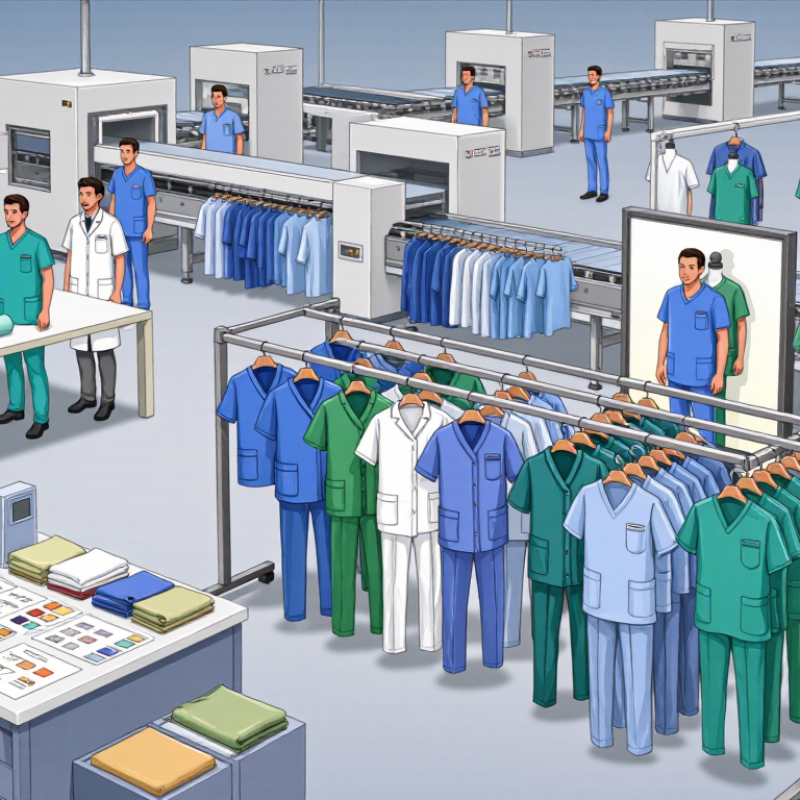
After approval, production is scheduled and materials are checked before cutting. Garments move through sewing, finishing, inspection, and packing. Quality checks may examine stitching, measurements, color consistency, and loose threads. Wash testing can also reveal shrinkage or fading, though results depend on care conditions. Some specifications still need refinement after the first production run; that is worth acknowledging, not hiding. Clear records of approved samples and revisions help prevent avoidable differences between batches.

What Is a Medical Uniform OEM Partner? — How OEM Uniform Production Works

OEM production generally moves from requirements and design through sampling, material sourcing, bulk manufacturing, and quality inspection. The bars show the sequence of stages, not production time; workflows can vary by order and supplier.

Services an OEM Partner Typically Provides

A medical uniform OEM partner can support a garment from an initial brief through finished production. Services often begin with design development: reviewing sketches, selecting pocket layouts, choosing closures, and checking how seams may hold up during repeated wear. The partner can source fabrics and trims, then prepare samples for fit and construction review. Fit matters. A sample should be tried on while standing, reaching, and bending—not judged only on a table.

OEM teams may also help define size charts, grading rules, color options, and production specifications. Before bulk manufacturing, they can confirm fabric weights, stitching details, labels, and packaging requirements. Quality checks may cover measurements, seam strength, color consistency, and visible defects. Ask what is inspected, when checks happen, and how findings are recorded. Details count. Some suppliers offer testing support, but the scope and documentation can vary, so confirm what is included rather than assuming every requirement is covered.

Production planning is another useful service. A partner may estimate lead times, minimum order quantities, and material needs, then coordinate packing and shipment. These estimates can change when fabrics are delayed or a sample needs revision. One weakness in the process is easy to miss: a polished sample does not guarantee identical bulk production. Clear specifications and agreed inspection points help reduce that gap.

Responsibilities in Quality and Compliance

A medical uniform OEM partner does more than cut fabric and sew seams. It documents material specifications, checks incoming fabric lots, and keeps production records traceable. For protective gowns, AAMI PB70 defines four liquid-barrier levels. Its hydrostatic-pressure criteria require at least 20 cm of water for Levels 1 and 2, and 50 cm for Level 3. These figures apply to gowns and drapes, not automatically to everyday scrubs. Details matter.

A responsible partner matches each product’s claims to the right test evidence. That may include seam strength, colorfastness, shrinkage after laundering, and barrier testing where relevant. It should also retain dated test reports, lot numbers, inspection results, and approved sample records. A neat certificate alone is not enough. Buyers should check that the report identifies the tested material and method. One practical check: compare a washed sample with the approved sample under the same lighting. A spreadsheet can look complete while the fabric has changed. That is an easy gap to miss. Since uniform requirements vary by use and facility, the OEM should clarify intended use before printing labels or making performance claims.

What Is a Medical Uniform OEM Partner? - Responsibilities in Quality and Compliance

Responsibility OEM Partner Activities Typical Records or Evidence Quality Checkpoint Relevant Reference (When Applicable)
Product specifications Confirm garment design, measurements, materials, colors, construction details, and approved changes with the buyer before production. Approved specification sheet, size chart, bill of materials, sample approvals, and revision history. Pre-production review confirms that the production sample matches the current approved specification. Buyer requirements; ISO 9001 quality management principles may be used as a general framework.
Material and supplier control Qualify material suppliers, verify incoming fabric and trims, and maintain lot identification through production. Supplier records, purchase specifications, material certificates or test reports where required, and incoming inspection records. Check material identity, shade, width, defects, and agreed test requirements before cutting. Contractual material requirements; applicable chemical restrictions, such as EU REACH requirements for products placed on the EU market.
Production process control Use controlled work instructions, trained operators, suitable equipment, and in-process checks for cutting, sewing, finishing, and packing. Work instructions, training records, inspection logs, equipment maintenance records, and production lot records. Inspect workmanship and measurements at defined stages; record and segregate nonconforming products. Documented buyer quality plan; ISO 9001 may provide a general process-control framework.
Product testing and inspection Arrange agreed garment or fabric tests and final inspection, using appropriate methods and acceptance criteria defined by the buyer or applicable market rules. Test reports, inspection results, defect records, and shipment release documentation. Verify measurements, seams, appearance, labeling, and agreed performance properties before release. Examples of test methods include ISO 105-C06 for colorfastness to domestic and commercial laundering and ISO 105-X12 for colorfastness to rubbing. The method and pass criteria should be specified for the product.
Labeling and market requirements Prepare labels and packaging to the buyer’s approved artwork and identify market-specific requirements for fiber content, care, origin, and other required information. Approved label artwork, label checks, packaging specifications, and destination-market compliance checklist. Confirm label content, placement, legibility, and consistency with the garment and sales destination. For the United States, applicable FTC textile fiber identification and care-labeling rules; requirements vary by product and market.
Nonconformity and corrective action Contain affected goods, investigate causes, agree on disposition, and implement corrective actions to reduce recurrence. Nonconformance reports, root-cause analysis, corrective-action records, and effectiveness checks. Close actions only after documented review confirms the issue has been addressed effectively. The buyer’s quality agreement and documented quality procedures.
Traceability and records Maintain records linking material lots, production batches, inspections, and shipments so that affected products can be identified if an issue arises. Batch records, material lot references, inspection records, and shipment documentation. Check that records are complete, retrievable, and retained for the period agreed with the buyer or required by applicable rules. Buyer contract and applicable market requirements; record-retention periods are not universal.
Clear compliance boundaries Support the buyer with manufacturing documentation and agreed compliance evidence, while clarifying who is responsible for market placement, claims, and final regulatory decisions. Quality agreement, responsibility matrix, product claims, and applicable test or conformity documents. Review the intended use and product claims before applying requirements for medical devices or personal protective equipment. Ordinary medical uniforms are not automatically medical devices or PPE. Requirements such as ISO 13485, the EU PPE Regulation, or EN 13795 apply only when the product’s intended purpose and applicable rules bring it within scope.

Note: Specific acceptance criteria, testing frequency, documentation, and regulatory responsibilities should be agreed in writing for each product and destination market.

How to Choose a Suitable OEM Partner

What Is a Medical Uniform OEM Partner?

How to Choose a Suitable OEM Partner

An OEM partner develops and produces uniforms to a buyer’s specifications. Choosing one requires more than comparing unit prices. Ask how the supplier handles fabric selection, sizing, sample approval, production checks, and delivery updates. A clear process matters. Request a sample in the intended fabric. Inspect the seams, pocket placement, color consistency, and ease of movement. Staff need to bend and reach comfortably.

Tips: Share a written specification sheet with measurements, fabric weight, color references, and labeling details. Ask for a pre-production sample, and confirm who approves changes. Check how defects are recorded and corrected. If answers stay vague, pause. A low quote can become costly when details are missed.

Review relevant manufacturing experience and quality procedures, not just polished product photos. Ask for evidence of inspection steps, production capacity, lead times, and plans for fabric delays. Clarify minimum order quantities and payment milestones before committing. Communication should be specific and documented. Even a strong sample cannot guarantee every batch will match perfectly. Agree on inspection criteria and remedies in writing, including what happens if delivered uniforms differ from the approved sample.

Call Now Button