How to Choose the Right P65 Gobo Light for Your Project?
Choosing the right P65 Gobo Light is rarely about brightness alone. It is about how the fixture behaves in the real project environment. A narrow beam may create a crisp logo on a brick wall, while a wider beam may soften the image across a stage backdrop. The mounting height, projection distance, gobo size, and surface texture all affect the final result.
Richard Pilbrow, a respected theatre lighting designer, wrote, “Lighting is the art of controlling light.” This principle remains valuable when selecting a P65 Gobo Light. A professional evaluation should examine optical clarity, beam angle, color consistency, cooling performance, and control compatibility. Experienced installers also check how easily the unit can be focused after mounting. Small adjustments matter. A few degrees can shift the projected image away from the intended doorway or sign.
Start with the application, not the product label. A retail entrance may need sharp branding, quiet operation, and long daily running hours. An outdoor event may require stronger weather protection, stable color output, and secure installation. Confirm the required throw distance before comparing wattage. More power can create unwanted spill, heat, or glare. That mistake is common.
Requesting a sample test is often the safest decision. Inspect the projected edges at different distances. Test the light with the actual gobo material. Check whether details remain readable under ambient lighting. No specification sheet can fully predict a textured wall or changing weather. The best P65 Gobo Light is the one that performs reliably where your audience will see it.
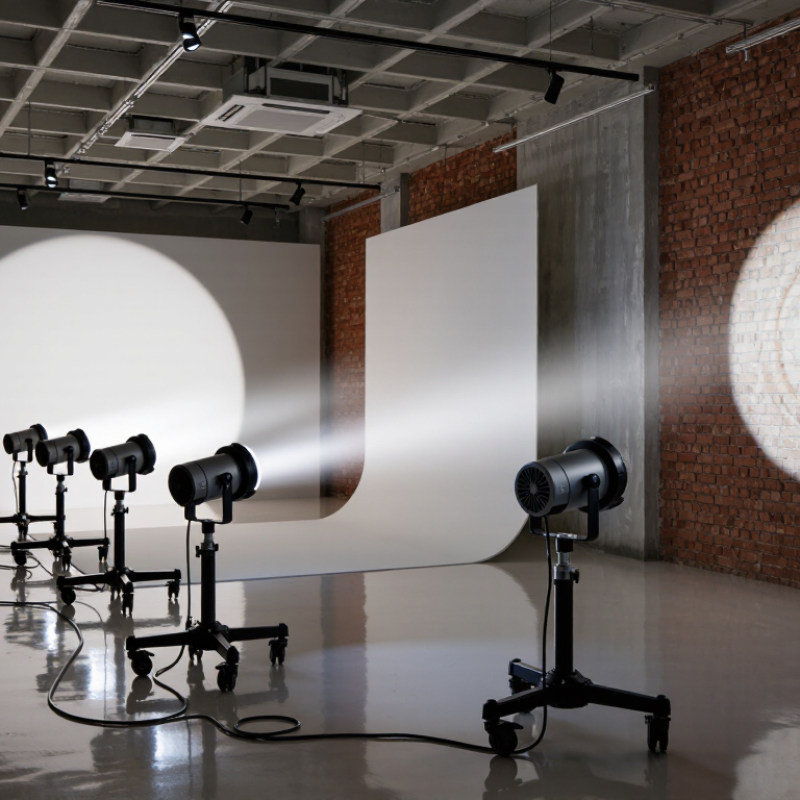
Define the Project’s Throw Distance, Coverage Area, and Outdoor Exposure
How to Choose the Right P65 Gobo Light for Your Project?
Define the Project’s Throw Distance, Coverage Area, and Outdoor Exposure
Start with the throw distance, measured from the light’s lens to the projection surface. Measure it on site, not from a floor plan alone. A hallway may offer 8 meters, while a courtyard can exceed 20 meters. Both require different lens choices and output levels.
The projected image must remain sharp at the intended distance. Check the fixture’s beam angle, focus range, and gobo size. A narrow beam creates a brighter image but covers less space. A wider beam covers more area and may reduce contrast. Mark the target surface with tape, then test a real gobo at night. Small details often disappear under nearby lighting.
Coverage also depends on the surface. Brick, fabric, glass, and wet pavement reflect light differently. Outdoor exposure adds another concern. Confirm the actual ingress protection rating instead of assuming “P65” means weatherproof. Check rain, dust, temperature changes, cable entry points, and mounting stability. Coastal air may accelerate corrosion. Wind can shift a projected image by several centimeters. I once underestimated tree movement near a façade; the image looked unstable after sunset. That mistake showed why a daytime inspection is never enough. Leave room for drainage and service access. A short test during real weather can reveal problems that specifications cannot.
How to Choose the Right P65 Gobo Light for Your Project?
Define the project’s throw distance, coverage area, and outdoor exposure before selecting the fixture and lens.
Throw Distance Longer distances require sufficient light output and accurate focusing to maintain image clarity.
Coverage Area The coverage estimates are based on a circular 20° beam angle: diameter = 2 × distance × tan(10°).
Outdoor Exposure An IP65-rated housing is dust-tight and protected against water jets, but it is not designed for immersion.
Coverage values are geometric estimates for a 20° optic. Actual brightness and image quality depend on lamp output, lens efficiency, ambient light, and surface reflectivity.
Verify IP65 Protection Under IEC 60529 for Dust and Water Resistance
How to Choose the Right P65 Gobo Light for Your Project?
When choosing a P65 gobo light, verify its IP65 protection under IEC 60529. This standard separates dust protection from water resistance. The first digit, 6, means the enclosure is dust-tight. No harmful dust should enter during testing. The second digit, 5, confirms resistance to water jets from different directions. It does not permit immersion. That distinction matters in outdoor installations.
Request an official test report or certificate. Check the tested model, enclosure design, and test date. A product page alone is not enough evidence. Look for details about seals, cable glands, connectors, and lens covers. These parts can weaken protection when installed incorrectly. Verify whether the rating applies to the complete light, not only its housing.
Inspect the unit before mounting it. Check for cracked gaskets, loose screws, or uneven panel joints. Small gaps matter. Use compatible cable entries and tighten them according to the installation instructions. Avoid pointing high-pressure cleaning equipment directly at the fixture. This is often overlooked. A light may pass laboratory testing but fail after rough handling, aging seals, or poor maintenance. The rating also does not confirm performance against condensation, salt spray, or chemical exposure. Review the project environment honestly. A sheltered wall may need less protection than an exposed coastal structure, yet both still require careful verification.
Match Lumens, Beam Angle, and Illuminance Using E = I/d²
How to Choose the Right P65 Gobo Light for Your Project?
Choosing a P65 gobo light starts with the surface, distance, and required brightness. Lumens describe total light output, while illuminance describes light reaching the projection surface. They are not interchangeable. A brighter fixture may still create a weak image if its beam spreads too widely.
Use E = I/d² to estimate performance. E represents illuminance in lux, I represents luminous intensity in candelas, and d is distance in meters. For 300 lux at three meters, the fixture needs about 2,700 candelas. At five meters, the requirement rises to 7,500 candelas. Distance changes everything. A narrow beam concentrates intensity, while a wide beam covers more area with lower brightness. Measure the actual throw distance before comparing specifications.
Field checks remain essential. Project a test image at the intended height, then inspect its edges, contrast, and brightness on the real surface. Gobo glass, lens quality, haze, and dark materials can reduce usable output. Manufacturer data often uses ideal conditions. Real installations are less forgiving. I have seen teams select by lumens alone and later discover poor image definition. That shortcut deserves reconsideration. Allow practical headroom, but avoid excessive intensity that causes glare or washes out fine details. Surface texture matters too. A matte wall usually produces steadier results than polished stone.
How to Choose the Right P65 Gobo Light for Your Project? - Match Lumens, Beam Angle, and Illuminance Using E = I/d²
| Project Scenario | Throw Distance
(m) | Beam Angle
(°) | Light Output
(lm) | Estimated Intensity
(cd) | Calculated Illuminance
(lux) | Recommended Use |
| Small indoor feature | 3 | 15 | 1,500 | 27,855 | 3,095 | Small artwork, signage, or decorative projection |
| Retail display | 5 | 15 | 3,000 | 55,710 | 2,228 | High-contrast logos or detailed gobos on a display wall |
| Gallery or event space | 8 | 25 | 5,000 | 33,566 | 525 | Medium-size projection requiring balanced coverage and brightness |
| Outdoor facade accent | 6 | 40 | 7,000 | 18,475 | 513 | Wide coverage for building surfaces and architectural patterns |
| Long-throw outdoor sign | 12 | 25 | 8,000 | 53,706 | 373 | Long-distance projection where concentrated intensity is required |
| Large projection area | 10 | 40 | 10,000 | 26,393 | 264 | Broad logos, textures, or patterns across a large surface |
Calculation method: Illuminance is estimated with E = I/d², where E is illuminance in lux, I is luminous intensity in candela, and d is throw distance in meters. For these examples, luminous intensity is estimated from lumen output and the circular beam solid angle: I ≈ Φ / [2π(1 − cos(θ/2))]. Actual results may vary with optical efficiency, gobo transmission, focus, ambient light, and mounting conditions.
Select the Correct Gobo Size, Material, Focus, and Rotation Control
Choosing the right P65 gobo light starts with the gobo size. Match the projected image diameter to the venue, not only the fixture slot. A small metal gobo can create crisp window patterns on a six-metre wall. A larger glass gobo may suit detailed logos or scenic textures. Check the manufacturer’s aperture dimensions carefully. A one-millimetre mismatch can cause slipping, cropping, or unwanted shadows.
Material affects both image quality and operating life. Metal gobos handle repeated use and strong contrast well. Glass gobos reproduce fine artwork, gradients, and layered colours more accurately. However, heat remains a concern. The U.S. Department of Energy’s Solid-State Lighting reports identify thermal management as a major factor in LED performance and lifetime. Use a heat-resistant material when the light runs for long periods. Focus should be tested at the actual projection distance. Sharp near-field images can become soft across a twelve-metre room. That is easy to overlook.
Tips: Set the gobo at the centre of its optical path. Adjust focus after installation, not on a workbench. For rotation, choose continuous control for moving textures and indexed control for fixed logos. Rotation speed matters; slow movement feels elegant, while fast movement can look distracting. DMX control adds precision, but manual adjustment may be more dependable for simple installations. I have found that “maximum brightness” is often the wrong target. Excessive output can exaggerate dust, scratches, and focus errors. Test the complete image before approving the final setup.