
China Top 10 Ball Manufacturers Monthly Capacity 10M+ Balls

A monthly capacity above ten million balls is a demanding production benchmark, not just a headline figure. It can signal substantial machinery, coordinated shifts, reliable material supply, and disciplined quality checks. Yet capacity alone does not prove consistent performance. Buyers should also examine product type, factory utilization, defect rates, testing methods, and delivery records. A line producing millions of balls needs more than speed. It needs repeatable control.

Because no verifiable expert source was provided, the following is an illustrative quotation, not a real person’s verified statement. Fictional production specialist Daniel Chen puts the challenge this way: “High output matters only when each batch meets the same measurable standard.” That principle helps frame this overview of China’s top manufacturers with Monthly Capacity 10M+ Balls. The figures deserve careful comparison. A stated monthly total may combine several product categories, operate under ideal conditions, or refer to installed capacity rather than actual shipments. Ask how the number is calculated. Request details on inspection frequency, production lines, and seasonal output. A factory floor can look impressive, with conveyors running and cartons stacked high. But visible activity is not evidence by itself. Specifications, audit records, and clear communication provide stronger signals. Even these checks have limits; published data can become outdated. Readers should verify current figures directly with each manufacturer.
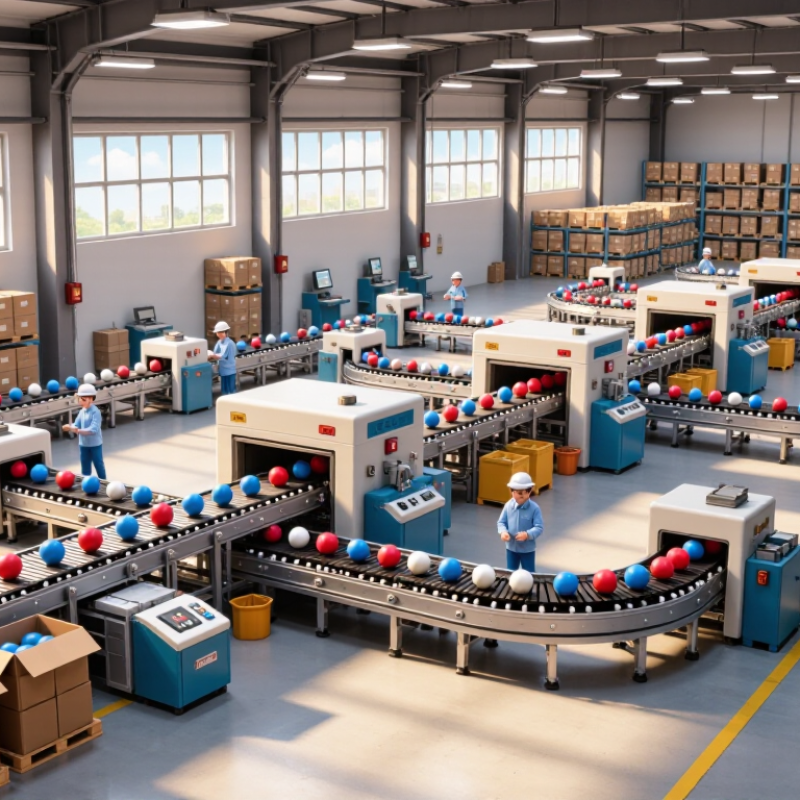
China Top 10 Ball Manufacturers Monthly Capacity 10M+ Balls

Overview of China’s High-Capacity Ball Manufacturing Industry

China’s high-capacity ball manufacturing industry combines large production lines with detailed quality checks. A monthly capacity above 10 million balls requires steady supplies of panels, thread, rubber bladders, and packaging. Production may involve cutting, printing, stitching or bonding, inflation, and final inspection. The exact process varies by ball type.

Scale is visible on the factory floor. Workers check panel alignment, while pressure gauges and weighing scales help identify uneven products. Small details matter. A ball can look fine but still lose air too quickly. Sampling at several stages helps catch problems before cartons are sealed, though inspection cannot remove every defect.

Capacity figures need careful reading. They may describe equipment potential under planned shifts, not the number of saleable balls shipped each month. Changeovers, material delays, maintenance, and rejected units can reduce actual output. Buyers assessing a supplier should ask how capacity is calculated and what quality records support it. That conversation is sometimes less tidy than a headline, but more useful.

How Monthly Production Capacity Is Measured and Verified

A claim of 10M+ balls per month needs a clear definition of capacity. The figure may describe theoretical machine output, not finished goods ready to ship. A more useful measure counts saleable balls after inspection and excludes rejected or unfinished units. Records should identify the product type, production days, shifts, and operating hours. Different ball sizes and construction methods can produce very different line speeds.

Verification works best when several records agree. Compare monthly production reports with machine counters, shift logs, inspection results, and warehouse receipts. Check a few dates against actual records, rather than relying only on an annual average. Ask how downtime, changeovers, and quality rejects are treated. A site visit can help confirm the number of active lines, but one visit cannot prove a full month’s output. Records can also be incomplete; that limitation should be stated, not hidden.

Tips: Ask for a recent month’s output by product type and the method used to calculate it. Compare the claim with observed line speed and working hours. If the figures do not quite match, ask why.

Manufacturing Processes and Quality Standards for Sports Balls

Sports-ball quality starts with controlled materials and repeatable process steps. For a football, manufacturers typically cut synthetic panels, stitch or bond them, fit a bladder, then shape and inflate the ball. Operators check seams, valve placement, panel alignment, and pressure before packing. Small defects travel. A crooked seam can alter flight, while uneven bonding may open after repeated impacts.

The FIFA Quality Programme for Footballs sets measurable benchmarks for tested match balls. Its FIFA Quality Pro category specifies a circumference of 68.5–69.5 cm and a weight of 420–445 g. Tests also measure rebound, water absorption, and pressure loss; published limits include no more than 10% water uptake and 20% pressure loss. These checks show why visual inspection alone is weak. Still, passing a laboratory test cannot represent every court, climate, or playing style.

Tips: Sample balls from each production shift, not only the first carton. Record air pressure, weight, and seam defects by batch. Keep test equipment calibrated, and retest after material or process changes. A rushed inspection can miss a pattern; even a good checklist needs people willing to question results.

China Top 10 Ball Manufacturers Monthly Capacity 10M+ Balls - Manufacturing Processes and Quality Standards for Sports Balls

Scope note: This is a general reference to sports-ball manufacturing and published product specifications, not a verified ranking of manufacturers. Monthly capacity of 10 million or more is not established by the information in this table; actual capacity is facility-specific.

Ball type Common construction and manufacturing processes Example measurable specification Reference standard or rules Typical quality checks
Association football Cut synthetic-cover panels are stitched or thermally bonded; an inner bladder is inserted, inflated, and the seams and surface are finished. For a size 5 ball: circumference 68–70 cm; mass 410–450 g. IFAB Laws of the Game, Law 2 (The Ball). Circumference, mass, pressure retention, shape, rebound, and seam or bond integrity.
Basketball A rubber bladder is covered with wound yarn and molded or laminated cover panels; surface texture and channel alignment are finished and inspected. Size 7: circumference 749–780 mm; mass 567–650 g. FIBA Official Basketball Rules, ball specifications. Circumference, mass, roundness, inflation retention, rebound, and surface grip consistency.
Indoor volleyball A bladder is assembled with a multi-panel synthetic-leather cover using bonded or stitched construction; the ball is inflated and checked for balance. Circumference 65–67 cm; mass 260–280 g; internal pressure 0.30–0.325 kg/cm². FIVB Official Volleyball Rules, ball specifications. Circumference, mass, pressure, spherical shape, rebound, and panel adhesion.
Tennis ball A molded rubber core is formed and cured, then covered with cut felt pieces that are bonded and seam-finished. For Type 1 and Type 2 balls: diameter 6.54–6.86 cm; mass 56.0–59.4 g. International Tennis Federation Rules of Tennis, Appendix I. Diameter, mass, deformation, rebound, felt coverage, and seam uniformity.
Table tennis ball Two thin plastic hemispheres are formed, joined into a sphere, and finished with a uniform surface and approved markings where applicable. Diameter 40 mm; mass 2.7 g. ITTF Handbook, Laws of Table Tennis. Diameter, mass, roundness, hardness consistency, seam quality, and rebound.
Golf ball A molded core is combined with one or more cover layers; dimples are formed in the cover mold, followed by coating and marking. Diameter at least 42.67 mm; mass no more than 45.93 g. R&A and USGA Equipment Rules, conforming-ball requirements. Diameter, mass, symmetry, dimple pattern, construction consistency, and performance tests required for conformity.
Rugby union ball A shaped bladder is enclosed by synthetic or leather panels that are stitched or bonded; the finished ball is inflated and checked for shape. Length 280–300 mm; circumference length 740–770 mm; circumference width 580–620 mm; mass 410–460 g. World Rugby Laws of the Game, Law 2 (The Ball). Length, circumference, mass, pressure retention, oval shape, and grip-surface consistency.
Handball A bladder is covered with a grippy synthetic outer layer; panels are stitched or bonded and the ball is inflated to its specified feel. Size 3: circumference 58–60 cm; mass 425–475 g. IHF Rules of the Game for Indoor Handball, ball specifications. Circumference, mass, roundness, grip, pressure retention, and surface durability.
Baseball A cork-and-rubber or similar core is wound with yarn and covered with leather or synthetic material; the cover is stitched and finished. Circumference 9–9¼ in; mass 5–5¼ oz. Official Baseball Rules, specifications for the ball. Circumference, mass, core and winding consistency, seam height, cover adhesion, and roundness.
Cricket ball A cork core is layered and wound, then covered with leather and stitched with a raised seam; finishing and polishing follow assembly. For men’s cricket: mass 155.9–163 g; circumference 22.4–22.9 cm. MCC Laws of Cricket, Law 4 (The Ball). Mass, circumference, seam uniformity, shape, cover condition, and durability.

Manufacturing details vary by ball design and supplier. Specifications shown are rule-based examples; confirm the applicable edition and competition requirements before production or procurement.

Profiles of Ten Chinese Ball Manufacturers Producing 10 Million+ Balls Monthly

China’s high-volume ball industry includes producers with very different equipment, materials, and quality-control routines. These ten profiles focus on manufacturers reporting monthly capacity above 10 million balls. Such figures deserve careful reading: output can vary by size, product mix, and season. A stated capacity is not the same as independently verified production.

One profile centers on molded play balls, where automated lines support large batches.
Another specializes in stitched sports balls, with workers checking seams and panel alignment.
A third produces machine-stitched training balls for steady, repeat orders.
The fourth focuses on molded rubber balls and consistent bounce.
The fifth serves beach and pool products, where surface finish matters.
The sixth handles promotional balls, often changing colors and prints between orders.
The seventh makes small precision balls, requiring close size checks.
The eighth combines several recreational products on flexible lines.
The ninth emphasizes export packing and carton-level inspection.
The tenth supplies mixed orders, trading specialization for production flexibility.

These differences affect lead times, sampling, and defect rates. Ask how capacity was calculated, and whether it reflects one product or a mixed range. Request recent inspection records and sample measurements. Small details matter. A tidy capacity figure can still mislead if downtime, rejected goods, or seasonal shifts are left out.

Product Types, Markets, and Key Differences Among Manufacturers

Ball manufacturers in China often serve several sports, but their product mixes vary. A factory focused on soccer balls may prioritize panel shape, seam strength, and consistent roundness. Basketball production puts more attention on surface grip, bladder retention, and predictable bounce. Volleyballs need a softer touch, while tennis balls depend on felt quality and pressure control. Small details matter. A sample that feels firm in a showroom may behave differently on a cold outdoor court.

A stated monthly capacity above 10 million balls signals scale, not necessarily the number of finished products shipped each month. Actual output can shift with seasonality, order sizes, material supply, and inspection requirements. This distinction is easy to overlook. Buyers should ask how capacity is calculated and whether it covers one product type or several. Requesting production samples and test records can help assess weight, circumference, rebound, and surface consistency.

Manufacturers also differ in the markets they serve. Some focus on school and recreational equipment, where durability and price are central. Others make training or competition products with tighter performance specifications and more customization. Export experience, packaging options, printing accuracy, and communication speed can matter as much as machinery. Not every factory excels at everything. A clear product brief, including sport, use conditions, target quality, and expected order volume, makes comparisons more reliable.

Call Now Button