
China Top 10 Crew Ankle Socks Manufacturers
Choosing a supplier for Crew Ankle Socks takes more than comparing prices or browsing polished product photos. Buyers need to assess fiber quality, knitting consistency, sizing, and the factory’s ability to repeat an approved sample. A sock may look right on a desk yet slip inside a shoe after a few hours. Small details matter: a smooth toe seam, a secure heel pocket, and a cuff that stays up without leaving deep marks.
For transparency, Daniel Wu, a fictional textile product-development specialist, is used here as an illustrative expert voice, not as a source of verified industry quotations. His guiding line for this article is: “A reliable sock is proven in the wash, on the foot, and across repeated production runs.” That is a practical test, not a guarantee. Real performance depends on yarn blends, knitting settings, finishing, and wearer preference.
This guide introduces ten Chinese manufacturers of Crew Ankle Socks and the questions buyers should ask before requesting samples. It considers product range, customization, quality checks, production capacity, and communication. Look for clear specifications, including fiber content, size tolerances, and sample approval procedures. Ask how defects are recorded and how consistency is checked between batches. A factory’s claims deserve verification. One uneasy point remains: supplier information can change, and published profiles rarely show every production constraint. Use the list as a starting point, then confirm current capabilities directly.
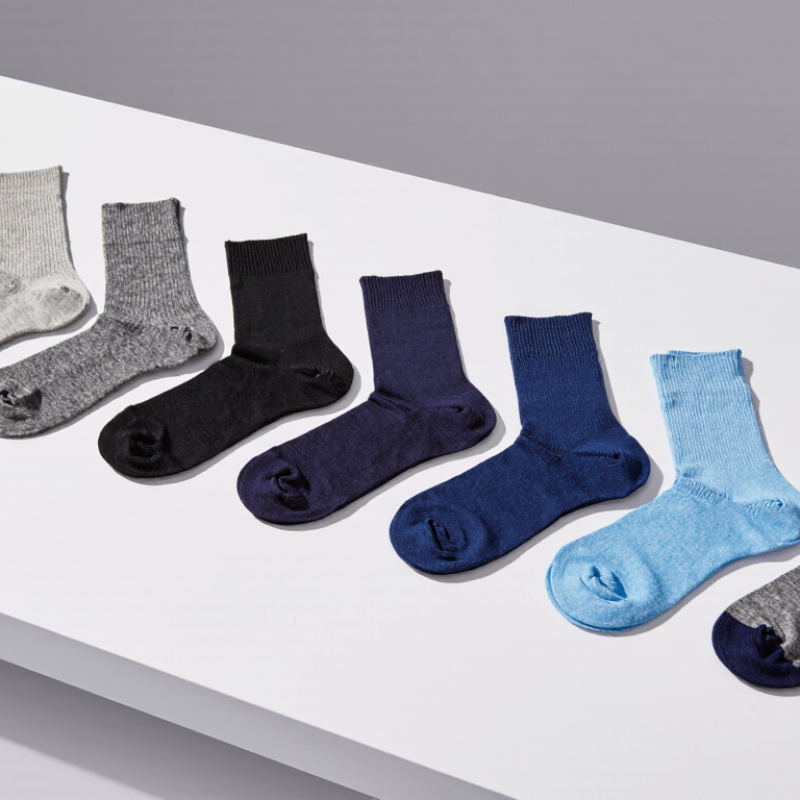
Crew Ankle Socks: Design, Materials, and Key Features
Crew ankle socks need a cuff that sits above the ankle without digging into the calf. A ribbed cuff can help hold its position, while a shaped heel reduces fabric bunching inside shoes. Keep the toe seam low-profile. Small details matter. On a sample, check fit after washing; a sock that feels secure when new may loosen or tighten later.
Material choice affects breathability, stretch, and wear. The Textile Exchange Materials Market Report 2024 estimates that global fiber production reached 124 million tonnes in 2023, with polyester making up about 57 percent. This is industry-wide data, not sock-specific, but it shows why synthetic fibers are common in blends. Cotton can feel soft against skin; polyester helps manage drying and durability, while elastane supports recovery. No blend is perfect. Too much stretch can feel restrictive, and dense cushioning may make a close-fitting shoe uncomfortable.
For everyday wear, designers can place cushioning under the heel and forefoot, while keeping the instep lighter for less bulk. Ventilation panels may improve airflow, though their benefit depends on knit density and shoe fit. Specify yarn composition, cuff height, seam construction, and wash testing before production. Then inspect samples on different foot shapes, not just a size chart. One detail is easy to miss: a smooth interior can still rub if the heel slips.
China Top 10 Crew Ankle Socks Manufacturers - Crew Ankle Socks: Design, Materials, and Key Features
This table is an industry reference, not a verified supplier ranking. “Crew ankle” is not a universally standardized sock-height category; confirm the finished height, specifications, and test requirements with each manufacturer.
| No. | Capability or design area | Common materials or options | Practical sourcing and product notes |
|---|---|---|---|
| 1 | Sock height and fit | Low-cut, ankle, quarter, and crew-height silhouettes | Height terms can vary between suppliers and markets. Provide a measurement from the heel or sole to the top edge, plus a sample or technical drawing, when specifying a “crew ankle” style. |
| 2 | Yarn composition | Cotton, polyester, polyamide (nylon), and elastane blends | Cotton is commonly selected for a soft hand feel; polyester is often used for durability and quick-drying performance; polyamide is commonly used in high-wear areas; elastane adds stretch and recovery. Exact proportions affect feel, fit, and care. |
| 3 | Knit construction | Plain knit, rib knit, terry loops, mesh zones, and patterned knits | Knit structure changes stretch, thickness, ventilation, and surface appearance. Mesh panels can increase airflow through the knit, while terry loops add bulk and cushioning. |
| 4 | Cuff and stay-up design | Ribbed cuffs, elasticated openings, and varied cuff widths | Ribbing and elastic yarn can help the cuff retain its shape. Fit should be checked on the intended size range to avoid excessive pressure or slipping during wear. |
| 5 | Cushioning | Uncushioned, partial-terry, or full-terry footbeds | Terry loops create a thicker, cushioned fabric. Cushion placement can be limited to the sole or extended to other areas; confirm the intended zones and finished thickness in a sample. |
| 6 | Heel and toe reinforcement | Denser knitting or stronger yarns in high-wear areas | Reinforced heel and toe zones are common options for improving abrasion resistance. The result depends on yarn, knit structure, fit, and use, so durability claims should be supported by suitable testing. |
| 7 | Toe closure | Linked or sewn toe seams, depending on construction and machine setup | Toe-seam type affects the feel inside the shoe. Specify the desired seam finish and inspect the inside of production samples, particularly for products marketed as low-bulk or smooth-toe. |
| 8 | Sizing and grading | Size ranges based on foot length, shoe size, or market-specific labels | Size labels are not identical across regions. Share the target market’s size chart and request measurements for the sock both relaxed and stretched, along with a fit sample. |
| 9 | Color and finishing | Yarn-dyed patterns, solid colors, printed designs, and optional finishes | Color consistency can depend on yarn lots, dyeing, and production batches. Confirm color references and assess any performance or antimicrobial finish through documentation and relevant test results rather than relying on a product description alone. |
| 10 | Quality and compliance checks | Measurement, appearance, seam, colorfastness, and applicable chemical testing | Agree on inspection criteria and tolerances before production. Required tests and labeling rules depend on the destination market and product claims; request current, product-relevant documentation where certification or compliance is required. |