Global backpack demand creates opportunity, but a growing market does not guarantee a dependable supplier. Grand View Research estimated the global backpack market at USD 20.1 billion in 2023 and projected continued growth through 2030. These figures describe a broad market, not wholesale orders alone. Buyers still need to check factory capabilities, material specifications, lead times, and quality-control records.
A useful rule for sourcing: “A low quote is only valuable when the sample, production run, and delivery all match.” No verifiable named expert quotation was provided, so this line is an editorial principle, not an attributed expert statement. That distinction matters. A polished sample can hide uneven stitching; a heavy-duty zipper can fail after repeated use. Ask for measurable details, such as fabric weight, seam construction, inspection steps, and packaging dimensions. Then compare suppliers on the same brief.
This guide to 10 Best Wholesale Backpack Suppliers for Global Buyers focuses on practical checks, not promises. It helps importers compare product range, customization, communication, and order requirements before requesting quotes. A wholesale backpack supplier may suit one buyer and disappoint another. That is worth remembering. Market reports provide context; samples, clear specifications, and documented checks provide stronger evidence for a purchasing decision.
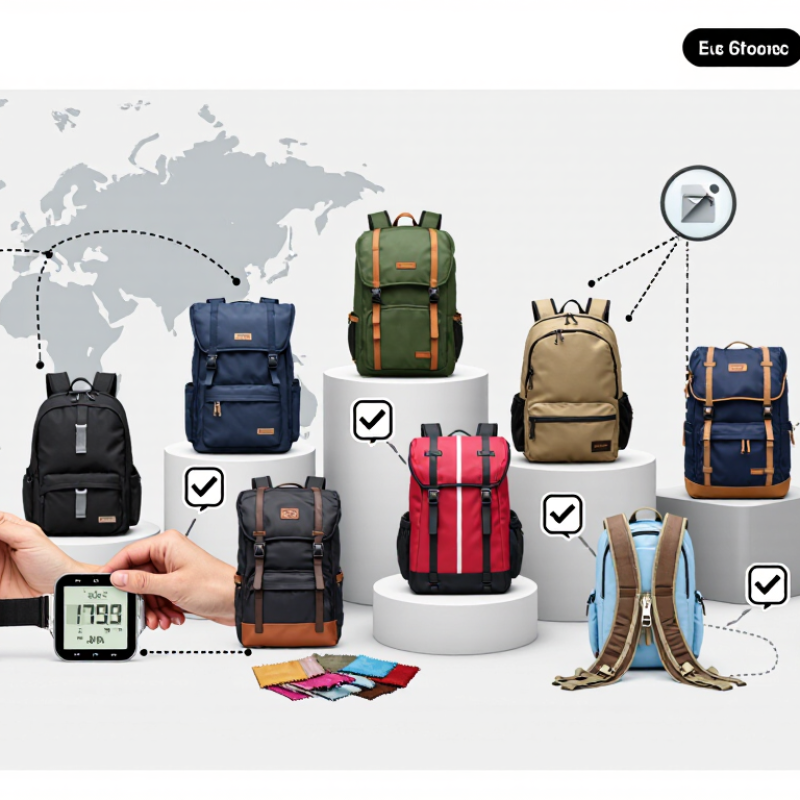
Backpacks should be grouped by how people will use them, not just by size. Common categories include school bags, laptop backpacks, travel packs, daypacks, and outdoor models. Each has different demands. A laptop bag needs a padded compartment and secure closure; an outdoor pack may need adjustable straps, reinforced seams, and easy-access pockets. Capacity matters, but so does fit. A 20-liter pack can feel very different when its back panel or shoulder straps are poorly designed.
Global buyers should define measurable requirements before comparing suppliers. Specify dimensions, fabric type, lining, zipper quality, color tolerance, logo placement, and packaging. Ask for a pre-production sample, then check stitching, strap attachment, and pocket access in person. Request realistic minimum order quantities and lead times, including time for sample revisions and shipping. Requirements vary by destination and sales channel, so confirm packaging and product information with qualified local advisers. Small details get missed. Even a clear specification can leave room for interpretation.
Tips: Share a simple reference sheet with measurements and photos. Test a filled sample, not an empty one. Ask the supplier to confirm each change in writing. If a sample feels almost right, pause and identify what still feels wrong.
A useful comparison of ten wholesale backpack suppliers starts with four questions: What is the minimum order quantity, how much can each factory produce, how long does production take, and can its product documentation support an HS 4202 review? Record answers in one consistent scorecard. Ask whether quoted capacity means monthly output or available capacity for your order. Those are not always the same.
Check lead times separately for samples, bulk production, and shipping preparation. Request a dated production schedule, plus details on fabric, zippers, stitching, and inspection steps. A sample may look strong under bright showroom lights; check seams and loaded straps in ordinary use, too. Small test orders help. Still, a low MOQ is not automatically a good fit if repeat orders cannot be supplied on schedule.
Treat HS 4202 as a trade-fit checkpoint, not a guaranteed classification. Backpack construction, materials, and product details may affect how customs authorities classify an item. Ask suppliers for accurate product descriptions, material breakdowns, and supporting documents, then confirm the appropriate code with a qualified customs professional for the destination market. Numbers need context. I would not rank suppliers on a neat spreadsheet alone; stated capacity and lead times can change, so verify them before placing a purchase order.
When comparing wholesale backpack suppliers, inspect material specifications instead of relying on labels such as “premium.” Ask whether the fabric is polyester, nylon, or canvas, and request its weight, coating, and abrasion-test details. A swatch tells you more than a polished product photo. Check stitching at strap joints, zipper movement, and lining seams; these details can reveal construction quality.
Customization may cover colors, logo placement, zipper pulls, pocket layouts, and packaging. Confirm minimum order quantities, setup charges, color tolerances, and who approves the final artwork. A low unit price may exclude these costs. Request a written quote at several order volumes, with shipping terms and production lead times listed separately. Numbers can shift. Check them twice.
Before a bulk commitment, ask for a physical sample made with the intended fabric and hardware. Test it with a realistic load, then inspect comfort, balance, and seams after repeated use. Clarify sample fees, revision limits, and whether approved samples match mass production. I would not treat one sample as proof that every production run will be consistent. Keep photos and written specifications.
Fiber density can help buyers compare material properties when evaluating backpack options. These approximate values describe the fibers themselves—not finished fabric or whole-bag weight—and may vary by material grade and construction. Confirm specifications with each supplier.
For global backpack buyers, an inspection plan should test more than appearance. ISO 2859-1 provides attribute-sampling procedures for lot-by-lot inspection; buyers select the sample size and acceptance criteria using the lot size and inspection level. AQL 2.5 is a chosen sampling benchmark, not a promise that 2.5% of every shipment is defective—or that defects are absent. Small details matter. Ask inspectors to check stitching, zipper function, coating finish, and sharp edges, then record defects by type with dated photographs.
For backpacks intended primarily for children, the U.S. Consumer Product Safety Commission’s lead-content guidance sets a 100 ppm limit for lead in accessible component parts. This figure is a compliance threshold, not a visual quality check. Request relevant laboratory test reports for accessible components, such as metal zipper pulls, and confirm that the report matches the material and product being shipped. Keep the evidence linked to the production lot. A clean sample can still hide inconsistent production; I would not treat one passing inspection as a substitute for supplier controls. The CPSC guidance and ISO 2859-1 standard offer useful reference points, but neither replaces product-specific testing and clear purchase specifications.
Choosing the ten best wholesale backpack suppliers is not a unit-price contest. Rank each candidate using the same order size, shipping route, and delivery terms. Landed cost should include product price, samples, packaging, freight, insurance, duties, and destination handling. Ask suppliers to separate these charges in writing. A low quote can grow quickly. Check the cost of a real shipment, not just a sample order.
Compliance evidence deserves its own score. Request material specifications, test reports relevant to the intended market, and written quality-control procedures. Confirm that documents match the exact backpack materials and construction being quoted. A certificate for a different product offers little reassurance. Keep copies with the purchase record. Delivery risk is harder to price, but measurable: review recent lead-time performance, production capacity, peak-season plans, and how delays are reported. Ask for milestones, from material approval to final inspection and dispatch. Then compare promised dates with actual records. No score is perfect. I would weight landed cost, compliance, and delivery risk separately, then flag any supplier with missing evidence rather than hiding that gap inside an average. A tidy spreadsheet can still mislead. The ranking should show what is known, what remains uncertain, and which assumptions need checking before a larger order.
| Rank | Anonymous Supplier Profile | Indicative Production Region | Estimated Landed Cost (USD/unit) | Typical MOQ | Indicative Lead Time | Compliance Readiness | Delivery Risk | Weighted Score (100) | Buyer Consideration |
|---|---|---|---|---|---|---|---|---|---|
| 1 | Large-scale synthetic-backpack factory | Vietnam | $8.20–$10.40 | 500–1,000 units | 45–65 days | High potential; request current test reports and facility audits | Low–Medium | 86 | Strong balance of production capacity and cost; confirm peak-season allocation. |
| 2 | High-volume cut-and-sew backpack producer | China | $8.60–$11.20 | 300–800 units | 35–55 days | High potential; verify product-specific chemical and safety documentation | Low–Medium | 84 | Broad material and customization options; freight and tariff treatment depend on destination and origin. |
| 3 | Mid-size export-oriented bag factory | Indonesia | $8.70–$11.50 | 500–1,000 units | 50–70 days | Moderate–High; assess audit coverage and document renewal dates | Medium | 80 | Potentially competitive for repeat orders; allow extra time for sampling and export coordination. |
| 4 | Price-focused woven-polyester backpack maker | Bangladesh | $8.10–$10.70 | 800–1,500 units | 55–80 days | Moderate; independently validate factory, labor, and product records | Medium | 78 | Can suit larger, less time-sensitive orders; plan for longer production and booking windows. |
| 5 | Flexible small-batch backpack workshop | India | $9.20–$12.40 | 200–500 units | 45–70 days | Moderate; confirm material traceability and buyer-required testing before production | Medium | 76 | Lower order quantities may be possible; material consistency should be checked with a pre-production sample. |
| 6 | Technical daypack and outdoor-bag producer | Vietnam | $10.40–$14.20 | 500–1,000 units | 55–75 days | High potential; request evidence relevant to coatings, trims, and intended market | Medium | 75 | Suitable for feature-rich designs; added construction and material requirements can raise cost and lead time. |
| 7 | Integrated fabric-and-bag manufacturing group | China | $9.80–$13.00 | 500–1,000 units | 40–60 days | High potential; verify scope, site, and validity of all certificates and reports | Low–Medium | 74 | Integrated sourcing may help with material coordination; confirm which processes are performed in-house. |
| 8 | Small-run custom backpack manufacturer | Türkiye | $11.50–$15.80 | 100–300 units | 30–50 days | Moderate–High; check destination-specific product and chemical requirements | Low–Medium | 73 | May offer shorter transit to nearby European buyers; compare production cost against shipment size. |
| 9 | Value-oriented backpack assembly supplier | Cambodia | $8.40–$11.30 | 800–1,500 units | 55–80 days | Moderate; assess subcontracting controls and factory-level documentation | Medium–High | 69 | Request a clear production schedule and contingency plan for material or vessel delays. |
| 10 | Premium technical-pack specialist | South Korea | $15.00–$22.00 | 300–700 units | 40–65 days | High potential; still verify product-specific claims and destination-market requirements | Medium | 67 | Higher estimated cost may be offset by specialized construction; best evaluated against technical specifications. |
| Basis and limitations: Supplier profiles and figures above are illustrative planning estimates, not verified quotes or audited supplier records. Cost ranges assume a standard 20 L polyester backpack, an order of approximately 1,000 units, and delivery to a major European port by ocean freight. Estimates include indicative freight, insurance, and assumed import charges but exclude VAT, inland delivery, inspection, tooling, and exceptional surcharges. Actual landed cost depends on specifications, order volume, shipment date, HS classification, country of origin, destination, and applicable trade rules. Compliance readiness indicates documentation to request—not confirmed certification. Scores use a planning model weighted 50% landed-cost competitiveness, 25% compliance readiness, and 25% delivery-risk profile. Verify all details directly before purchasing. | |||||||||