What Are the Best Plastic Packaging Materials in 2026?
Plastic Packaging Materials in 2026 cannot be ranked by one simple label. A pouch, clear bottle, or rigid tray must protect its contents, work with available equipment, and fit local recovery systems. The “best” choice depends on product sensitivity, shelf life, transport, and what happens after use. Details matter.
William McDonough, an architect and circular-design expert, is known for the phrase, “Waste equals food.” It offers packaging teams a useful challenge: can a package become a dependable input for another cycle, rather than a leftover with no clear route? The answer is not always yes. Recycling access, sorting quality, material combinations, and food residue can change results between regions. A recyclable-looking package may still be difficult to process.
This guide compares common Plastic Packaging Materials, including PET, HDPE, polypropylene, flexible films, and emerging bio-based options. It considers barrier performance, weight, durability, cost, and end-of-life realities—not marketing claims alone. A cap, label, adhesive, or dark pigment can affect sorting. So can package shape. Small details count.
There is no flawless option. Some materials protect products well but depend on limited collection systems. Others reduce weight but may require careful redesign. We will examine these trade-offs through practical questions and current packaging considerations. One point deserves reflection: “recyclable” describes potential, not a guaranteed outcome. That distinction should guide every 2026 material decision.
What Qualifies as a Plastic Packaging Material?
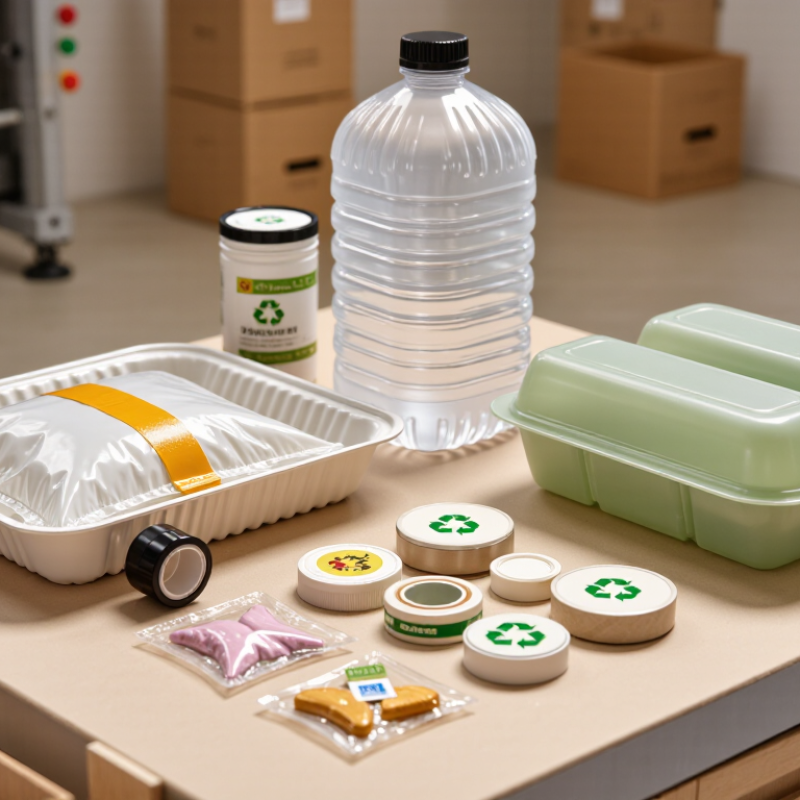
What qualifies as a plastic packaging material? It is any packaging component made partly or wholly from plastic polymers and used to contain, protect, handle, or deliver a product. The category includes rigid bottles and tubs, flexible films and pouches, foam cushioning, caps, and plastic coatings. Form alone does not decide it. A paper pouch with a thin polymer barrier may still contain plastic packaging material, though reporting systems may classify it differently.
The scale is significant. UNEP’s 2023 report, Turning off the Tap, estimates that packaging accounts for 36% of all plastics produced. The OECD’s Global Plastics Outlook reports that packaging generated about 40% of plastic waste in 2019. These figures describe different measures, but both show why material choices matter. A clear bottle, crinkled film, and multilayer pouch can all protect goods, yet differ in weight, barrier performance, and ease of sorting. Check the full structure, not just the visible surface. Small details count. A seal or coating can change how a package is processed, and labels do not always tell the whole story. That uncertainty deserves attention when comparing materials for 2026.
Which Plastic Materials Are Most Widely Used in 2026?
In 2026, polyethylene (PE), polypropylene (PP), and polyethylene terephthalate (PET) remain common choices for plastic packaging. PE appears in film, bags, pouches, and bottles; its flexibility and moisture barrier suit many everyday products. PP tolerates heat better, so it is often used for tubs, caps, and food containers. PET is clear and stiff, making it familiar in beverage bottles and trays. The format matters.
Packaging’s scale helps explain this mix. OECD’s Global Plastics Outlook reports that packaging generated 142 million tonnes of plastic waste worldwide in 2019, about 40% of the total. Plastics Europe’s Plastics—The Fast Facts 2023 reports packaging accounted for 39.1% of European plastics demand in 2021. These figures measure different things, but both show packaging’s dominant role. On a packing line, film can run quickly and wrap irregular shapes; a rigid bottle protects contents while showing them clearly.
Material selection still involves trade-offs. PE films can be hard to sort when layered with other materials, while clear PET depends on clean collection and sorting to retain value. PP offers useful heat resistance, but its recovery access varies by location. Convenience often wins. That is not always the best long-term choice, and packaging performance should be weighed against local collection and recycling systems.
How Do These Materials Compare in Strength, Safety, and Cost?
In 2026, PET, HDPE, and polypropylene remain common choices for packaging, but no single material wins every comparison. PET is clear and stiff, making it useful for bottles and transparent trays. HDPE handles knocks well and suits opaque containers for household liquids. Polypropylene tolerates more heat than many common packaging plastics, though thin parts can still bend or crack. LDPE is flexible and often economical for bags and film, but it offers less puncture resistance. Small design details matter.
Tips: Match the plastic to the product and handling conditions. Check that the specific grade is intended for food contact when needed. Test filled packages for drops, leaks, and temperature changes.
Safety depends on the exact resin, additives, intended use, and exposure conditions—not just the plastic’s name. Follow the supplier’s temperature guidance, and avoid reusing packaging if it is damaged or not designed for reuse. Cost also shifts with resin prices, package weight, manufacturing method, and order volume. A lightweight film may cost less per package, yet require extra layers to protect sharp or heavy contents. I would compare real samples before deciding; lab figures alone can miss a weak seam or slippery grip.
How Common Plastic Packaging Materials Compare in 2026
Indicative relative ratings for common packaging applications. Higher scores indicate stronger performance, greater heat tolerance, or better cost efficiency.
How to read this: Scores use an indicative 1–5 scale, not standardized laboratory measurements. Resin prices and performance vary by grade, design, and market. Food-contact safety depends on the specific formulation, intended use, and applicable regulations; it cannot be determined by polymer type alone.
Which Materials Best Suit Different Packaging Applications?
The best plastic packaging material depends on the product, filling conditions, and local recovery options. PET suits clear beverage bottles and display trays, where visibility and low weight matter. HDPE is a practical choice for opaque milk bottles and sturdy household containers. It tolerates knocks well. PP handles warmer filling and repeated use, making it useful for food tubs and caps. Flexible PE films fit produce bags and shipping wraps, though thin multilayer films can be difficult to sort and recycle.
OECD’s Global Plastics Outlook (2022) reports that packaging generated 40% of global plastic waste in 2019. That figure makes end-of-life planning hard to ignore. For moisture-sensitive goods, PE film can provide useful protection with little material, while rigid PET or HDPE may suit products needing stronger shape retention. The right choice still depends on shelf life, sealing equipment, and transport conditions; a resin that works in a lab may behave differently on a fast production line.
Check barrier needs before choosing by resin name alone. A dry snack may need strong moisture control, while a chilled drink needs dependable seals and impact resistance. Local collection systems matter, too. A technically recyclable package may not be recycled nearby. There is no perfect material. Testing the actual package with the product and filling process is often the step teams underestimate.
How Do Recyclability and Regulations Shape Material Choices?
In 2026, the “best” plastic packaging material depends on where a package will be sold and collected. A clear PET bottle may fit established recycling streams, while a flexible pouch can be harder to sort. Check local collection rules, not just a material’s theoretical recyclability. That distinction matters.
Regulations increasingly influence material choices through recycling targets, recycled-content requirements, labeling rules, and restrictions on certain formats. Requirements vary by market and product type, so packaging teams should verify current local guidance before finalizing a design. Food-contact packaging needs additional checks: recycled resin must meet applicable safety requirements for its intended use. A supplier’s documentation helps, but it does not replace independent compliance review.
Design details can make a practical difference. A dark label, mixed-material sleeve, or hard-to-remove adhesive may interfere with sorting or processing. Using one compatible material where feasible can simplify recycling, though it may affect barrier performance or shelf life. Recycled content can reduce demand for virgin plastic, but supply and quality vary. A neat material scorecard can still miss the local reality: collection bins, sorting equipment, and buyers for recovered material differ. The choice is rarely perfect. Test the finished pack, then revisit it as rules and infrastructure change.