
Why Choose an RO Water Filter?

A Ro Water Filter can make everyday drinking water more convenient, especially when tap water tastes salty, metallic, or strongly chlorinated. Reverse osmosis pushes water through a semi-permeable membrane, which can reduce many dissolved substances. The exact results depend on the system, its condition, and the water entering your home. Check the product’s independent certifications and performance data rather than relying on broad claims.

The difference is practical. A glass filled at the kitchen sink may taste cleaner, while a kettle may collect less mineral scale over time. But reverse osmosis is not a universal fix. It does not remove every possible contaminant, and some systems send water to a drain during filtration. That detail matters in homes where water use is a concern. Filter changes matter, too. A neglected cartridge can affect flow and taste, even when the unit still looks fine.

Think about your water report, household needs, and the available space beneath the sink before choosing a model. Some systems add minerals back for a fuller taste; others do not. Taste is personal. And yes, a simpler filter may be enough for some households. A Ro Water Filter is most worthwhile when its tested capabilities match a real water-quality concern—and when you are prepared to maintain it. One honest caveat: the label alone cannot tell you whether a system suits your tap.
Why Choose an RO Water Filter?

How Reverse Osmosis Water Filtration Works

Why Choose an RO Water Filter?

How Reverse Osmosis Water Filtration Works

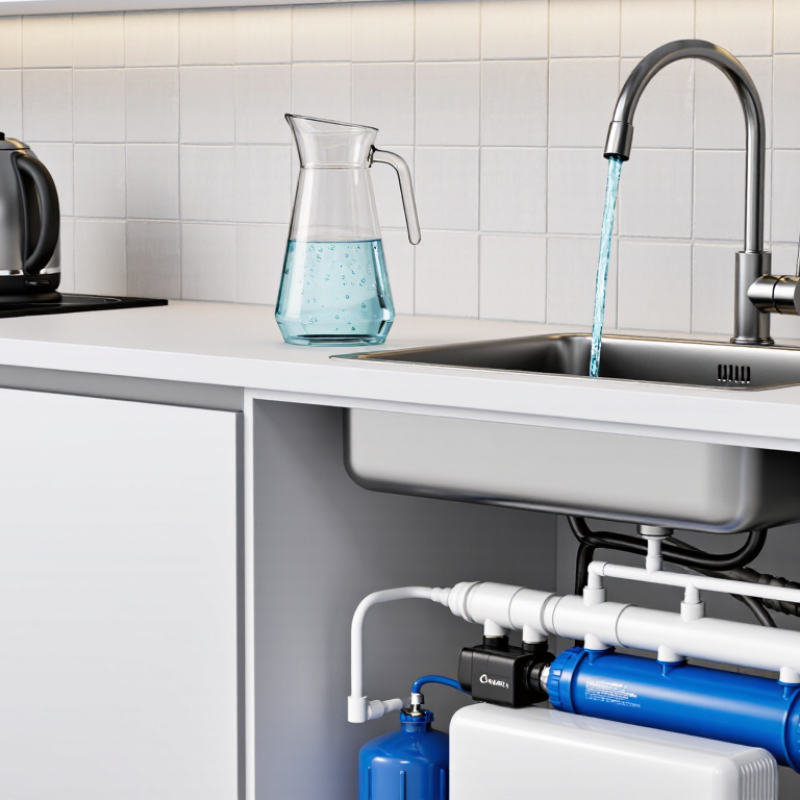
Reverse osmosis (RO) pushes pressurized water through a semipermeable membrane. Water molecules pass through, while many dissolved substances remain in a reject stream. Picture a thin barrier beneath the sink, with water slowly crossing it. It is not a sieve that catches everything.

CDC guidance says RO can reduce substances including lead, copper, sodium, and nitrate, although results vary by system and water chemistry (CDC, “About Home Water Treatment Systems”). NSF/ANSI 58 sets a minimum 75% total dissolved solids reduction requirement for certified systems. That figure is a test threshold, not proof that every unwanted substance disappears.

A typical unit sends some concentrated water to the drain while treated water fills a small tank. Membranes and prefilters need timely replacement; neglected filters can slow flow and affect performance. Check certified reduction claims against a recent water test, especially when local water has a known contaminant.

CDC notes that RO may reduce, rather than reliably remove, some substances. That distinction matters.

A clear glass is not proof of safe water: dissolved contaminants are invisible, and one filter cannot address every concern. RO also removes some minerals and uses more water than it delivers, so the practical choice depends on your household’s water and maintenance habits.

Which Contaminants an RO Filter Can Reduce

Reverse osmosis (RO) filters push water through a fine membrane that can reduce many dissolved contaminants. Depending on the system, these may include lead, arsenic, nitrate, fluoride, and some dissolved salts. A glass of treated water may taste less metallic or salty, though taste alone cannot confirm water safety.

RO is not a catch-all solution. Performance varies with the membrane, prefilters, water pressure, and maintenance. Some systems are certified to reduce specific contaminants; check the certification and claims for the exact model. That detail matters. RO can also reduce useful minerals, and many units send some water to drain. Their membranes do not reliably address every chemical or microbial risk, either. Replace filters on schedule, and test well water when its quality is uncertain. I’d avoid assuming that “RO” means every contaminant is gone. It means certain substances can be reduced under stated conditions. That distinction is easy to miss.

Benefits of Choosing an RO Water Filter

Why Choose an RO Water Filter?

Benefits of Choosing an RO Water Filter

A reverse osmosis (RO) filter pushes water through a fine membrane that reduces many dissolved substances. Depending on the system and its tested performance, it may reduce lead, arsenic, and certain salts. Check the product’s independent test data rather than assuming every RO filter removes the same contaminants. Water quality varies by home. A recent water test can help identify what actually needs filtering.

The difference can be noticeable in a glass of water or a cup of tea, especially when tap water has a strong mineral taste. RO systems can also reduce scale buildup in kettles and coffee makers.

Small, practical benefits. But there are trade-offs. Many systems send some water down the drain, and filters and membranes need timely replacement. That maintenance is easy to forget. RO may also remove minerals, though most people get these from food.

Before choosing one, consider your water test, daily use, available space, and willingness to maintain the system. A filter is only useful when it suits the water and gets cared for.

Limitations and Maintenance Needs of RO Systems

Reverse osmosis can reduce many dissolved substances, but it is not a universal fix. Its performance depends on the membrane, system design, and incoming water. A water test helps identify what needs treatment; check that the system’s independently verified claims match those results. Some contaminants may require a different treatment method.

There is a trade-off. RO systems send some incoming water to drain, and the amount varies with water pressure, temperature, and system design. They also remove minerals such as calcium and magnesium. That may affect taste, though it is not automatically a health concern for people with varied diets. The water can taste flat. I would not assume every household notices the same difference.

Maintenance takes attention. Sediment and carbon prefilters need timely replacement, while membrane life depends on water quality and use. Follow the maker’s schedule, and sanitize the storage tank and lines as directed. A sudden drop in faucet flow can signal a clogged filter, low pressure, or another issue; it is a clue, not a diagnosis. Keep a simple replacement log. It is easy to forget. If the system treats water for a specific safety concern, periodic testing can help confirm it is still performing as intended.

Why Choose an RO Water Filter? — Limitations and Maintenance Needs of RO Systems

Dimension What to Know Practical Consideration
Reduction of dissolved substances Reverse osmosis (RO) uses a semipermeable membrane to reduce many dissolved salts and other contaminants. The substances reduced depend on the system and its tested performance. Check the specific model’s independent certification and performance data for the contaminants you want to address.
Not a universal treatment No single treatment system removes every possible contaminant. RO performance can vary, and some systems include additional treatment stages for particular needs. Use a recent water-quality report or appropriate testing to identify concerns before choosing a system.
Water rejected during filtration RO systems send some incoming water to drain as concentrate. The amount varies with system design, water pressure, temperature, and operating conditions. Review the product’s stated drain-water performance and follow installation guidance; avoid assuming all systems have the same water-use ratio.
Flow and storage Many under-sink systems produce filtered water gradually and use a storage tank. Tank size and system capacity affect how quickly water is available. Choose a capacity suited to household use, and allow space for the unit, tank, and faucet if required.
Filter and membrane replacement Pre-filters, post-filters, and RO membranes require periodic replacement. The schedule depends on the system, water quality, and usage. Follow the manufacturer’s replacement intervals and keep a record of changes. Delayed replacement can reduce performance or affect water quality.
Water pressure and installation RO production depends in part on adequate feed-water pressure. Some installations may need a booster pump or other configuration adjustments. Confirm pressure and plumbing requirements before installation; a qualified installer can help assess compatibility.
Mineral content and taste RO reduces many dissolved minerals along with other substances, which can change the taste of water. Some systems add a remineralization stage. Consider taste preferences when comparing systems. A remineralization stage is optional and does not replace routine maintenance.
Ongoing ownership costs Replacement cartridges, occasional service, and installation can add to the initial purchase cost. Compare the total cost over time, including replacement parts and any installation needs, rather than comparing purchase price alone.

Note: Actual contaminant reduction, water use, capacity, and replacement intervals vary by system and site conditions. Follow the system’s instructions and verify claims against its current test or certification information.

How to Choose an RO Filter for Your Home

Why Choose an RO Water Filter?

How to Choose an RO Filter for Your Home

An RO filter can reduce many dissolved substances, but its performance depends on the system and your water. Start with a recent water report or a suitable laboratory test. Identify what you want to reduce, then check whether the system’s documented performance covers those substances. Look for independent certification and clear test data, not just broad claims. Fit matters. Measure the space beneath your sink, including room for a storage tank and filter changes. Check your home’s water pressure and connection type, too; some systems need specific conditions to work well.

Tips: Compare replacement-filter costs and service intervals. Ask how much wastewater the unit produces under your water conditions. Keep the manual and mark replacement dates on a calendar. Small details matter.

Think about daily use. A household that fills bottles and cooks often may need more stored water than a smaller household. Compare the system’s production rate and tank capacity with your routine. A remineralizing stage is optional, not essential for every home; consider taste preferences and the water’s starting composition. I would not choose by the lowest price alone. A low-cost unit can become inconvenient if parts are hard to find or maintenance is unclear. Review the installation steps, warranty terms, and available support before deciding.

Call Now Button