7 Tips for Choosing Screen Printing Textile Ink
Choosing the right Screen Printing Textile Ink can determine whether a garment feels premium or disappoints after one wash. Ink selection affects color strength, stretch, softness, opacity, curing, and production speed. A bright cotton shirt may need a different formula than a dark polyester hoodie. Small details matter. Even the fabric label can change the decision.
Screen-printing consultant Mark Coudray describes the craft as “a balance between art and science.” That principle remains practical on the press. A reliable printer studies the textile, checks the ink’s technical sheet, and tests a small print before approving a full run. Temperature, mesh count, squeegee pressure, and flash time can all change the final result. The best Screen Printing Textile Ink is not simply the brightest or cheapest option. It must suit the fabric and production conditions.
These seven tips examine the choices professionals make before printing. They cover fabric compatibility, opacity, stretch recovery, curing requirements, hand feel, color control, and wash durability. A sample may look perfect under workshop lights, yet crack after repeated washing. That mistake is easy to make. It is also preventable.
Real production is rarely perfect. Ink can cure unevenly. Colors can shift. Polyester may bleed unexpectedly. Careful testing reduces those risks, but it cannot replace experience. By comparing technical data with actual press results, printers can choose more confidently and deliver garments that look good, feel comfortable, and perform reliably.
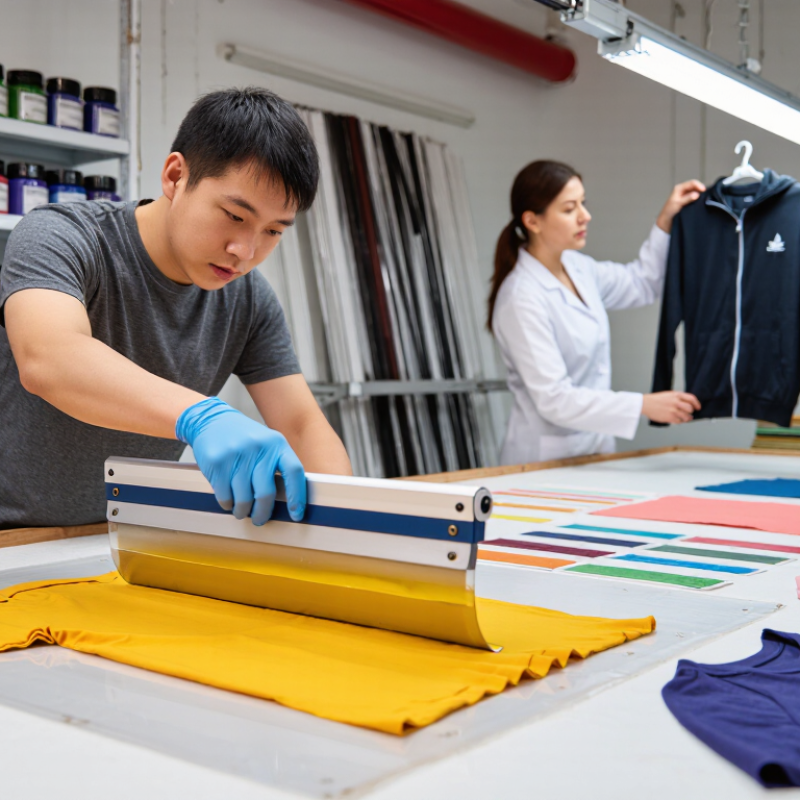
Identify the Fabric Type and Its Ink Compatibility
Choosing textile ink starts with identifying the fabric, not selecting a color chart. Cotton absorbs water-based ink well, creating a soft hand and breathable print. Plastisol ink usually sits on the surface and offers strong opacity. Polyester needs special attention because heat can trigger dye migration. Nylon is more difficult, especially when the fabric has water-repellent finishes. It often requires an ink formulated for adhesion and flexibility.
The material mix is becoming harder to predict. Textile Exchange’s Materials Market Report 2024 estimated global fiber production at 124 million tonnes in 2023, with production potentially reaching 160 million tonnes by 2030. More blended fabrics mean more compatibility checks. A cotton-polyester shirt may look like cotton, yet behave differently during curing. Read the fiber label, then test a small hidden area. Check wet adhesion, stretch recovery, wash resistance, and color transfer after curing. Do not trust appearance alone.
Temperature matters too. Use the lowest curing setting that achieves full film formation, especially with polyester. A fabric can feel dry but still fail after washing. I have seen clean samples crack because the ink layer was too heavy. That mistake is easy to repeat. Record the fabric content, ink type, mesh count, curing temperature, and wash results. These notes make production more reliable, although one test cannot represent every batch. Supplier specifications help, but real fabric testing remains essential.
Match Ink Properties to the Design and Printing Method
7 Tips for Choosing Screen Printing Textile Ink
Match Ink Properties to the Design and Printing Method
Choosing textile ink starts with the fabric, not the color chart. Cotton, polyester, blends, and coated materials accept ink differently. Check the fiber content before selecting a formula.
Match the ink’s curing needs to your equipment. Water-based ink may require controlled drying and careful moisture management. Plastisol-style ink can suit certain production setups, but it still needs correct heat and dwell time. Test cure temperature with a reliable measurement tool. Under-cured ink may crack or wash out. Overheating can damage sensitive fabric.
Consider the design’s detail, opacity, and hand feel. Fine lines need smooth flow and stable viscosity. Dark garments often require stronger coverage or an underbase. Softer prints usually need thinner deposits. Bright effects may need special particles or layered passes. Choose mesh count and squeegee pressure together with the ink.
I once trusted a sample that looked perfect under workshop lighting. After washing, the print felt heavier than expected. The lesson was uncomfortable but useful. Always test the finished print after washing, stretching, and drying. A small fabric swatch can reveal adhesion, bleeding, color change, and cracking.
Check drying time, pot life, cleanup requirements, and storage conditions. Keep ink records beside the production order. Record fabric type, mesh count, pressure, curing data, and wash results. Details matter. A repeatable process is more valuable than a lucky first print.
Compare Curing Requirements and Long-Term Wash Durability
7 Tips for Choosing Screen Printing Textile Ink
Compare curing requirements before judging an ink’s finish. Some textile inks need heat curing within a narrow temperature range. Others air-dry but require longer setting time. Check the manufacturer’s technical sheet, then confirm the fabric can tolerate that heat. A polyester shirt may shrink or distort under excessive temperature. Cotton usually handles more heat, but moisture can still affect curing. Measure the dryer temperature at the garment surface, not only on the control panel. Small differences matter.
Tip: Test a printed swatch first. Wash it five times, then inspect cracking, fading, peeling, and fabric shrinkage. Use the same detergent and water temperature your customers normally choose. A glossy print can look excellent before washing and disappointing afterward. Do not rely on touch alone. Rub the print after curing and compare it with an untouched sample. This simple check often exposes weak bonding.
Tip: Match ink viscosity to your mesh and artwork. Thick ink may improve coverage but can create a heavy hand and uneven curing. Thin ink may feel softer, yet it can lose opacity on dark fabric. I once focused too much on appearance and underestimated wash stress. That was a useful mistake. Record curing time, temperature, ink deposit, and wash results for every trial. Repeat the test when fabric lots change, because identical-looking shirts may behave differently. Long-term durability depends on the complete process, not ink choice alone.
7 Tips for Choosing Screen Printing Textile Ink
Compare curing requirements and long-term wash durability
The chart compares representative curing temperatures with typical wash durability expectations for common textile ink systems. Higher wash-cycle figures indicate better resistance to repeated laundering when the ink is properly printed, cured, and washed according to standard textile-care conditions.
Values are representative industry benchmarks rather than brand-specific specifications. Actual performance varies with fabric type, ink formulation, deposit thickness, dryer calibration, washing temperature, detergent, and mechanical stress.
Review Safety, Sustainability, Cost, and Supplier Support
Choosing screen printing textile ink requires more than checking color charts. In production tests, examine the safety data sheet before opening a container. Confirm curing temperatures, ventilation needs, skin-contact guidance, and disposal instructions. Ask whether the ink contains restricted substances for the intended market. Keep clear records. Small labels can prevent costly mistakes.
Sustainability needs evidence, not attractive language. Review water use, packaging, recycled content, and cleaning requirements. A water-based ink may reduce some impacts, yet it can demand careful drying control. That trade-off matters. Calculate total cost, including ink usage, screen cleaning, labor, energy, rejected garments, and maintenance. A low purchase price can hide higher production costs. Test a small batch first. It exposes problems early.
Supplier support also affects reliability. Request technical documents, curing recommendations, sample quantities, and batch consistency information. A responsive supplier should help diagnose problems without making vague promises. Check wash durability, color accuracy, hand feel, and print adhesion after curing. I once trusted a promising sample too quickly. Later, setup time exceeded my estimate. That mistake changed my evaluation process. Now I record every test result and ask difficult questions before placing a larger order. Supplier response time matters. So does honest communication.