
2026 Best Buckle Tie Down Straps for Heavy Duty Use

Choosing the right Buckle Tie Down Straps can determine whether heavy equipment arrives steady, protected, and ready for work. This 2026 guide examines strap strength, buckle design, webbing quality, and practical handling details. It focuses on demanding uses, including utility trailers, workshop transport, landscaping equipment, and construction loads.

Cargo-control engineer Elena Marquez offers a useful reminder: “A strap is only dependable when its buckle, webbing, anchor points, and inspection work together.” That principle shapes this comparison. A wide polyester strap may resist abrasion better, while a compact ratchet-style buckle can provide finer tension control. However, stronger does not always mean safer. An unsuitable anchor point can still fail under movement.

Real experience matters here. A strap can look perfect under warehouse lights, then reveal cuts beside a trailer rail. Buckle Tie Down Straps also face dust, rain, sharp edges, vibration, and repeated tightening. Small weaknesses grow quietly.

Not every claim deserves trust.

We will examine working load limits, breaking strength, buckle grip, stitching patterns, corrosion resistance, and ease of release. Product labels can confuse inexperienced buyers, especially when breaking strength is mistaken for working capacity. That mistake needs attention. The guide also considers storage habits, edge protection, and inspection routines that users often overlook.

This review is not a promise that one strap fits every load. It is a practical starting point for better decisions. Some recommendations may need reconsideration after field testing. That is acceptable. Reliable cargo control improves through careful measurement, honest inspection, and respect for changing load conditions.
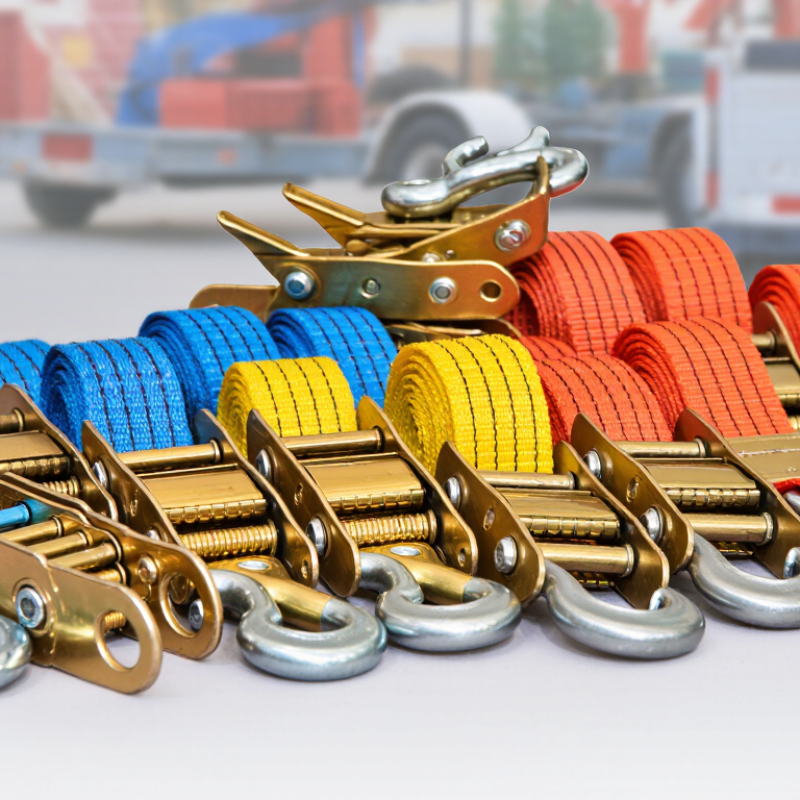
2026 Best Buckle Tie Down Straps for Heavy Duty Use

Types of Buckle Tie Down Straps for Heavy Duty Applications

Choosing the right buckle tie down strap starts with understanding its buckle type. Cam buckle straps suit loads that need quick adjustment and moderate tension. They work well for tool cases, panels, camping equipment, and light machinery. The strap passes through a hinged cam, then locks under hand pressure.

Ratchet buckle straps provide stronger tension for heavier loads. Their handle multiplies pulling force and helps secure pallets, construction materials, and compact equipment. However, excessive tightening can crush fragile edges or deform cargo.

Over-center buckles offer fast operation and firm closure, but they require a correctly sized strap and stable anchor points.

Tips: Match the strap’s working load limit to the cargo weight. Never rely on breaking strength alone. Inspect stitching, webbing, and buckle teeth before every use. Look for cuts, melted fibers, bent metal, or slipping adjustment points. Place edge protectors over sharp corners, and keep the strap flat during tensioning. Wet or dirty webbing may behave differently, so cleaning and drying matter.

In field use, I have found that the strongest buckle is not always the best choice. A ratchet can feel secure while hiding uneven pressure. Cam buckles are simpler, but they may loosen when the webbing is poorly routed. I still recheck straps after the first short movement. That small step prevents avoidable surprises.

Key Materials, Strength Ratings, and Safety Standards

Heavy-duty buckle tie-down straps depend on material, rated capacity, and correct installation. Polyester webbing offers low stretch, strong UV resistance, and better moisture stability than nylon. Nylon absorbs water and can lose performance when wet. That difference matters on an open trailer during rain.

Check the label for working load limit, assembly breaking strength, length, and manufacturer traceability. Do not judge strength by webbing width alone. The Web Sling and Tie Down Association’s technical specifications commonly apply a 3:1 design factor between breaking strength and working load limit. Ratings still vary by assembly design. The buckle, stitching, and end fittings must match the webbing.

FMCSA cargo-securement guidance under 49 CFR 393.102 requires the aggregate working load limit of securement devices to equal at least half the cargo weight. A 2,000-pound load therefore needs at least 1,000 pounds of combined working load limit. The North American Cargo Securement Inspection Out-of-Service Criteria also identifies damaged, weakened, or improperly attached securement devices as inspection concerns. Strength is not enough.

In field checks, I inspect every strap for cuts, melted fibers, crushed edges, and bent buckle teeth. I also check contact points around sharp steel corners. Small damage can hide beneath road dust. Wet roads expose weaknesses. I would prefer clearer industry labeling, because confusing breaking strength with working load limit remains an easy mistake. Secure the load again after the first short drive.

How to Choose the Right Strap for Different Loads

2026 Best Buckle Tie Down Straps for Heavy Duty Use

Choosing a buckle tie down strap starts with the load, not the strap’s appearance. Estimate the cargo weight, then check the strap’s working load limit. Never match the rating to the total weight alone. Vehicle movement, braking, vibration, and uneven roads can increase force. Heavy machinery may need wide webbing, reinforced stitching, and a higher-rated buckle. Smaller boxes may need less capacity, but they still require stable contact.

Consider the cargo shape and surface. Flat webbing suits pallets and crates with broad contact areas. Narrow straps can work around compact equipment, but they may press into soft edges. Add corner protection when metal corners could cut or crush the webbing.

For painted surfaces, choose a strap that will not create avoidable friction marks. Check buckle clearance before loading. A strong strap is useless if the buckle cannot close fully.

Inspect every strap before use. Look for cuts, melted fibers, stretched stitching, bent hardware, or a buckle that slips under tension. Keep the strap dry and clean when possible. Dirt can hide damage.

Avoid tying knots in load-rated webbing because knots can reduce strength sharply. This is where judgment matters. A strap may appear serviceable, yet its history could be unknown.

When the load is valuable, replacing one questionable strap is cheaper than trusting it. Secure the excess webbing. Loose ends can flap, catch, or distract during transport.

Proper Installation and Load-Securing Procedures

Proper installation starts with matching the strap’s Working Load Limit to the cargo. FMCSA regulations require the combined WLL of a securement system to equal at least 50% of the load’s weight. WSTDA guidance also stresses inspecting webbing, hooks, stitching, and tensioning devices before use. A 1,000-kilogram machine therefore needs securement with at least 500 kilograms of combined WLL. Never confuse breaking strength with working capacity.

Place straps over strong structural points, not fragile panels or loose accessories. Keep each strap straight and free from twists. Add edge protection where metal corners could cut the webbing. After tensioning, push the load firmly by hand. It should not shift, rock, or settle noticeably. Recheck the tension after the first few miles, especially when rain, vibration, or temperature changes affect friction. I still recheck difficult loads twice; one missed strap can reveal a weak assumption.

Tips: Clean, dry webbing grips better. Remove straps with cuts, burns, chemical damage, stretched stitching, or unreadable labels. Anchor points must also match the load. Avoid knots. Store straps away from sunlight and sharp tools. A torque-style tensioner may feel secure while the opposite side remains loose, so inspect both sides visually. CVSA inspection reports repeatedly identify cargo securement as a preventable roadside concern, making a documented pre-trip check a practical habit, not paperwork.

2026 Best Buckle Tie Down Straps for Heavy Duty Use - Proper Installation and Load-Securing Procedures
Working load limits are intended for tie-down use only. Always use the marked rating of the complete assembly and follow applicable cargo-securement regulations, vehicle instructions, and the weakest-component rule.
Configuration Webbing Width Typical Webbing Material Buckle Style Typical Assembly WLL Recommended Working Length Suitable Heavy-Duty Application Proper Installation and Load-Securing Procedure
Compact utility buckle strap 25 mm / 1 in High-tenacity polyester Cam buckle with sewn loop 250–350 daN
approximately 550–770 lbf
2–5 m
6.5–16 ft
Tool cases, light machinery covers, small utility loads, and bundled materials. Place the strap over the load, thread the free end through the cam, close the cam fully, remove slack by hand, and secure the tail. Do not use on sharp edges without edge protection.
Standard heavy-duty cam-buckle strap 35 mm / 1.4 in High-tenacity polyester Reinforced cam buckle 400–600 daN
approximately 880–1,320 lbf
3–8 m
10–26 ft
Crates, generators, compact equipment, and palletized cargo with stable anchor points. Center the strap over the load, keep it flat, pass it through the buckle in the marked direction, pull the free end until snug, and tie off the remaining tail. Recheck tension after initial movement.
Wide heavy-duty cam-buckle strap 50 mm / 2 in Polyester webbing with abrasion-resistant finish Large-frame cam buckle 750–1,000 daN
approximately 1,650–2,200 lbf
4–10 m
13–33 ft
Large crates, steel components, construction materials, and bulky equipment. Use two or more straps where needed to prevent forward, rearward, and sideways movement. Protect the webbing at every contact point, maintain a straight loading path, and ensure the buckle is fully engaged before transport.
Over-center buckle tie-down 50 mm / 2 in High-strength polyester Lever-operated over-center buckle 750–1,000 daN
approximately 1,650–2,200 lbf
3–8 m
10–26 ft
Repeated loading operations, machinery, metal frames, and cargo requiring faster tensioning. Position the buckle on the accessible side of the load, pull the webbing through the lever, close the lever completely over center, and lock or retain the handle if a secondary lock is provided. Never extend the lever with a pipe or tool.
Endless-loop buckle strap 25–50 mm / 1–2 in Polyester webbing Cam buckle with sewn loop or looped tail 250–750 daN
approximately 550–1,650 lbf
1–5 m
3–16 ft
Bundled pipes, rolled goods, compacted materials, and loads with no convenient free-end anchor position. Wrap the loop around the load and an approved anchor point, keep the webbing untwisted, thread the free end through the buckle, and tension evenly. Use a protective sleeve where the strap contacts rounded or abrasive surfaces.
Protective-sleeve buckle strap 50 mm / 2 in Polyester webbing with sliding abrasion sleeve Heavy-duty cam buckle 600–900 daN
approximately 1,320–1,980 lbf
4–12 m
13–39 ft
Painted machinery, finished surfaces, sharp-edged crates, and vibration-sensitive equipment. Center the sleeve over the highest-risk contact area, cover sharp edges with suitable edge guards, tension without crushing the cargo, and verify that the sleeve cannot slide away during travel.
Multiple-strap load system 50 mm / 2 in per strap High-strength polyester Cam or over-center buckle Use the combined capacity only when each strap shares the load effectively; otherwise rate the system by the lowest effective strap capacity. Selected to provide opposing restraint paths Long machinery, pallets, multiple crates, and loads requiring resistance to movement in several directions. Use independent anchor points where possible. Install straps symmetrically, restrain forward and rearward movement, add lateral restraint for unstable loads, and do not assume that simply adding straps increases capacity if anchor points or contact angles limit performance.
Important rating and safety rules: The working load limit is not the breaking strength. Use the lowest marked rating of the webbing, buckle, stitching, fittings, anchor points, and any protective equipment. Do not use buckle tie-down straps for overhead lifting, passenger restraint, towing, or securing a load with damaged or unreadable identification labels.
Pre-use inspection: Remove the strap from service if it has cuts, holes, melted or fused fibers, chemical damage, excessive abrasion, pulled stitching, bent or cracked hardware, a malfunctioning buckle, contamination that prevents inspection, or an illegible rating label.
Final load check: Confirm the cargo is stable before tensioning, keep straps away from hot exhaust components and moving parts, secure loose strap tails, check that no strap is twisted, drive a short distance at low speed, and recheck tension and cargo movement before continuing the journey.

Maintenance, Inspection, and Replacement Guidelines

Heavy-duty buckle tie-down straps can look sound while hidden fibers weaken. Maintenance starts before loading, not after failure. Wipe each strap with clean water and mild soap. Remove grit from the buckle. Let the fabric dry fully in shade. Never store damp straps in a sealed box. I once found rust beneath a buckle lever after a wet trip. The strap still worked, but that was a warning.

Inspect every strap before use, especially after sudden braking, sharp-edge contact, or rain.
Run the webbing through your fingers. Look for cuts, melted spots, pulled stitching, crushed fibers, and fading. Check the buckle for cracks, bending, sharp edges, or slipping teeth. Test its grip with moderate hand tension.
Do not trust appearance alone. A clean surface can hide internal damage. Record the inspection date and each concern. Photos help teams notice gradual changes.

Replace a strap immediately when the webbing is cut, heavily abraded, chemically stained, or heat damaged. Replace any buckle that releases unexpectedly or feels rough. Follow its rated capacity and care instructions. Do not repair load-bearing webbing with tape, knots, or improvised stitching. Conservative decisions may feel wasteful. Guessing is worse. In busy workshops, rushed inspections are common. A second person should review questionable straps before use. Store serviceable straps loosely coiled, away from sunlight, oils, moisture, and sharp tools.

Call Now Button